Grove read
Agricultural Robots Bringing Food to the Table
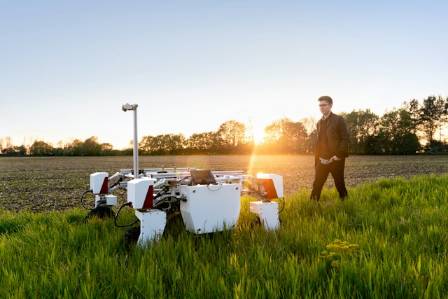
Agriculture is steadily becoming more automated. The shift initially focused on autonomous tractors equipped with sensors and software that allowed them to operate continuously throughout the day and night. Today, the technology has expanded into a wide variety of agricultural robots equipped with increasingly sophisticated sensors, software, lasers, and specialized gripping mechanisms. These machines can harvest crops, remove weeds, control pests, and perform many other demanding jobs. Here are five emerging agricultural robots currently working on farms across the country.
Elsin Veyne
Margin note
Reading tip
The full digest continues below among botanical margin notes.
Grove
Olive Digests
Agriculture is steadily becoming more automated. The shift initially focused on autonomous tractors equipped with sensors and software that allowed them to operate continuously throughout the day and night. Today, the technology has expanded into a wide variety of agricultural robots equipped with increasingly sophisticated sensors, software, lasers, and specialized gripping mechanisms. These machines can harvest crops, remove weeds, control pests, and perform many other demanding jobs. Here are five emerging agricultural robots currently working on farms across the country.
Farming is fundamentally about growing living things, but it also involves removing unwanted forms of life. Weed control is one of the most exhausting and frustrating responsibilities for farmers and gardeners alike. A growing number of robots are now capable of handling this difficult work, including Carbon Robotics’ Laserweeder. The machine is equipped with powerful lighting and a dozen high-resolution cameras that examine crop rows as the robot travels through the field.
Carbon Robotics Laserweeder
An artificial intelligence system analyzes the plants within milliseconds, distinguishing crops from unwanted weeds. Once a weed has been identified, 150 carbon-dioxide lasers rapidly target the unwanted growth, firing as frequently as once every 50 milliseconds.
The machine can eliminate as many as 200,000 weeds per hour and destroy approximately 99 percent of the weeds it encounters. This level of productivity can benefit both farmers and the environment by significantly reducing the need for chemical herbicides.
Harvest CROO Strawberry Picker
Anyone who has purchased a box of strawberries has probably encountered an inconsistent mixture of fruit. Some berries may be bruised, others may already be covered in mold, while others are perfectly ripe and ready to eat. The Harvest CROO could eventually help reduce this variation by automating the process of selecting ripe strawberries.
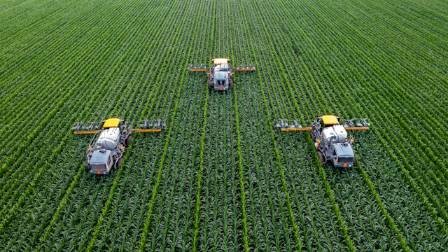
From a distance, the machine resembles a large tour bus designed for an electronic music group. However, as it moves along rows of strawberry plants, an onboard vision system examines individual berries and determines within milliseconds which ones are ready to harvest.
Sixteen robotic units inside the harvester then collect the ripe strawberries using soft, delicate grippers. External lidar systems help the machine navigate along the crop rows, allowing it to avoid damaging plants and to steer clear of people who may be working nearby.
Polly the Pollinating Robot
Some fruit-producing plants have separate male and female flowers, meaning pollen must be transferred from the male flower to the female one before fruit can develop. Cucumbers and squash are examples of plants that depend on this process. Other plants, including tomatoes and blueberries, contain both male and female reproductive structures within the same flower and only require vibration to release and transfer pollen.
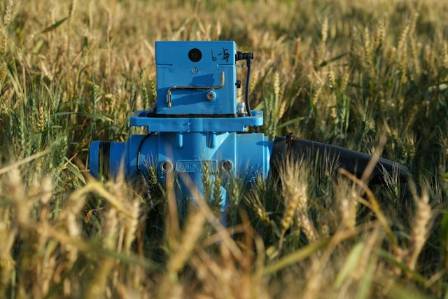
Bumblebees are normally important pollinators for these crops, but their populations have been declining. People can perform pollination manually, but doing so requires considerable labor because individual flowers must be handled one by one. Polly, a robotic pollinator, is designed to automate this task.
Developed by Israeli company Arugga, the compact robot travels between crop rows while scanning the plants around it. Its artificial intelligence can identify flowers and determine which ones are ready to receive pollen.
Once a suitable flower is detected, Polly releases a short burst of air that shakes the flower and initiates the pollination process that can eventually result in fruit. Unlike bumblebees, the robot can operate under temperatures and lighting conditions that are unfavorable to the insects. This allows it to perform pollination work under circumstances where both natural pollinators and human workers may be less effective.
Naio Technologies Oz
Smaller farms generally cannot dedicate a separate robot to every agricultural task, such as planting, cultivating, weeding, or harvesting. To address this need, French company Naio Technologies developed Oz, a compact multipurpose agricultural robot.
The fully electric machine weighs only about 330 pounds and stands approximately 33 inches tall. It uses RTK GPS guidance, allowing it to navigate with accuracy down to roughly one centimeter.
Oz essentially functions as a small autonomous tractor. It can handle tasks including weeding, planting, creating furrows, hoeing, and transporting materials, and it can operate for as long as eight hours at a time.
There are currently around 220 Oz robots operating across 48 countries. Together, they have accumulated approximately 36,000 hours of agricultural work. Its versatility allows commercial growers and smaller operations to use a single autonomous machine for a range of different field tasks.
TerraClear Rock Picker
Before people or machines can begin cultivating a field, the land often needs to be cleared of rocks. Stones can interfere with plant growth and potentially damage agricultural machinery. Traditionally, removing rocks has required substantial manual labor, but TerraClear has developed both digital and physical technology designed to make the process more efficient.
The first stage involves a drone equipped with neural-network-based software. It surveys the field and identifies the location and size of individual rocks, creating a detailed map showing where the stones are located.
The robotic Rock Picker then uses three belt-driven fingers to lift rocks from the soil and place them into a collection scoop. TerraClear is continuing to develop the technology with the goal of eventually making the entire rock-removal process fully autonomous.
More along this branch
LEAF · en

Definitive Guide to Decorating Tables with Fresh Flowers
Matching flower varieties and colors to the table’s overall theme helps elevate the mood and visual harmony.
LEAF · en

Where is Earth’s Largest Waterfall?
Rivers plunging through Earth’s deep gorges can produce spectacular waterfalls, natural wonders that attract millions of people with their dramatic beauty, immense scale, and tremendous force. Yet even the greatest waterfalls visible on land are dwarfed by enormous cascades hidden deep beneath the ocean.
LEAF · en

DIY Emoji Celebration Cake: A Fun and Allergy-Friendly Dessert Idea
Have you ever spent hours scrolling through cake decorating videos online and suddenly felt inspired to create your own themed cake?
LEAF · en

Five Leading Stars Probably Set to Join Fresh IPL Teams
As the IPL retention day has arrived, Let's have a look at five star players who will join new teams in IPL 2025.
LEAF · en

Top 6 Universities with Accomplished and Stunning Female Students
Are you searching for universities with accomplished and stunning female students? Look no further, as several institutions in the USA boast not only attractive but also intelligent, ambitious, and driven women. Explore the top 6 universities where young women showcase their talents in sports, leadership, and various fields.
LEAF · en

Master the Art of Homemade Sushi: Expert Tips and Techniques
While ordering sushi at a restaurant is a common treat, preparing it in your own kitchen is surprisingly achievable and significantly more affordable. Most of the necessary components, such as sriracha, sesame seeds, and rice vinegar, are pantry staples that remain fresh for a long time. By investing in a few basic items, you can host a festive "roll your own dinner" night for a fraction of the cost of dining out.