Grove read
Fun Facts About The San Remo Luxury Apartment Building in NYC
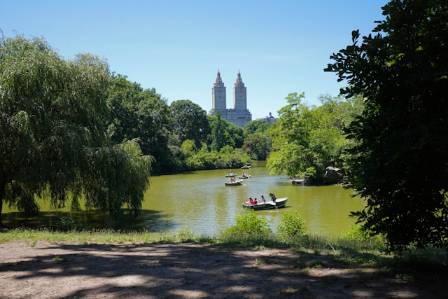
As the first historic residential building in New York City to feature twin towers, The San Remo has long dominated the skyline of Central Park West with its unmistakable silhouette. This 27-story luxury cooperative apartment building was designed by renowned architect Emery Roth and stands between West 74th and West 75th Streets, offering residents spectacular views of Central Park from its soaring towers.
Soren Whitlock
Margin note
Reading tip
The full digest continues below among botanical margin notes.
Grove
Olive Digests
As the first historic residential building in New York City to feature twin towers, The San Remo has long dominated the skyline of Central Park West with its unmistakable silhouette. This 27-story luxury cooperative apartment building was designed by renowned architect Emery Roth and stands between West 74th and West 75th Streets, offering residents spectacular views of Central Park from its soaring towers.
Completed in 1930, The San Remo quickly established itself as one of Manhattan’s most prestigious and sought-after apartment buildings. Behind its elegant façade are countless stories involving architecture, history, famous residents, and unusual design choices. Here are ten interesting facts that reveal the hidden details behind this legendary New York landmark.
The Twin Towers Were Originally Created to Hide Water Tanks
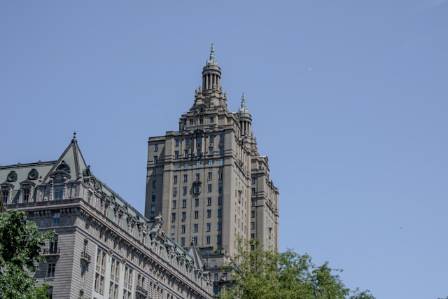
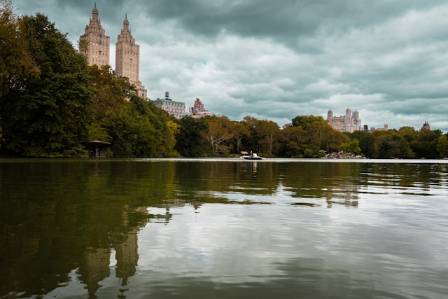
One of the most recognizable features of The San Remo is its pair of towers rising above the 18th floor. Each tower extends another ten stories and was inspired by the drum design of the Choragic Monument of Lysicrates in Athens, creating a dramatic architectural presence against the Manhattan sky.
Although the towers appear to exist purely as decorative elements, they actually serve a practical purpose. Their original function was to conceal the building’s water storage tanks, blending necessary infrastructure with architectural beauty. This combination of usefulness and aesthetics reflected Emery Roth’s design philosophy, where practical elements were incorporated into the overall visual character of the building.
The Building Has Two Separate Addresses
Unlike many apartment buildings, The San Remo officially carries two different addresses: 145 Central Park West and 146 Central Park West.
The two addresses correspond to the northern and southern sections of the building, each with its own entrance lobby and elevator system. This unusual arrangement allowed the architects to avoid creating long interior corridors that would have taken up valuable residential space.
The dual-address layout helped make the apartments more efficient while maintaining a sense of privacy and exclusivity for residents.
The Apartments Were Divided Into Smaller Units After the Great Depression
When The San Remo first opened, it was marketed as the “Aristocrat of Central Park West,” attracting wealthy residents who wanted luxurious homes with spectacular views.
However, shortly after its completion, the stock market crash of 1929 and the following Great Depression made it difficult to fill the building’s large and expensive apartments. To attract more tenants, many of the larger residences were divided into smaller apartments that were easier to rent.
Several duplex units in the south tower were converted into single-floor apartments, while some of the larger C-line and E-line residences were also reduced in size. These changes eventually added around 20 more apartments, bringing the building’s total number of residences to 138.
The Two Towers Are Not Completely Identical
Although The San Remo appears perfectly symmetrical from the outside, the two towers actually contain subtle differences.
The western sides of the towers include slight variations, including a small outward projection that is difficult to notice from street level. In addition, apartments in the south tower were designed with larger floor areas compared with those in the north tower.
These small differences reveal the careful planning behind the building’s design and demonstrate that its appearance is more complex than it first appears.
The San Remo and The Beresford Were Once Sold for Only $25,000
During the economic struggles of the Great Depression, many luxury apartment buildings faced serious financial problems, and The San Remo was no exception. With fewer wealthy tenants available, the building eventually fell into bankruptcy.
In 1940, both The San Remo and another Emery Roth-designed building, The Beresford, were sold together for only $25,000 in cash, in addition to existing mortgages. This was a dramatic decline from their estimated value of approximately $10 million in 1929.
Today, however, apartments in The San Remo are among the most expensive residences in New York City, with prices ranging from several million dollars to tens of millions of dollars.
The South Tower Was Originally Considered the More Desirable Side
When The San Remo was first built, the south tower was viewed as the premium choice because it provided better views toward Midtown Manhattan.
The south tower originally contained large duplex apartments measuring around 6,000 square feet, while the north tower mainly featured smaller single-floor residences of approximately 2,500 square feet with two bedrooms.
After the Great Depression, many of these luxurious duplex apartments were divided into smaller homes, changing the original layout of the building.
Only One Original South Tower Duplex Still Remains
Most of The San Remo’s original duplex apartments disappeared after the building was reorganized during the Depression era. However, one remarkable residence survived: the South Tower Penthouse.
This approximately 7,000-square-foot apartment remains the only surviving duplex from the building’s original design. Over time, it expanded further by incorporating mechanical and storage areas, transforming it into a unique triplex penthouse.
The residence includes 17 rooms, multiple terraces, and breathtaking panoramic views of New York City. It was once owned by actress Demi Moore, who later sold the property for around $45 million.
Madonna Was Rejected When She Applied to Live There
The San Remo has attracted many famous residents over the decades, including actors, musicians, and entertainers such as Dustin Hoffman, Steve Martin, Diane Keaton, and Bono.
However, one celebrity who failed to gain approval was Madonna. In 1986, she applied to purchase a cooperative apartment valued at approximately $1.2 million.
At the time, she was still early in her career and reportedly attempted to impress the building’s approval board by attending a personal interview dressed in an elegant black outfit with pearls and gold crosses.
Despite her efforts, her application was rejected. Diane Keaton, who was part of the cooperative board, was reportedly the only member who supported her purchase.
The Tower Design Was Inspired by Spain’s Giralda Tower
Although The San Remo later influenced many New York buildings, including The Majestic, The Century, The El Dorado, and the Time Warner Center, its own tower design borrowed inspiration from a famous European landmark.
The twin towers were loosely based on the Giralda Tower in Seville, Spain. While The San Remo’s version is more restrained and adapted to the Art Deco style, similarities between the two structures can still be seen in their proportions and decorative forms.
This international influence helped give The San Remo its distinctive appearance among Manhattan’s many residential towers.
The Windows Were Designed to Improve Temperature Control
Beyond its impressive appearance, The San Remo also incorporated several innovative architectural solutions.
Many of the building’s windows feature metal frames with movable sections above and below the main glass panels. The upper sections open outward, while the lower sections, known as hopper windows, open inward.
This design improved ventilation and helped regulate indoor temperatures, allowing residents to enjoy greater comfort while maintaining the building’s elegant exterior appearance.
A Lasting Symbol of Manhattan Elegance
Nearly a century after its completion, The San Remo remains one of New York City’s most recognizable residential landmarks. Its combination of classical influences, Art Deco details, innovative engineering, and celebrity history has secured its place as one of the most admired buildings along Central Park West.
From its hidden water tanks and unusual apartment layouts to its famous residents and architectural inspirations, The San Remo continues to represent the timeless elegance of Manhattan living.
More along this branch
LEAF · en

Butterfly Floral Tapestry Wall Hanging Tapis Cloth
The Butterfly Floral Tapestry Wall Hanging Cloth features vivid colors and a clean, refined finish, making it an eye-catching centerpiece for any interior space. Designed with style in mind, this high-quality tapestry is perfect for enhancing the atmosphere of your living room, bedroom, or hallway.
LEAF · en

7 Coastal Lighthouses to Explore in North Carolina
Since 1875, the Currituck Beach Light Station has safeguarded vessels along the northern Outer Banks. Distinctive for its unpainted red-brick exterior—composed of approximately one million bricks—this active navigational aid stands apart from the traditional black-and-white towers found further south. Climbing season: Mid-March through December
LEAF · en

Understanding the Hedgehog: Nature’s Defensive Mammal
Hedgehogs are members of the Erinaceidae family and belong to the genus Erinaceus. Classified as mammals, these creatures generally live for about seven years in their natural environment and can grow to weigh up to 1.1kg. Their bodies typically measure between 14cm and 30cm in length, and they are capable of moving in quick bursts at speeds of 9.5km/h. These animals primarily inhabit woodlands, meadows, grasslands, and hedgerows across Africa, Asia, and Europe.
LEAF · en

Famous Ship Paintings: Exploring the Timeless Charm of Nautical Art (Rewritten & Expanded)
To discuss the history of human civilization is to inevitably confront the significance of ships—a symbol that transcends mere transportation. For millennia, ships have served as lifelines of global trade, facilitating economic prosperity and cultural exchange across continents; yet, they have also been instruments of colonial expansion and the transatlantic slave trade, bearing witness to humanity’s darkest atrocities. This dual nature of ships—their role as agents of connection and conflict—has made them enduring subjects in the world of art. Nautical paintings, or ship paintings, do more than depict the majestic beauty of vessels on the water; they capture the spirit of their eras, preserving stories of exploration, war, survival, and hope. In this expanded exploration, we will delve into the rich history of marine art, examine ten of the most famous ship paintings that have shaped the genre, and unpack the profound symbolic meanings that ships carry in artistic representation. Whether you are an art enthusiast, a history buff, or simply drawn to the allure of the sea, these works offer a window into the complex relationship between humanity and the ocean.
LEAF · en

9 Fresh Fruit Smoothies You’ll Want to Make Again and Again
Fresh fruit smoothies are refreshing, naturally sweet, and incredibly easy to make. Whether you want a quick breakfast, a healthy snack, or a cooling summer treat, smoothies are one of the simplest ways to enjoy fruit.
LEAF · en

Most Popular Women’s Rings in the USA
Jewelry in 2026 is all about self-expression, creativity, and individuality, and women’s rings are at the forefront of this movement. Across the United States, contemporary ring designs are moving beyond classic norms, embracing vibrant gemstones, distinctive shapes, and artistic settings.