
Grove read
African Lion: The Powerful Predator of the Savannah
Lions possess powerful, muscular bodies, strong forelegs, sharp teeth, and sturdy jaws that enable them to bring down and kill relatively large prey.
Nyra Caldwell
Margin note
Reading tip
The full digest continues below among botanical margin notes.
Grove
Olive Digests
Lions possess powerful, muscular bodies, strong forelegs, sharp teeth, and sturdy jaws that enable them to bring down and kill relatively large prey.
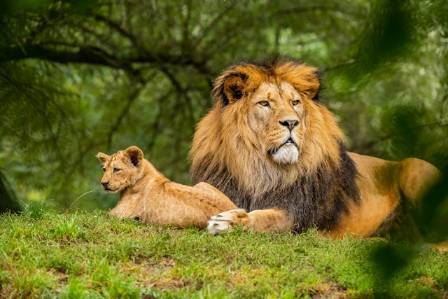
Their coats are generally golden-yellow, while mature males are distinguished by the prominent mane surrounding their heads and necks. A male lion’s mane can range in color from pale blond and reddish-brown to very dark black. Its appearance can be affected by several factors, including the animal’s age, genetics, and hormone levels.
Lion cubs are sometimes born with subtle spots across their coats. These markings usually become less noticeable and disappear as the animals grow older.
Interestingly, lions and tigers have remarkably similar body structures when their coats are removed. Distinguishing between the two species based solely on their bodies can therefore be difficult without specialized knowledge.
Size
Most adult lions stand approximately 3.5 to 4 feet (1–1.2 meters) high at the shoulder.
Males are typically larger than females. They can reach about 10 feet (3 meters) in total body length, including a tail measuring roughly 2 to 3 feet (60–91 centimeters). Adult males generally weigh between 330 and 550 pounds (150–250 kilograms).
Female lions are somewhat smaller. Their bodies can reach approximately 9 feet (2.7 meters) in length, while their weight generally falls between 265 and 395 pounds.
Natural Habitat
Lions are remarkably flexible in their habitat preferences and can live in a variety of environments, including open grasslands, areas with dense vegetation, and dry thorn forests.
Today, wild lions are concentrated primarily in Africa, occupying regions extending from south of the Sahara Desert toward northern South Africa. Outside Africa, the only remaining wild population belongs to the Asiatic lion, which survives in India’s Gir Forest.
Lions are generally not found in areas dominated by humid tropical rainforests.
Lifespan
Lions kept under human care can frequently live into their late teenage years and may sometimes reach their early twenties.
In natural environments, females can survive to approximately 16 years of age, whereas males generally have shorter lives and seldom live beyond about 12 years.
Diet and Feeding Behavior
Lions are strictly carnivorous and primarily pursue large mammals weighing approximately 100 to 1,000 pounds (45–453 kilograms). Common prey species include zebras and wildebeests.
When large prey is scarce, lions can turn to smaller animals, including rodents and reptiles. They are also opportunistic enough to take food from other predators, such as hyenas and leopards. However, food theft can work in both directions, and groups of hyenas may sometimes take kills from lions.
Where lion habitat overlaps with human settlements, the animals may occasionally attack and kill domestic livestock.
Captive lions are given specially formulated diets intended to provide appropriate nutrition. At the Smithsonian’s National Zoo, for example, lions are fed commercially prepared ground beef together with bones and rabbits. These harder foods also help support healthy teeth and maintain jaw strength.
Social Structure
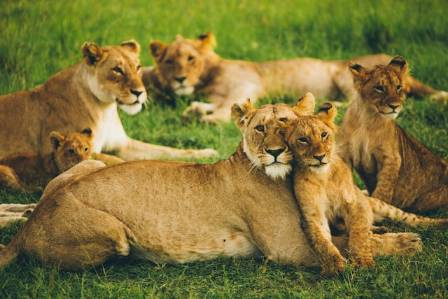
Lions are widely regarded as the most socially organized members of the cat family. While most large cats tend to live alone, lions form cooperative family groups known as prides.
A typical pride includes related adult females, their offspring, younger adults, and one or more resident males. The size of a pride depends partly on food availability and can range from only a few animals to approximately 40 individuals.
Female lions generally remain with the pride into adulthood and throughout their lives. However, environmental pressures such as severe food shortages can sometimes cause them to leave.
Young males are usually forced out of their natal pride once they become large and strong enough to challenge the resident males. This generally occurs between two and four years of age. After leaving, males often form coalitions with brothers or other relatives and attempt to gain control of another pride.
When unfamiliar males take over a pride, they may kill cubs that are too young to escape. A coalition of males that successfully controls a pride generally maintains dominance for roughly two years before another group of males takes its place.
Asiatic lions in India display somewhat different social behavior. Males and females generally live in separate groups and come together primarily during mating periods.
Territory, Hunting, and Communication
Male lions play a major role in defending the territory occupied by the pride, although females also participate in protecting the group’s range.
Lions communicate over long distances through their powerful roars, which can carry for as much as five miles. They also use urine and scent marking to establish and communicate territorial boundaries.
Female lions usually take primary responsibility for caring for cubs and are often the main hunters. Males, however, can also join hunting activities.
When pursuing prey, several lions may cooperate by approaching from different directions and coordinating their movements. Once they are within roughly 100 feet (30 meters), they can launch their attack.
Males living without a pride must obtain food on their own, either by hunting independently or by scavenging meals left by other predators.
Reproduction and Growth
Female lions may become receptive to mating several times throughout the year. Mating stimulates ovulation, and females generally produce a new litter about every two years unless they are already pregnant or caring for existing cubs.
Following a pregnancy of approximately three and a half months, a female usually gives birth to between one and four cubs.
Lion cubs typically continue nursing for around six months, although they begin consuming meat at approximately three months of age.
The first years of a lion’s life are particularly dangerous. Food shortages can cause starvation, while newly dominant males may kill young cubs after taking control of a pride. As a result of these and other dangers, mortality among young lions is extremely high, with as many as 80% of cubs potentially dying before they reach two years of age.
More along this branch
LEAF · en

The Well-Documented Health Benefits of Coffee: An In-depth Exploration
Coffee has become an integral part of the daily lives of numerous people around the world. It's not just a simple drink that helps us get going in the morning or provides a momentary break during a busy day; rather, it holds a wealth of health benefits that have been thoroughly investigated and verified through extensive scientific research. From its impact on our general health to its potential role in preventing certain diseases, coffee offers far more than just its appealing taste and pleasant aroma. Let's explore the top evidence-based health benefits of coffee one by one.
LEAF · en

Strategies for Exceptional Home Furnishing: A Guide to Curating Your Space
Choosing the right furniture involves much more than simply placing functional objects within a room. It is a fundamental element of interior design that establishes a home's comfort, utility, and visual character. Whether you are furnishing a compact studio or a sprawling estate, your selections possess the power to completely reinvent your living environment. Achieving a balanced and inviting home requires a deep understanding of how to pick pieces that harmonize with your architecture while serving your daily requirements.
LEAF · en

10 Amazing Hikes in Acadia National Park
Acadia National Park boasts hikes tailored to every type of adventurer—thrill-seekers chasing iron rungs, photographers hunting sunrise vistas, and dog lovers exploring with their four-legged companions. Most trails are under 5 miles, making it easy to combine two or three in a single day, and the park’s integration with Mount Desert Island (including Bar Harbor) lets you hike in the morning, savor a lobster roll for lunch, and hit another trail by afternoon. After three weeks of hiking Acadia’s top routes during peak fall season, we’ve curated this list of 10 standout hikes, complete with crowd-avoidance tips, view-enhancing tricks, and pup-friendly notes.
LEAF · en

Maple Leaves in Full Fall Foliage Colors
Autumn is one of my favorite seasons, and it is also the best time of year for photography. I have mentioned before how disappointing it can be when fall arrives and the leaves show little color or the display is almost completely missing.
LEAF · en

Easy Homemade Fruit Jelly
Making your own fruit jelly at home is a rewarding experience. Bursting with natural colors and fruity flavors, this easy recipe lets you enjoy a sweet treat without relying on store-bought options. Whether you’re hosting a summer gathering, making a playful dessert for children, or looking for a quick fruity snack, this homemade fruit jelly is simple to prepare and always satisfying.
LEAF · en

Embracing the Work-Leisure Revolution: A Guide to Effortless Transition
Fashion serves as a reflective mirror, mirroring the shifts in societal trends and norms. The past two years have witnessed a wardrobe revolution—dressing from the waist up for virtual meetings, swapping tailored ensembles for cozy joggers. However, a paradigm shift is underway, with Microsoft reporting that 50% of leaders anticipate a return to full-time, in-person work. As the professional world readies itself for a resurgence of office life, considerations about what to wear take center stage. Workwear is staging a comeback, but not in the traditional sense; think elevated athleisure meets power dressing.