Grove read
Polar Bears: Giants of the Arctic
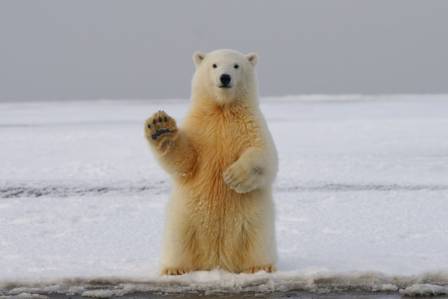
Polar bears (Ursus maritimus) are close relatives of brown bears but have evolved to thrive in snowy, icy habitats, inhabiting some of the coldest regions in North America. Their black skin helps absorb heat from the sun, while their thick, white fur provides insulation, repels water, and offers camouflage against the snow and ice. Large, webbed paws make them exceptional swimmers, allowing them to navigate the Arctic waters with ease.
Jack Foster
Margin note
Reading tip
The full digest continues below among botanical margin notes.
Grove
Olive Digests
Polar bears (Ursus maritimus) are close relatives of brown bears but have evolved to thrive in snowy, icy habitats, inhabiting some of the coldest regions in North America. Their black skin helps absorb heat from the sun, while their thick, white fur provides insulation, repels water, and offers camouflage against the snow and ice. Large, webbed paws make them exceptional swimmers, allowing them to navigate the Arctic waters with ease.
In the United States, polar bears are found exclusively in Alaska. Two subpopulations utilize Alaskan territory at different points in their life cycle: the Chukchi Sea subpopulation, estimated at around 3,000 bears, and the Southern Beaufort subpopulation, which has roughly 900 individuals. Only two U.S. national park units—Bering Land Bridge National Preserve and Cape Krusenstern National Monument—are known to have polar bears in proximity, with some bears’ home ranges extending into park boundaries. For specific information about polar bears in any national park, it’s best to contact the park directly.
Diet and Feeding
Polar bears consume a diet much richer in fat and protein than other bear species. Their main prey are seals, though they will also scavenge whale carcasses when available. With an exceptional sense of smell, polar bears can detect prey or carcasses from nearly 20 miles away. When on land and primary food sources are scarce, they may eat marine mammal remains, birds, fish, terrestrial mammals, and even berries.
Winter Dens
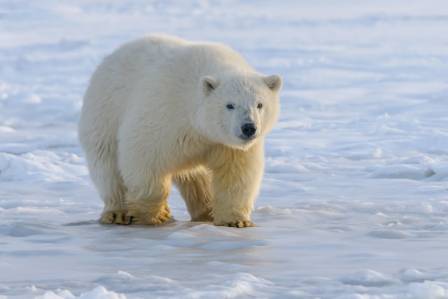
Pregnant female polar bears are the only ones that spend the winter in dens, as hunting for seals on sea ice is most productive during this season. Dens can be located on land along the coast or on sea ice. Unlike black and brown bears, which enter a deep metabolic dormancy during hibernation, denning polar bears remain somewhat active throughout the winter months while nurturing their unborn cubs.
Reproduction and Life Cycle
Mating usually occurs between March and June, but embryo implantation is delayed until autumn. Polar bears give birth during the winter to one to three cubs, with twins being the most common.
Newborn cubs are typically 12–14 inches long and weigh just over one pound. In spring, the mother and her cubs emerge from the den.
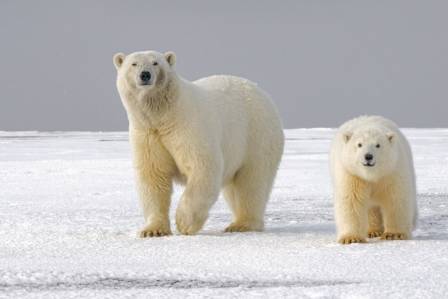
Mother polar bears are highly protective, sometimes defending their young from adult males, which can pose a threat to cubs. Cubs grow quickly, remaining with their mother for a little more than two years as they learn essential survival skills in the harsh Arctic environment.
More along this branch
LEAF · en
The Intelligent Social Monkeys You Need to Know About
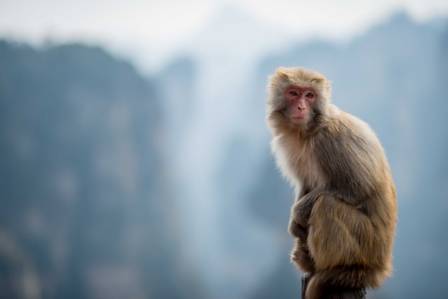
Macaques (Macaca spp.) are Old World monkeys with the widest natural geographic range among non-human primates. They are distributed throughout parts of Asia, southern Europe and North Africa. There are 22 recognized macaque species, with the cynomolgus macaque (Macaca fascicularis) and rhesus macaque (Macaca mulatta) being the two species most frequently involved in scientific research and testing.
LEAF · en

Stunning Homes Built Into Cliffs
For anyone who suffers from a fear of heights, it is easy to understand why cliffside homes might seem like the last place they would want to live. Fortunately, a new book published by Lannoo Publishers allows readers to explore some of these extraordinary properties from a safe distance. Written by Agata Toromanoff, In Living on the Edge: Houses on Cliffs examines more than 40 homes and structures built in locations that many people would consider impossible or unsuitable for construction.
LEAF · en

Exploring Light Meals: Nourishing Options for Every Day
In our fast-paced world, finding meals that are both satisfying and gentle on the digestive system is essential. Light meals offer a perfect balance, providing necessary nutrients without overwhelming the body. These meals are typically low in calories, easy to digest, and rich in essential nutrients. In this guide, we'll delve into what constitutes a light meal, its benefits, and some delicious options to consider
LEAF · en

17 New Cars To Look Forward to in 2025
2025 promises to be a dynamic year for the automotive industry as it navigates the shift away from fossil fuels. While pure battery electric vehicles (BEV) and plug-in hybrid electric vehicles (PHEV) saw a slight sales dip early in 2024, they rebounded strongly in the second half—especially in the luxury segment—while hybrid vehicle sales surged dramatically. Embracing this unpredictability, our list of the most anticipated 2025 cars breaks from recent all-electrified lineups to include gasoline-powered options, offering something for every budget, style preference, performance craving, and vehicle type. From outrageous electric concepts to reimagined classics, these 17 models are set to define the year ahead for motoring enthusiasts.
LEAF · en

The World’s Ten Tallest Skyscrapers in 2025
As of 2025, some architectural marvels dominate the global skyline, towering above the rest. These ten buildings represent the pinnacle of engineering and design, each soaring to extraordinary heights. From the iconic Burj Khalifa to the newest additions reshaping Asia’s urban landscape, here is an updated overview of the ten tallest structures currently standing.
LEAF · en
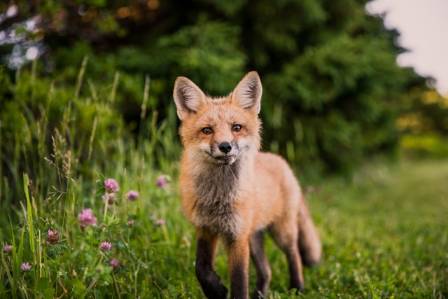
25 Intriguing Facts About Foxes
Foxes inhabit every continent except Antarctica, thriving in cities, towns, and rural areas alike. Even though they’re all around us, there’s still a sense of mystery surrounding these elusive creatures. Let’s uncover more about this fascinating animal and its unique traits, behaviors, and history.