Grove read
Annular Solar Eclipses: The “Ring of Fire” in the Sky
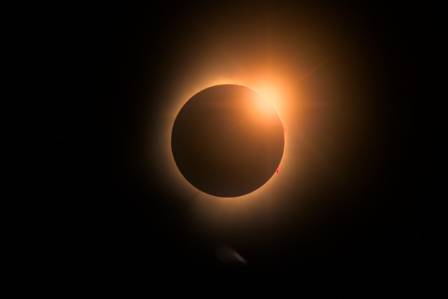
An annular solar eclipse is a rare and striking type of eclipse. It occurs when the Moon moves directly in front of the Sun but does not fully cover it. Instead, a bright outer ring of sunlight remains visible around the Moon’s silhouette. This glowing circle is known as an annulus, often described as a dramatic “ring of fire.”
Lucian Drake
Margin note
Reading tip
The full digest continues below among botanical margin notes.
Grove
Olive Digests
An annular solar eclipse is a rare and striking type of eclipse. It occurs when the Moon moves directly in front of the Sun but does not fully cover it. Instead, a bright outer ring of sunlight remains visible around the Moon’s silhouette. This glowing circle is known as an annulus, often described as a dramatic “ring of fire.”
This phenomenon happens only when the Moon is near the farthest point of its orbit around Earth, making it appear slightly smaller than the Sun in our sky.
The 2023 Annular Eclipse
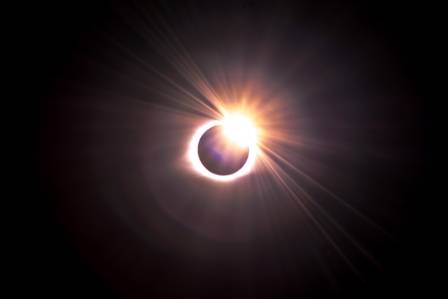
One notable example is the 2023 annular solar eclipse. Observers captured stunning images showing the Moon aligned with the Sun at peak alignment, with the maximum phase framed by the moments just before and after full coverage. These observations were taken using specialized solar telescopes, such as hydrogen-alpha instruments, which allow detailed viewing of solar structure during eclipses.
Why Annular Eclipses Occur
The Moon does not travel around Earth in a perfect circle. Its orbit is slightly elliptical, meaning its distance from Earth changes over time. As a result, its apparent size in the sky also varies.
When the Moon is closer to Earth, it can completely cover the Sun, producing a total solar eclipse. However, when it is near apogee—the most distant point in its orbit—it appears smaller than the Sun’s disk. If alignment occurs at this time, the Moon cannot fully block the Sun, resulting in an annular eclipse.
What You See During an Annular Eclipse
An annular eclipse unfolds in stages. It begins as a partial eclipse, when a dark curve gradually appears along the Sun’s edge. As the Moon continues moving, more of the Sun is obscured, and daylight slowly changes in intensity and quality. Shadows may sharpen and the environment can take on an unusual tone.
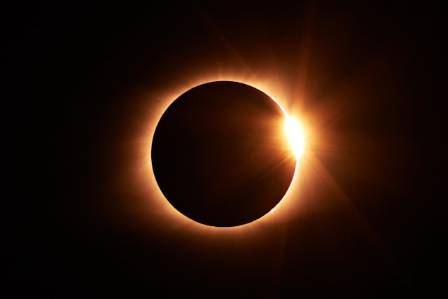
At maximum eclipse, the Moon sits centered over the Sun, leaving a brilliant ring of sunlight around its dark outline. This is the famous “ring of fire.” Unlike a total eclipse, the sky does not become fully dark, but the lighting can feel unusual or slightly eerie. Subtle environmental changes, such as temperature drops and shifts in animal behavior, may also occur.
After this peak moment, the Moon continues its path, and the ring gradually breaks apart. The event then returns to a partial eclipse before ending completely.
Duration of Annular Eclipses
Although the full eclipse event can last several hours, the true annular phase is relatively brief, usually only a few minutes. The partial phases before and after can extend for two to three hours depending on the observer’s location relative to the eclipse path.
Because the Moon appears smaller than during a total eclipse, it takes longer to pass fully across the Sun’s face, which contributes to the extended overall timeline.
How Often They Occur
Annular eclipses are relatively uncommon compared to other eclipse types. They occur only when the Moon is near apogee at the moment of alignment with the Sun and Earth.
On average, somewhere on Earth experiences an annular eclipse roughly every three to five years. However, they are not evenly distributed geographically. Regions closer to Earth’s polar areas tend to witness them more frequently due to subtle differences in viewing geometry caused by Earth’s shape and the Moon’s distance.
Hybrid Solar Eclipses
In some cases, an eclipse can shift between total and annular along different parts of its path. This rare event is called a hybrid solar eclipse. Depending on where an observer is located, the same eclipse may appear as total in one region and annular in another.
Safe Viewing Is Essential
As with all solar eclipses, proper eye protection is absolutely necessary. Even during an annular eclipse, the Sun is never fully covered, and direct viewing without certified solar filters can cause serious eye damage.
Special eclipse glasses or approved solar viewing equipment must always be used to observe the event safely.
Annular eclipses combine precise orbital mechanics with breathtaking visual beauty. The “ring of fire” is a reminder of the delicate alignments that govern our solar system—and how even small variations in distance can create some of the most spectacular sights in the sky.
More along this branch
LEAF · en

15 Races in the US That Every Runner Needs To Do
For runners, the motivation to tie up our shoes is as varied as the races themselves. We chase personal goals, the thrill of competition, the weight of a finisher's medal, and the incredible community spirit. The real challenge isn't getting out the door, but choosing which iconic event to target. To help you decide, we've curated a list of the most legendary and breathtaking races across the United States.
LEAF · en

Famous Sunflower Paintings by Celebrated Artists
Sunflowers have long held a cherished place in the art realm, standing as enduring symbols of joy, vitality, and nature’s effortless beauty. Across centuries, countless master artists have been enchanted by the flower’s radiant allure, producing timeless works that continue to inspire and uplift audiences worldwide. In this article, we’ll explore some of the most iconic sunflower paintings by renowned creators, highlighting their artistic genius and the everlasting charm of these golden blooms.
LEAF · en

5 Tips For Maintaining Family Harmony
Everyone desires the happiness of their family.
LEAF · en

Qingdao Zhanqiao Pier, One Of The Most Famous Piers In China
As one of China's most celebrated piers, Zhanqiao Pier stands as both a historical monument and cultural symbol. Originally constructed during the German concession in 1891, this 440-meter-long pier has witnessed Qingdao's transformation from a colonial port to a modern metropolis.
LEAF · en

Easy Homemade Fruit Jelly
Making your own fruit jelly at home is a rewarding experience. Bursting with natural colors and fruity flavors, this easy recipe lets you enjoy a sweet treat without relying on store-bought options. Whether you’re hosting a summer gathering, making a playful dessert for children, or looking for a quick fruity snack, this homemade fruit jelly is simple to prepare and always satisfying.
LEAF · en
Kopsia Plant Care Guide
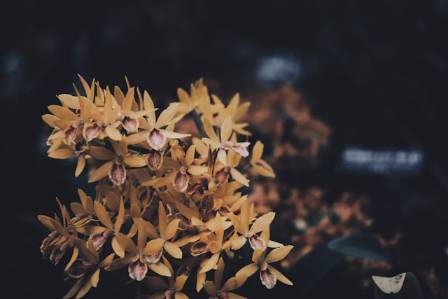
Kopsia, a striking tropical ornamental plant, flourishes in consistently warm, humid environments. Known for its glossy leaves and charming blooms, it requires attentive care to grow successfully, especially outside its native climate. Below is a complete care guide to help you grow a healthy Kopsia at home or in your garden.