Rare Discovery in Bavaria: The Snow-White Fox and the Science of Leucism

Grove read

Rare Discovery in Bavaria: The Snow-White Fox and the Science of Leucism

A recent rare sighting in Bavaria stirred excitement among nature lovers and experts alike: near Munich, a nature photographer encountered a completely white fox at dusk—a striking anomaly that sparked curiosity about its unusual appearance. This article delves into the story behind the discovery, the biological phenomenon that causes white fur in red foxes, and why similar traits appear in other animals.

M

Margaret

Margin note

Reading tip

The full digest continues below among botanical margin notes.

Grove

Olive Digests

A recent rare sighting in Bavaria stirred excitement among nature lovers and experts alike: near Munich, a nature photographer encountered a completely white fox at dusk—a striking anomaly that sparked curiosity about its unusual appearance. This article delves into the story behind the discovery, the biological phenomenon that causes white fur in red foxes, and why similar traits appear in other animals.

The Discovery: A Snow-White Fox in Munich’s Outskirts

Nature photographer Dominik Reigl stumbled upon the rare animal during one of his regular exploration tours in the Munich district. After a largely uneventful outing, he was preparing to leave when he spotted “a small, completely white fox with blue eyes”—a sight he described as a unexpected surprise. To protect the young fox from disturbance by curious onlookers, Reigl chose not to disclose the exact location. The Bavarian Society for the Protection of Birds (LBV) confirmed the animal is a red fox (Vulpes vulpes), distinguished by its snow-white fur rather than the species’ typical reddish-brown coat.

Not an Arctic Fox, Nor an Albino

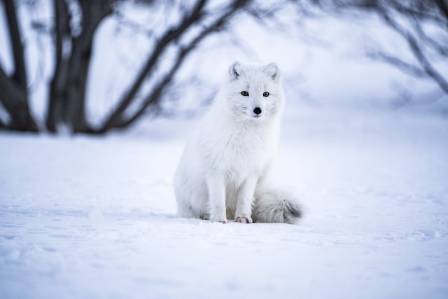
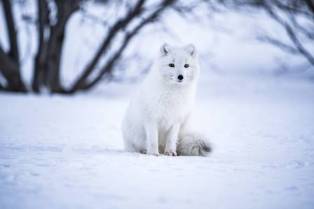
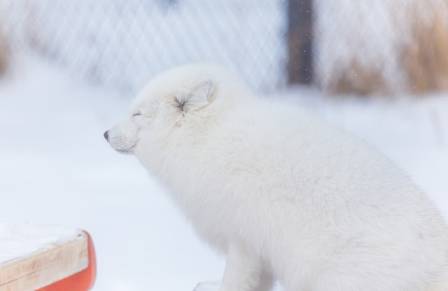
At first glance, the white fox could be mistaken for an Arctic fox, but Arctic foxes have small round ears and are not native to Germany. It is also not an albino, a common misconception. Albino animals lack all pigment, resulting in red or pink eyes—yet this fox has bright blue eyes. Instead, its white fur stems from a genetic condition called leucism, which affects pigment production in fur or feathers while leaving eye color intact (eyes may be blue, brown, or other natural hues). This pigment disorder is more commonly observed in birds like thrushes or crows but is extremely rare in red foxes.

Leucism: The Science Behind White Fur/Feathers

Leucism is a naturally occurring genetic peculiarity characterized by partial or complete loss of color in fur, feathers, or skin. Unlike albinism, which involves a lack of pigment production (even with functional pigment cells), leucism occurs when pigment cells are absent entirely in affected areas or gradually break down over time. This is caused by genetic defects that hinder the formation of new pigment cells. The condition can manifest as patchy white spots or full white coverage, and it affects a range of animals—from birds and mammals to reptiles and amphibians. For the red fox in Bavaria, leucism resulted in an entirely white coat, a rare full-expression of the trait.

White Feathers in Urban Birds: A Common Sight

While fully white red foxes are rare, leucism is frequently observed in urban birds—especially blackbirds. Normally black, blackbirds with partial white plumage stand out in cities, catching human attention. According to the Nature and Biodiversity Conservation Union (NABU), other dark-colored urban birds like house sparrows, jackdaws, and carrion crows are also affected, though leucism is most prevalent in blackbirds. This urban prevalence has led experts to explore links between city environments and the expression of the trait, though the exact connection remains under study.

Key Differences Between Leucism and Albinism
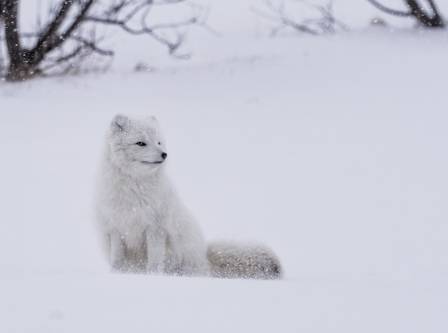
Though both conditions result in pale or white appearance, leucism and albinism are biologically distinct. Albinism is caused by a lack of melanin production, even when pigment cells (melanocytes) are present, leading to white fur/feathers, pink/red eyes (due to blood vessel visibility), and often pale skin, beaks, or feet. Leucism, by contrast, involves the absence or degradation of pigment cells themselves—so eye color remains natural (blue, brown, etc.), and non-feathered/non-furred areas (like skin or beaks) are unaffected. This difference is critical: the Bavarian fox’s blue eyes immediately ruled out albinism, pointing to leucism as the cause.

Survival Challenges for Leucistic Animals

Leucistic animals face unique challenges in the wild. Their unusual coloration makes them more visible to predators, as camouflage is compromised. They may also struggle to attract mates, as many species rely on natural coloration for courtship displays. Exact statistics on leucism are scarce due to a lack of systematic surveys, but experts estimate it affects only a small single-digit percentage of animal populations. For the young white fox in Bavaria, these challenges highlight the importance of protecting its location to minimize human disturbance.

What Causes Leucism? Genetics, Environment, and Age

The triggers for leucism are diverse. Hereditary factors are a primary cause—genetically affected animals may gradually lose more pigment over their lifetimes. Environmental factors like diseases or nutritional deficiencies can also play a role, similar to how white spots form on human fingernails due to nutrient gaps. Frequent molting, especially in urban areas, may exacerbate patchy color loss, as aging birds lose more pigment cells and develop additional white spots. For the Bavarian fox—relatively young with a fully white coat—experts suspect it was born with the trait, pointing to genetics as the primary driver.

Urban Observations: Leucism in Human-Altered Landscapes
NABU notes a potential link between urbanization and leucism, though whether cities promote or reduce the trait remains unclear. Frequent molting in urban birds, possibly due to environmental stressors or diet, may contribute to increased white plumage. Urban residents often report sightings of leucistic birds—like the nearly all-white blackbird in Berlin’s Steglitz neighborhood, which became a local landmark. These sightings offer valuable opportunities for citizens to observe and document rare biological traits, bridging the gap between everyday life and wildlife science.

More along this branch

LF

LEAF · en

Interesting Facts About Ducks You May Not Know

Interesting Facts About Ducks You May Not Know

If you spend time around animals living in sanctuaries, you may notice that every resident has its own personality, habits, and unique behaviors. Many people have never had the chance to meet individual animals and understand their daily lives, so we have created a collection of interesting facts to help people learn more about these amazing creatures. Ducks are intelligent, fascinating animals that deserve more attention and appreciation.

LF

LEAF · en

The 10 Most Powerful Classic Muscle Cars

The 10 Most Powerful Classic Muscle Cars

When it comes to high-powered muscle cars and unadulterated American horsepower, Carly Simon hit the nail on the head: these truly were the good old days. The Chevrolet Camaro ZL1 cranks out a minimum of 650 SAE net horsepower. Ford’s Shelby GT500 raises the bar to 760 horses. Still not enough? Dodge’s Hellcat Redeye Jailbreak models push the envelope to a whopping 807 horsepower. All these modern beasts fire up with a single turn of the key (or press of a button), can run 100,000 miles without a tune-up, and deliver fuel efficiency no worse than the 145-horsepower 1982 Camaro Z-28.

LF

LEAF · en

Smart Casual for Men: The Definitive 2025 Style Guide

Smart Casual for Men: The Definitive 2025 Style Guide

Smart casual remains one of the most elusive dress codes in men’s fashion—neither overly formal nor purely casual, it balances polish and comfort in a way that adapts to countless contexts. The Oxford Dictionary defines it as “neat, conventional, yet relatively informal in style,” but this vague description leaves plenty of room for interpretation. In 2025, the term has evolved beyond outdated rules, becoming a flexible framework that reflects personal style while respecting occasion norms. Unlike rigid dress codes of the past, modern smart casual is as much a mindset as a set of garments—prioritizing well-maintained pieces, intentional coordination, and a balance between refinement and relaxation. Whether you’re dressing for a work lunch, a weekend brunch, or a casual client meeting, mastering smart casual means understanding how to blend elevated basics with casual staples, adjust for context, and infuse personality without sacrificing polish.

LF

LEAF · en

The Anchor Point: Mastering King-Size Bed Styling for Every Aesthetic

The Anchor Point: Mastering King-Size Bed Styling for Every Aesthetic

In the realm of interior design, the king-size bed is more than furniture; it is the gravitational center of the master bedroom. A well-appointed king bed anchors the space, dictating the room’s aesthetic and setting the tone for rest and rejuvenation. Whether you are cultivating a serene minimalist retreat or a bold modern sanctuary, these styling strategies will help you harness the full potential of your space with confidence and flair.

LF

LEAF · en

The Coolest New Supercars of 2025

The Coolest New Supercars of 2025

The term “supercar” never fails to ignite excitement—for me and countless enthusiasts alike. Since the 1966 Lamborghini Miura unofficially pioneered the segment, exotic cars have delivered mind-blowing power, precision handling, and head-turning style to those who can afford them (and I’m still holding out hope to join that club someday). What’s even more thrilling is that automakers—both established and new—continue to outdo each other with fresh releases, pushing the boundaries of what’s possible with four wheels and a powertrain. In recent years, models like the McLaren Artura, Rimac Nevera, and Maserati MC20 have redefined the genre, and 2025 promises to be no less extraordinary. After sifting through numerous upcoming releases, I’ve narrowed down the coolest supercars confirmed or expected to hit the scene this year—each one a testament to automotive innovation and performance.

LF

LEAF · en

Polar Bears: Giants of the Arctic

Polar Bears: Giants of the Arctic

Polar bears (Ursus maritimus) are close relatives of brown bears but have evolved to thrive in snowy, icy habitats, inhabiting some of the coldest regions in North America. Their black skin helps absorb heat from the sun, while their thick, white fur provides insulation, repels water, and offers camouflage against the snow and ice. Large, webbed paws make them exceptional swimmers, allowing them to navigate the Arctic waters with ease.