Grove read
Knowing Bird Toucan, A Colorful Icon of the Rainforest
When people hear the word toucan, they often picture a rainforest bird sitting high among the trees, instantly recognizable by its enormous, brilliantly colored bill. With its vivid appearance, playful character, and unusual behaviors, this tropical bird has fascinated nature enthusiasts and wildlife photographers for generations.
Lachlan Hayes
Margin note
Reading tip
The full digest continues below among botanical margin notes.
Grove
Olive Digests
When people hear the word toucan, they often picture a rainforest bird sitting high among the trees, instantly recognizable by its enormous, brilliantly colored bill. With its vivid appearance, playful character, and unusual behaviors, this tropical bird has fascinated nature enthusiasts and wildlife photographers for generations.
Yet there is far more to the toucan than its remarkable appearance. These birds have an important place in tropical ecosystems and possess surprisingly sophisticated vocal behaviors. From their unusual bills to their role in spreading seeds, toucans are among the most fascinating birds found in the rainforest.
Let’s take a closer look at the life, characteristics, and ecological importance of this colorful bird.
Meet the Iconic Toucan
The toucan is undoubtedly one of the most recognizable birds in the world. Its enormous bill can approach the length of its body, creating an appearance that seems almost disproportionate.
Despite its size, the bill works remarkably well for the bird. Combined with plumage that may feature glossy black, bright yellow, vivid red, and other striking colors, the toucan looks almost like a living work of tropical art.
Its appeal goes beyond appearance. Toucans are intelligent, inquisitive, and playful birds. They may leap between branches, handle food with their bills, or toss pieces of fruit into the air before catching them. Their active and entertaining behavior is one reason these rainforest birds have attracted admirers around the world.
General Information About Toucans
Toucans are native to the tropical regions of Central and South America and are especially associated with the Amazon rainforest. They belong to the family Ramphastidae, which contains approximately 40 species of toucans along with their close relatives, the toucanets and aracaris.
These birds are particularly well adapted to humid, forested environments. Lowland rainforests provide them with tall trees for shelter and abundant fruit for food. Depending on the species and location, some toucans also inhabit mountainous cloud forests and dry tropical forests.
Because they depend heavily on forest canopies, the destruction and fragmentation of tropical forests can have serious consequences for their populations.
Unique Characteristics of the Toucan
Several distinctive features separate toucans from many other birds. Their oversized bills, colorful plumage, specialized feet, and unusual calls all contribute to their unique appearance and behavior.
The Famous Bill
The toucan’s bill is by far its most recognizable characteristic. It is enormous, brightly colored, and appears as though it should be extremely heavy. Surprisingly, however, it is relatively lightweight.
Much of the bill is composed of keratin, the same lightweight structural material found in human fingernails. This construction allows the bill to become extremely large without placing an excessive burden on the bird.
The bill can display combinations of orange, yellow, green, and red. These vivid colors may have several functions, including attracting potential mates and displaying to rivals. The bill also contributes to temperature regulation. Toucans can adjust blood circulation through the bill, allowing it to release heat in the warm rainforest environment.
The bill is also a practical feeding tool. Toucans use it to reach fruit, access difficult spaces such as nests and crevices, and defend themselves when necessary. While feeding, they frequently throw fruit upward and catch it in their open bills with impressive precision.
Body Features
Toucans are medium-sized birds with relatively short wings and sturdy bodies. Many species have predominantly glossy black plumage combined with white, yellow, or red markings around the throat, chest, or tail.
Their legs are powerful, and their feet are zygodactyl, meaning two toes point forward while the other two point backward. This arrangement gives them an excellent grip when they move along branches.
Body size differs considerably among species. Smaller aracaris may measure around 11 inches, while a Toco Toucan can grow to more than 25 inches in length.
Despite their impressive appearance, toucans are not especially speedy fliers. Instead, they generally prefer moving through the canopy by hopping or gliding from one branch to another.
Vocal and Social Behavior
Toucans have distinctive voices that differ considerably from the songs and chirps produced by many other birds. Their calls may sound like frog-like croaks, clicking noises, or sharp, harsh yelps.
Each species has its own characteristic vocalizations. These sounds can be used to communicate with members of a group and to establish or defend territory.
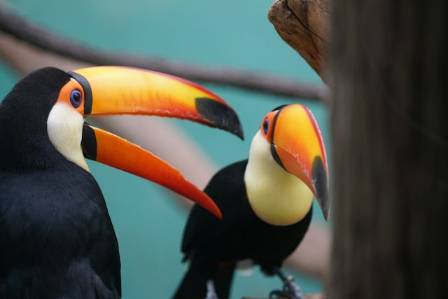
Toucans are also social animals. They are commonly seen in pairs or small groups, particularly when feeding. Their playful interactions may include bill fencing and passing food between individuals, making them especially entertaining birds to watch.
Different Types of Toucans
Approximately 40 species of toucans are recognized, and each has its own combination of colors, patterns, and physical characteristics.
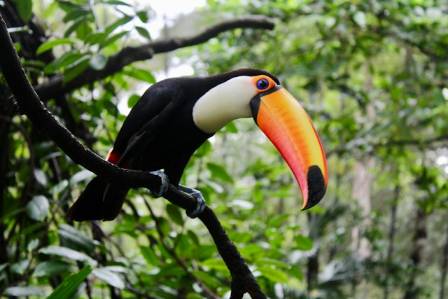
The Toco Toucan is the largest and perhaps most famous species. It is easily recognized by its brilliant orange bill and strongly contrasting black-and-white body and is frequently represented in advertisements and cartoons.
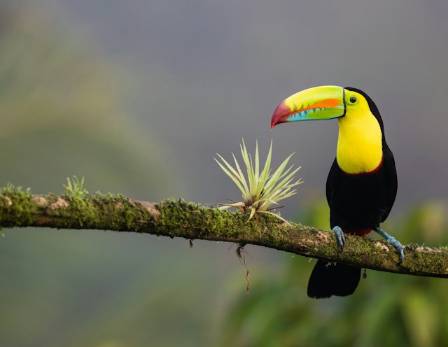
The Keel-billed Toucan is sometimes called the rainbow-billed toucan because its bill displays vivid green, orange, blue, and red coloration. It is smaller than the Toco Toucan but equally striking.
The Channel-billed Toucan has a large, dark bill and a comparatively restrained color pattern. Although it is not as brightly colored as some other species, it remains an attractive bird.
The Ariel Toucan is a less familiar species associated with Brazil’s Atlantic forests. Its vocalizations can sound surprisingly frog-like rather than resembling the calls people typically expect from a bird.
Aracaris and toucanets are smaller relatives within the Ramphastidae family. They share many characteristics with larger toucans, including colorful plumage and prominent bills, but are often more active and can display even more varied coloration.
Fascinating Facts About Toucans
The toucan’s bill may reach approximately one-third of the bird’s total body length. Despite its impressive dimensions, its lightweight construction allows the bird to handle it without difficulty.
Toucans also have an important ecological function. Fruit makes up a major part of their diet, and the seeds they consume can later be dispersed throughout the forest. In this way, toucans contribute to the regeneration and continued health of tropical forests.
Their feeding technique is another remarkable behavior. When a toucan finds fruit, it can toss the food upward and catch it in midair, performing the action with remarkable consistency.
A toucan living in the wild generally has a lifespan of around 15 to 20 years, although longevity can differ depending on the species and environmental conditions.
An adult toucan in good health commonly weighs approximately 400–600 grams, although exact body weight varies among species.
Conservation and Environmental Role
Not every aspect of the toucan’s story is positive. Like many animals that depend on tropical forests, toucans face threats from habitat destruction, illegal wildlife trade, and climate change.
Their strong dependence on dense forest habitats means that deforestation can have a major effect on their ability to survive and reproduce.
Several toucan species are classified by conservation organizations as near-threatened or vulnerable. Protecting toucans therefore involves more than preserving a visually spectacular bird. Their survival is closely connected to the protection of the wider rainforest ecosystem.
Toucans have also become recognizable symbols of rainforest conservation. Their ability to disperse seeds makes them especially important to forest regeneration, meaning their ecological value extends far beyond their striking appearance.
Toucan vs. Toucanet
Toucans and toucanets are sometimes mistaken for one another because both belong to the same bird family and share features such as colorful feathers and large bills.
The main difference is their size. Toucanets are considerably smaller and may weigh less than half as much as their larger relatives.
Their diets are also broadly similar. Fruit makes up much of their food, while insects and small reptiles may occasionally supplement their meals. Toucanets, however, often search for food at lower levels of the forest.
Their calls are generally softer and higher-pitched, and they may be somewhat more reserved than the often energetic and conspicuous larger toucans.
In simple terms, if the full-sized toucan is the colorful star of the rainforest, the toucanet is its quieter counterpart with its own distinctive charm.
Seeing Toucans Up Close
For visitors to Bali, bird parks can provide opportunities to observe these remarkable birds at close range. At Bali Bird Park, visitors can see a variety of exotic bird species, observe their behavior, hear their distinctive calls, and learn more about their place in the natural world.
Educational activities, interactive feeding experiences, and opportunities to photograph birds can provide visitors with a closer look at these fascinating animals.
Ultimately, the toucan is much more than a striking bird with an oversized bill. It is an intelligent, social animal that plays an important role in rainforest ecosystems. Its unusual anatomy, complex behavior, feeding habits, and contribution to seed dispersal all demonstrate the remarkable diversity and complexity of the natural world.
More along this branch
LEAF · en

Steps to Make Healthy, Delicious Salads
Looking for an easy and enjoyable way to hit your daily goal of four servings of vegetables? A large, well-composed salad is one of the simplest solutions.
LEAF · en

Guidelines for Selecting the Perfect Handbag Shade
Determining the ideal color for a handbag is a more nuanced task than it might initially appear. A well-chosen hue should complement your entire outfit while remaining appropriate for the current time of year. While modern fashion has moved away from rigid coordination rules, an mismatched choice can still disrupt the visual flow of an ensemble or appear out of place in certain settings.
LEAF · en
Fascinating Biological Traits and Behaviors of Woodpeckers
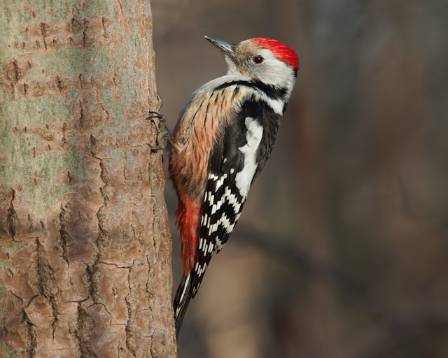
Woodpeckers possess a remarkable set of sensory adaptations and physical characteristics that allow them to thrive in forested environments. While many birds rely primarily on sight, woodpeckers may locate concealed prey through a combination of auditory cues and an advanced sense of smell. By striking a tree trunk, they can listen for hollow echoes that reveal the tunnels of wood-boring insects—a technique similar to thumping a melon to check for ripeness. Additionally, the audible sounds made by grubs as they feed on wood can be detected by these birds. Unlike many avian species, woodpeckers also have a keen olfactory sense, allowing them to smell the formic acid excreted by termites, bark beetles, and ants, which often carries a scent reminiscent of tart candy.
LEAF · en

Unlocking the Benefits of Youth Football Camps
Choosing to enroll children in summer football camps remains a favored decision for parents, irrespective of their child's gender. These camps, organized by professional football clubs, athletic groups, and occasionally local authorities, present a spectrum of opportunities. What do these camps offer, and are they genuinely worth exploring? This article delves into the advantages of a football summer camp.
LEAF · en

Embracing the Work-Leisure Revolution: A Guide to Effortless Transition
Fashion serves as a reflective mirror, mirroring the shifts in societal trends and norms. The past two years have witnessed a wardrobe revolution—dressing from the waist up for virtual meetings, swapping tailored ensembles for cozy joggers. However, a paradigm shift is underway, with Microsoft reporting that 50% of leaders anticipate a return to full-time, in-person work. As the professional world readies itself for a resurgence of office life, considerations about what to wear take center stage. Workwear is staging a comeback, but not in the traditional sense; think elevated athleisure meets power dressing.
LEAF · en

Manned Submersibles: Human Exploration of the Deep Ocean
Manned submersibles enable humans to reach the most inaccessible regions of the ocean. These specialized underwater vehicles allow a direct human presence in extreme marine environments, offering experiences and capabilities that other platforms, including larger submarines, cannot provide. Unlike full-sized submarines, submersibles generally have limited range and depend on a support ship for extended operations.