Grove read
Raccoons: Clever Survivors of the Wild and Urban World
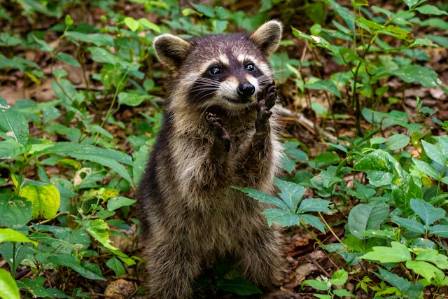
The raccoon (Procyon lotor) is classified among the carnivores, a mammalian group traditionally made up of animals that primarily consume meat. However, many members of this group are also capable of eating berries, fruits, vegetables, eggs, acorns, beech and hickory nuts, grains, grasses, and bark when other food sources are scarce. Carnivorous mammals have five toes and prominent canine teeth. Raccoons are omnivores, and the proportion of plant and animal foods they consume changes according to the season and what is available in their surroundings.
Arden Bellamy
Margin note
Reading tip
The full digest continues below among botanical margin notes.
Grove
Olive Digests
The raccoon (Procyon lotor) is classified among the carnivores, a mammalian group traditionally made up of animals that primarily consume meat. However, many members of this group are also capable of eating berries, fruits, vegetables, eggs, acorns, beech and hickory nuts, grains, grasses, and bark when other food sources are scarce. Carnivorous mammals have five toes and prominent canine teeth. Raccoons are omnivores, and the proportion of plant and animal foods they consume changes according to the season and what is available in their surroundings.
Raccoon Species and Physical Characteristics
Raccoons belong to the Procyonidae family, a name derived from “procyon,” meaning “to wash.” This family also contains the ringtail cat and coati and is probably related to the red panda as well. North America is home to seven recognized raccoon species and 25 subspecies. Their body weight generally ranges from 12 to 35 pounds, with females typically being smaller than males.
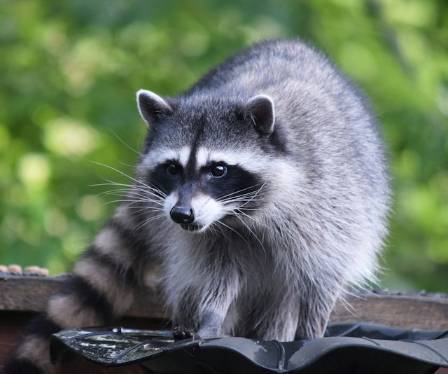
Their fur is generally grayish-brown. The tail is marked by five to seven complete dark bands separated by wider brown or gray bands, while the end of the tail is consistently dark. White, or albinistic, raccoons and black, or melanistic, individuals are also relatively common.
Exceptional Senses and Physical Abilities
Raccoons possess an exceptionally well-developed sense of touch, which is considered more advanced than that of other non-primate mammals. Their sensitive front paws allow them to manipulate objects with remarkable skill, helping them open doors, get into garbage containers, and cause all kinds of household mischief.
They also have excellent hearing and visual abilities suited to their primarily nocturnal lifestyle. Raccoons are highly capable climbers and are among the few mammals that can climb down a vertical tree trunk headfirst. They are strong swimmers as well and can cross rivers and lakes with ease, although they generally enter deep water only when trying to escape danger.
Do Raccoons Really Wash Their Food?
The idea that raccoons routinely wash their food is a familiar one, but evidence suggests that this behavior is mainly observed in captive animals. In the wild, the motion appears to be a fixed motor pattern associated with searching for aquatic prey rather than an intentional attempt to clean food.
The word “raccoon” comes from the Algonquin Indians and is translated as “he scratches with his hands,” a reference to the animal's distinctive use of its front paws.
Raccoons Seen During the Day
Raccoons are primarily nocturnal, which has led to another common misconception: that a raccoon seen during daylight hours must have rabies. In reality, healthy raccoons may come out during the day, particularly in urban environments, when they are hungry or when their den has been destroyed.
Nursing mothers may be especially likely to search for food both during the day and at night because they have to provide for their young. If a raccoon is behaving normally despite being active in daylight, it is probably not rabid and should generally be left undisturbed.
Habitat and Territorial Behavior
Raccoons are territorial animals that favor wooded environments containing ponds, lakes, marshes, or streams. They are generally associated with areas where forests and dependable sources of water are available.
When raccoons need to be released after rehabilitation, the release site should provide abundant water, protection from hunting, and people willing to supply food until the animals are capable of locating enough natural food on their own.
Dens and Winter Survival
Raccoons commonly establish dens in hollow trees, cracks or cavities among rocks, and underground shelters. During late autumn and early winter, their coats become considerably thicker as they develop a dense winter layer. They also consume as much food as possible in preparation for periods of severe weather.
During winter, raccoons may remain inside their dens for several weeks without eating. Despite this behavior, they do not actually hibernate.
Breeding Season and Pregnancy
Adult raccoons generally breed between January and June, although the exact timing depends on local environmental conditions. Females can experience their first breeding cycle at approximately ten months of age. Males are physically capable of reproducing during their first year, but they generally do not breed because they must compete with older males.
If a female does not become pregnant during her first estrus, she may enter estrus again about four months later. This later reproductive cycle accounts for some of the unusually late-born young. Most raccoon babies are born during April and May, following a gestation period of approximately 63 days.
Male raccoons do not participate in pregnancy or in raising the young. A litter may contain between one and seven babies, although four is the most common litter size.
What Newborn Raccoons Look Like
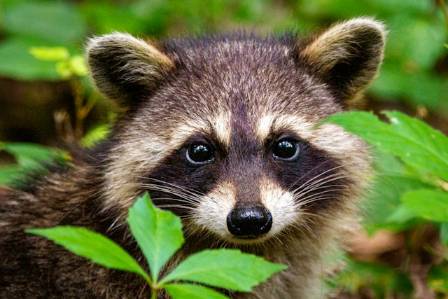
Newborn raccoons have very little fur and only a faint facial mask. Their characteristic tail rings may already be visible or may develop at around one week of age. Their ears are folded tightly against their heads, and their eyes remain closed. Their heads appear disproportionately large compared with the rest of their bodies.
At birth, they typically weigh only three to five ounces.
Early Development of Raccoon Cubs
When they are cold, hungry, or separated from a source of warmth, young raccoons may chatter, whine, or make birdlike twittering sounds. They are able to crawl using all four legs in an extended, spider-like manner, but at this stage they cannot climb or stand while supporting their entire body weight.
Their eyes usually open at approximately 21 days of age, followed shortly afterward by their ears. At this point they become particularly vocal, producing sounds such as churring, growling, hissing, and alarm snorts.
By five to six weeks old, most cubs are capable of walking, running, and climbing quite effectively. At around seven weeks, they begin engaging in energetic and sometimes rough play-fighting. These encounters may include growling, squealing, biting, wrestling, and copying defensive postures used by adult raccoons.
At approximately eight to nine weeks of age, wild cubs begin consuming solid food and start accompanying their mother outside the den.
Weaning and Family Life
By four months of age, young raccoons are normally completely weaned. A mother with cubs occupies a particularly respected position within raccoon social interactions. Other raccoons will often give way to a female accompanied by young when food is involved. This special status continues while the cubs remain with their mother.
In northern regions, including Virginia, young raccoons generally stay with their mother for nearly a year, remaining together until she is ready to breed again. In southern areas, the young may separate from their mother during autumn. Even after dispersing, however, family members may periodically reunite around dens or feeding locations.
Lifespan and Causes of Death
Raccoons can survive for as long as 16 years in the wild, although most do not live beyond five years. Research indicates that mortality is particularly high during the second year of life.
Human activities account for the majority of raccoon deaths, especially hunting, trapping, vehicle collisions, and attacks by dogs. Malnutrition and disease are additional causes. Natural predators include cougars, bobcats, wolves, coyotes, alligators, foxes, and great horned owls, but deaths caused by these predators are relatively insignificant compared with those resulting from human activities.
Raccoon Latrines
Despite their reputation for getting into garbage and making a mess, raccoons are actually very clean animals. In the wild, they commonly use shared latrine sites rather than randomly leaving their waste throughout their habitat.
Raccoons in Urban Environments
Raccoons are unusual among native mammals because urban development has not forced them into progressively smaller areas of natural habitat. Instead, they have adapted remarkably well to human environments.
Attics and chimneys can serve as dens or resting places, storm drains and sewers function as travel routes, and food left outside for pets can replace many of the foods they traditionally consume. This successful adaptation to cities and suburbs has also increased the frequency of encounters between raccoons and people, some of which can create problems.
Raccoons in Chimneys and Attics
The most frequent complaints involving raccoons arise when they establish dens inside chimneys or attics. The situation becomes particularly challenging when the den contains a mother and her cubs.
In most cases, the safest approach is to leave the family undisturbed until the mother naturally moves the young. This generally happens when the cubs reach approximately eight or nine weeks of age.
There have been cases in which pest-control companies were called to remove raccoons and trapped the mother before releasing her far from the original location. The chimney or attic was then sealed, leaving the babies behind. Without their mother, the cubs could ultimately die from starvation or suffocation.
When Raccoon Cubs Are Left Behind
Homeowners may sometimes hear the young crying after the mother has been removed and then contact a wildlife rehabilitator for help. However, many of the babies brought to rehabilitators are not true orphans. They are effectively victims of human intervention.
When someone reports a raccoon living in a chimney or attic but has not yet contacted a pest-control company, they should be encouraged to leave the animals alone. The mother will generally relocate her cubs once they are approximately eight to nine weeks old. Emphasizing this fact can often persuade homeowners to wait until the family has moved on naturally.
Hollow Trees and Hidden Raccoons
Another unfortunate danger for raccoons occurs when hollow trees are cut down with chainsaws. Hollow trees can provide important shelter for wildlife, including raccoons.
If someone is preparing to cut down a hollow tree, they should first be encouraged to check whether animals are living inside. Taking this simple precaution can prevent the accidental destruction of an occupied den.
Diseases and Parasites
Raccoons can become infected with a variety of diseases, including feline and canine distemper, rabies, leptospirosis, salmonellosis, tuberculosis, coccidiosis, and toxoplasmosis. They can also carry parasites such as roundworms, including Baylisascaris, tapeworms, flukes, and heartworms.
Canine distemper is a viral illness transmitted through direct or indirect contact. It causes more raccoon deaths than any other disease and has completely eliminated raccoon populations in some areas.
Canine Distemper and Rabies
Canine distemper cannot be transmitted to humans. Rabies, however, can be transmitted by any warm-blooded animal, although raccoons, foxes, skunks, woodchucks, and bats are considered high-risk species.
The symptoms of canine distemper in raccoons can closely resemble those of rabies. Both diseases affect the nervous system and may cause symptoms such as paralysis, self-injury, circling, and an unusual lack of fear toward humans.
The Two Forms of Rabies
Rabies can spread to humans through the bite or saliva of an infected animal. In animals, clinical rabies generally appears in two forms, commonly referred to as “dumb” and “furious” rabies.
An animal suffering from the “dumb” form may become lethargic and appear visibly ill, often with a fixed or staring expression. With the “furious” form, aggression is usually the most obvious symptom, and infected animals may attack species that would not normally be considered prey. Paralysis and convulsions can occur during the later stages of either form.
Raccoons and Rabies Risk
Although the raccoon is regarded as the primary rabies carrier in the Mid-Atlantic region, there has never been a documented human rabies case in medical history attributed to a raccoon.
People should still use caution if a raccoon appears ill or behaves unusually. However, unusual behavior does not mean that every raccoon is dangerous or infected. A raccoon should never be approached or captured by an untrained person. An attempt to catch the animal can result in a defensive bite, which would require the raccoon to be euthanized for rabies testing.
More along this branch
LEAF · en

8 Types of Cozy Cabin Retreats for Your Snowy Escape
There’s something almost spellbinding about stepping into a world blanketed in white, where silence reigns and the cold air sharpens every sense. For me, the ideal winter getaway is in a cabin that marries rustic warmth with creature comforts—wood crackling in the fire, deep views out frosted windows, and the scent of pine filling the air. Below are eight handpicked cabin styles designed to elevate your next snowy adventure.
LEAF · en
Health Benefits of Walnuts and How Much You Should Eat
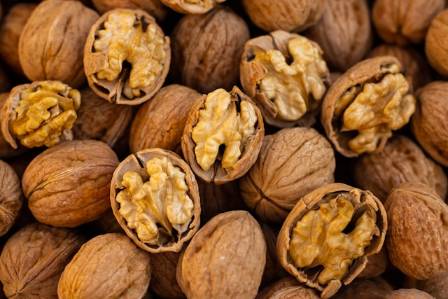
Walnuts have a long history that can be traced back to ancient Persia, where they were once considered a food reserved for royalty. Later on, they spread to California and eventually became one of the state’s top agricultural products, even ranking among the top 10 commodities in 2021.
LEAF · en

Kopsia Plant Care Guide
Kopsia, a striking tropical ornamental plant, flourishes in consistently warm, humid environments. Known for its glossy leaves and charming blooms, it requires attentive care to grow successfully, especially outside its native climate. Below is a complete care guide to help you grow a healthy Kopsia at home or in your garden.
LEAF · en

7 Essential Tips for a Thriving Indoor Windowsill Garden
Many people dream of nurturing a garden but are held back by a lack of outdoor space. Living in areas with long winters—like the Midwest—can make this even more challenging. But with a bit of creativity and planning, growing fresh herbs or greens indoors is absolutely possible. Whether it’s microgreens, herbs, or wheatgrass, all you need is a bright windowsill, a few basic tools, and the right knowledge to get started. Here are seven practical tips to help you create and maintain a healthy indoor windowsill garden year-round.
LEAF · en

I Tried French Onion Soup at 4 Popular Chains & This One Was Pure, Cheesy Perfection
There’s something irresistibly comforting about a warm, hearty soup on a cold day, and French onion soup is the ultimate cozy choice. Caramelized onions, rich broth, toasted bread, and melted cheese combine into a simple yet deeply satisfying dish.
LEAF · en

The Best Selling Vehicles Dominating British Roads Right Now
Fully electric vehicles secured an unprecedented thirty percent of the automotive market in the United Kingdom during the month of June, representing the highest performance observed throughout the current year. This surge helped propel overall vehicle registrations upward by eleven point four percent to hit a grand total of 213,166 units, according to recent data published by the Society of Motor Manufacturers and Traders. This exceptional performance marked the strongest showing for the month of June since the year 2019, with the expansion driven entirely by low-emission options as automakers continue to roll out more electric and hybrid models while fresh automotive brands enter the British marketplace. Consumer appetite for electric mobility was further accelerated by climbing fuel prices connected to ongoing geopolitical tensions in the Middle East.