Grove read
Santorini: The Greek Island of Dreams
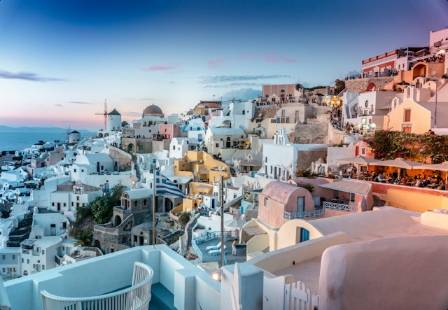
The phrase “Greek Isles” immediately brings to mind images of bright white houses clustered along steep hillsides, overlooking sparkling blue seas. Yet with more than 200 islands spread throughout the Aegean and Ionian seas, choosing where to begin can be difficult.
Tavian Rhodes
Margin note
Reading tip
The full digest continues below among botanical margin notes.
Grove
Olive Digests
The phrase “Greek Isles” immediately brings to mind images of bright white houses clustered along steep hillsides, overlooking sparkling blue seas. Yet with more than 200 islands spread throughout the Aegean and Ionian seas, choosing where to begin can be difficult.
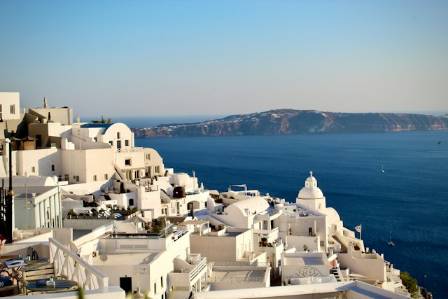
For many travelers, the first island that comes to mind is Santorini. Like the other islands around it, Santorini was once part of a larger landmass. Thousands of years ago, however, a massive volcanic eruption destroyed much of the island and created an enormous caldera. Today, the island’s whitewashed settlements cling to the dramatic edges of this volcanic crater, seemingly competing for the best views.
There is far more to Santorini than the scenery seen on postcards. Visitors can explore rural vineyards, ancient archaeological remains and beaches shaped by the island’s remarkable volcanic history.
Oia and the Classic Greek Island Landscape
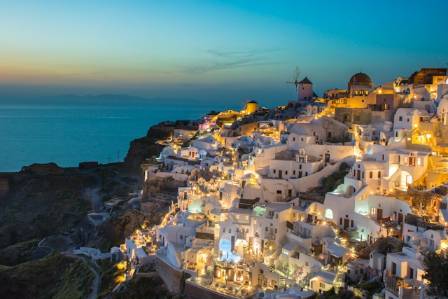
The village of Oia, pronounced “EE-ah,” represents one of the most recognizable expressions of Greek island beauty. Whitewashed homes and brilliant blue domes spread gracefully across the steep slope near the top of the cliffs.
The village contains some of the most famous viewpoints in the Greek islands, attracting photographers who search for the perfect composition. Artists are often captivated by Oia and choose to make the village their home. Honeymooners can find charming B&Bs where they can enjoy breakfast surrounded by unforgettable scenery.
At the quieter end of the village, an old windmill offers a reminder of a simpler and more traditional era. Along the cliffs, cocktail bars create romantic settings where visitors gather each evening to watch the famous Santorini sunset.
Why Santorini Is So White and Blue
Photographs often make it appear that the villages of the Greek islands are almost entirely white. On Santorini, however, the tradition of whitewashing the buildings originally served a practical purpose as well as an aesthetic one.
White surfaces reflect the intense heat of the sun, helping keep buildings cooler. The lime used to create the white coating also functions as a natural antiseptic. Local residents understood that it could help disinfect rainwater collected from rooftops.
The combination of white buildings and blue details is also especially appealing because the colours seem to echo the blue and white of the Greek national flag.
Santorini’s Cave Houses
Many of Santorini’s earliest homes were simple dwellings carved directly into the rock. Because building materials were limited on the island, excavating living spaces into the cliffs was a practical solution.
These traditional “cave houses” were surrounded by air-filled volcanic pumice, which gave them natural insulating properties. They could remain relatively cool during the summer and retain warmth during the winter.
What were once some of the island’s least expensive forms of housing gradually became highly desirable properties. As tourism developed, these former cave dwellings were transformed into upscale residences, hotels and restaurants.
A Landscape Created by Volcanic Fire
Beaches such as Vlychada on Santorini’s southern coast reveal just how strongly volcanic activity has influenced the island’s appearance. The unusual cliffs and shorelines are the result of thousands of years of volcanic processes.
Long before modern tourism existed, Santorini was already an important center of life in the Bronze Age. This period was ancient even to the Greeks who would later be described as “ancient.” During that era, the Minoans represented the earliest documented civilization in the Aegean, with their primary center on Crete.
Santorini was the largest Minoan city outside Crete. Around 1630 BC, however, the enormous eruption known as the “Minoan Eruption” dramatically altered the island.
The eruption was among the most powerful volcanic events known in human history. It expelled approximately 24 cubic miles of volcanic material, a volume at least four times greater than that released by the 1883 eruption of Krakatoa in present-day Indonesia.
This enormous event ultimately produced the sunken, crater-like landscape that defines Santorini today.
Exploring Ancient Akrotiri
Santorini has its own version of Pompeii: an ancient settlement that was buried and preserved beneath volcanic ash during the massive eruption.
The Bronze Age settlement near the modern village of Akrotiri continues to be excavated. More than 30 buildings can currently be viewed within a carefully designed archaeological structure, although only around 3 percent of the overall site has been uncovered.
Visitors can follow ramps through and around the remains, exploring the streets of this prehistoric settlement. Careful observation reveals features such as paved walkways, underground drainage systems and ceramic vessels that were left behind.
Some of the most remarkable discoveries from Akrotiri, including beautifully preserved wall paintings, elaborate furniture and decorated ceramics, are displayed primarily at the Museum of Prehistoric Thira in Fira, Santorini’s main town.
Santorini’s Ancient Wine Tradition
Santorini’s volcanic ground, abundant sunshine and dry climate create conditions that are particularly well suited to producing distinctive wine grapes.
Local winemakers have cultivated vines on the island since ancient times. To protect the plants from the island’s strong winds while also allowing them to collect moisture from the dew, growers traditionally train the vines into low, basket-like shapes.
The grapes produced by Santorini’s vines are both robust and sweet. Today, visitors can choose from roughly a dozen wineries where they can sample local wines while enjoying views of the island.
Volcanic Beaches of Santorini
Santorini’s beaches offer another opportunity to experience the effects of its unusual volcanic geology. Two black-sand beaches sit on either side of the steep mountain in the southeastern part of the island.
Along the southern coastline near Akrotiri, visitors can find several beaches displaying striking volcanic colours. White Beach is backed by pale, chalk-like cliffs and can only be reached by boat.
Red Beach gets its distinctive appearance from deposits of iron within the surrounding volcanic material. Reaching it requires a challenging walk around the bluff, but the unusual colours make the effort worthwhile.
The Endless Views of Santorini
Almost everywhere on Santorini, visitors are surrounded by remarkable scenery. The island’s combination of cliffs, volcanic formations, whitewashed villages, blue water and dramatic horizons creates views that are difficult to forget.
Whether you spend your days discovering archaeological sites, vineyards and unusual beaches or simply settle onto a terrace above the cliffs and admire the enormous caldera, Santorini has a remarkable ability to fulfill the classic dream of a Greek island vacation.
More along this branch
LEAF · en
What Are the Best Beaches Near Seattle?
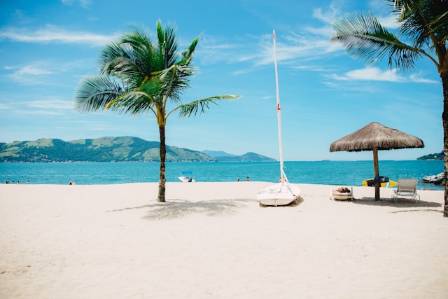
When you need a break from city routines and want a short escape, there are several scenic beaches near Seattle, Washington that are ideal for a weekend retreat. Head toward Olympic National Park to experience the well-known Ruby Beach, where dramatic sea stacks rise from the shoreline and driftwood is scattered across the sand. Alternatively, you can spend time in the relaxed coastal community of Seabrook and unwind in a seaside cottage. The region also offers plenty of activities, attractions, and outdoor experiences to explore.
LEAF · en

The Mayo Clinic Diet: A Sustainable Approach to Lifelong Weight Management
The Mayo Clinic Diet is a long-term lifestyle program designed to help people achieve and maintain a healthy weight for life.
LEAF · en

5 Things You Need To Know About Lions
The lion (Panthera leo), a member of the feline family (Felidae), is a powerfully built creature, second in size only to the tiger. Renowned as an apex predator, it exists without natural enemies.
LEAF · en

Who Leads the Global Robot Industry?
The robotics industry has officially entered its "iPhone era." After decades of sky-high price tags ($100,000+) and programming headaches, firms like Standard Bots now deliver plug-and-play collaborative robots for just $37,000, while Chinese manufacturers flood the market with viable alternatives.
LEAF · en
Smart Buying Tips for Vacation Rentals
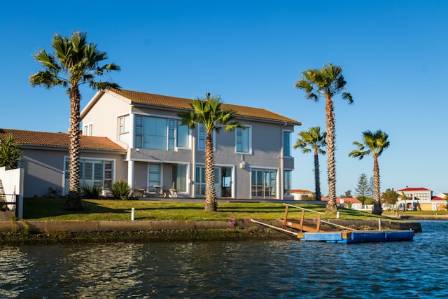
To maximize your investment returns, look for properties in prime destinations that offer high-demand features like pools, hot tubs, or scenic views. Prioritize locations with lower overhead to boost your capitalization rate.
LEAF · en
12 Warm Color Schemes Recommended by Interior Designers
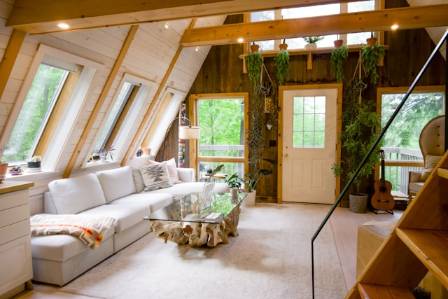
These 12 Designer-Selected Warm Color Schemes Offer Unmatched Coziness When you want your living space to feel like the visual counterpart of curling up in bed on a cool autumn day with no plans that force you to leave the comfort of your covers, a warm color palette is exactly what you need. Shades of red, brown, cream, and more can help craft a welcoming atmosphere in any room, regardless of your personal style.