Men’s artistic gymnastics (MAG) stands as the cornerstone of gymnastics, with roots tracing back to ancient Greece, where athletes trained in strength, flexibility, and precision to prepare for warfare and competition. Recognized as the oldest form of organized gymnastics, it evolved through centuries—from 19th-century European gymnasiums to its debut as an Olympic sport at the first modern Games in 1896—to become a showcase of human physical excellence. At the elite level, MAG athletes compete across six demanding disciplines: floor exercise, pommel horse, still rings, vault, parallel bars, and high bar. Each event demands a unique blend of core skills—strength, balance, coordination, agility, and mental fortitude—while pushing the boundaries of what the human body can achieve. Below is an in-depth exploration of each discipline, uncovering the technical nuances, historical context, and competitive standards that define men’s artistic gymnastics.
1.Floor Exercise: Grace, Power, and Precision on the Mat
The floor exercise is a dynamic blend of acrobatic tumbling, dance elements, and strength moves, performed on a 12x12-meter spring floor that provides rebound for high-flying maneuvers. Unlike women’s floor exercise, men’s routines do not include music, focusing instead on technical precision and seamless transitions. Athletes must utilize the entire mat, executing tumbling passes in multiple directions (forward, backward, sideways) to demonstrate versatility. A valid routine must include at least three acrobatic elements—such as forward/backward flips (saltos) with twists, double backflips, or layout somersaults—and one non-acrobatic element, which can be a balance move (e.g., a one-legged handstand, a split leap) or a strength hold (e.g., a planche). Transitions between tumbling passes and elements must flow with rhythm and harmony, avoiding pauses or awkward shifts. Judges score the routine based on difficulty (D-score) of elements, execution (E-score) for form and technique, and artistry (though less emphasized than in women’s gymnastics). Standout floor exercise athletes, such as Olympic champions Kohei Uchimura and Simone Biles (though Biles competes in women’s), are known for combining high-difficulty tumbling with flawless execution, turning the mat into a stage for athletic artistry.
2.Pommel Horse: The Ultimate Test of Control and Rhythm
Widely regarded as one of the most challenging MAG disciplines, the pommel horse demands exceptional upper-body strength, core stability, and precise hand-eye coordination. The apparatus consists of a wooden horse (160cm long, 35cm wide, 115cm high) with two parallel pommels (12cm in diameter) spaced 40-45cm apart. Gymnasts perform routines while gripping the pommels, executing continuous circular movements—swinging their legs around the horse in forward or backward arcs—without allowing any part of their body (other than their hands) to touch the horse or the floor during the routine. Basic skills include the “scissors” (alternating leg swings), “circles” (full rotations around the pommels), and “flairs” (dynamic, high-arching swings that require immense shoulder strength). Advanced routines incorporate combinations like “double leg circles with a twist” or “pommel to handstand transitions,” pushing the limits of control. Mastery of the pommel horse takes years of practice, as even a slight miscalculation in hand placement or leg movement can disrupt the rhythm and lead to a fall. Legendary pommel horse specialists, such as Romania’s Marius Urzică and China’s Xiao Ruoteng, are celebrated for their ability to maintain fluidity and precision through complex, high-speed sequences.
3.Still Rings: Strength, Stability, and Static Mastery
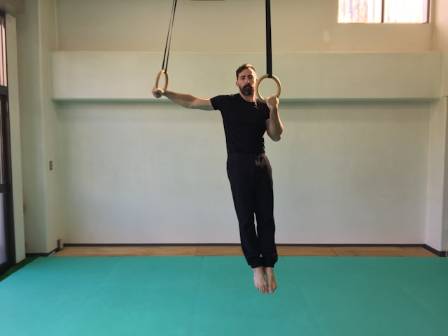
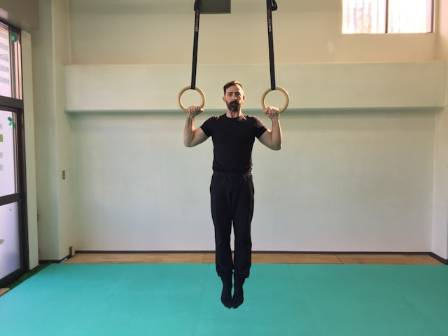
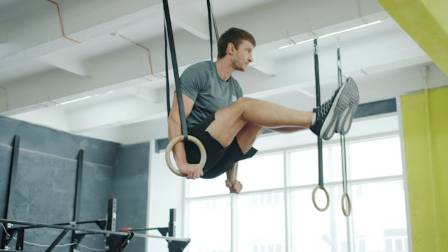
The still rings (or simply “rings”) is a discipline that highlights raw upper-body and core strength, as athletes perform on two suspended rings (2.8 meters long, 2.5 meters above the floor) attached to a rigid frame. Unlike other apparatus, the rings are not fixed—they swing freely, requiring gymnasts to control both dynamic movements and static holds. A valid routine includes a combination of swinging elements (e.g., back swings, front swings, giants) and static holds, which must be held for at least two seconds with the rings as still as possible. Key static holds include the “iron cross” (arms extended horizontally, body parallel to the floor), the “inverted cross” (upside-down cross), and the “planche” (body held horizontally with arms straight). Swinging elements often transition into holds or dismounts, which typically involve flips and twists before a standing landing. Judges score the routine on the difficulty of holds and swings, the stability of static positions (any movement of the rings deducts points), and the execution of the dismount. The still rings are often called the “ultimate strength test” in gymnastics; athletes like Russia’s Denis Ablyazin and Brazil’s Arthur Zanetti are renowned for their ability to hold seemingly impossible positions with unwavering stability.
4.Vault: Speed, Power, and Explosive Precision
The vault is a high-intensity discipline that combines sprinting, jumping, and aerial acrobatics, all performed in a matter of seconds. The apparatus consists of a runway (15 meters long), a springboard, and a vaulting table (1.2 meters long, 0.9 meters wide, 1.1 meters high). The routine begins with a sprint down the runway—gymnasts reach speeds of up to 25 km/h—to build momentum. They then hurdle onto the springboard, using the rebound to propel themselves over the vaulting table, executing a series of flips and twists in the air before landing on their feet on a padded mat. A valid vault must include a clear takeoff, a controlled flight phase, and a stable landing (any step, hop, or fall deducts points). Modern vaults are categorized by their entry (e.g., Yurchenko, Tsukahara, handspring) and the number of flips/twists (e.g., double backflip with two twists, front handspring with a 180-degree twist). Gymnasts typically perform two vaults in competition, with the average of the two scores counting toward their total. The vault demands explosive power (to achieve height and distance) and split-second timing (to execute twists mid-air); athletes like South Korea’s Yang Hak-seon and the United States’ Sam Mikulak are known for their high-risk, high-reward vaults that push the sport’s boundaries.
5.Parallel Bars: Versatility, Strength, and Dynamic Movement
The parallel bars consist of two wooden bars (3.5 meters long, 2.8 centimeters thick) set 42-52 centimeters apart and 1.75 meters above the floor. This discipline showcases a mix of swinging movements, static holds, releases, and dismounts, requiring both upper-body strength and rhythmic coordination. Gymnasts perform routines that include elements like “swing to handstand” (holding a handstand on the bars), “giants” (360-degree swings with the body fully extended), “dips” (lowering and raising the body by bending the elbows), and “releases” (letting go of the bars, performing a flip or twist, and re-grasping the bars). Transitions between elements must be smooth, and the routine must utilize the full length of the bars. Dismounts are a highlight, often involving high flips (e.g., triple backflip) or twists before landing. Judges score on difficulty, execution (form, control), and the variety of elements. The parallel bars allow for both power and grace; legendary gymnasts like Japan’s Hiroyuki Tomita and China’s Lin Chaopan excel at blending dynamic swings with precise holds, creating routines that balance strength and elegance.
6.High Bar: Aerial Artistry and Fearless Innovation
The high bar (or “horizontal bar”) is the most thrilling of the MAG disciplines, featuring high-flying swings, releases, and complex dismounts. The apparatus is a single steel bar (2.4 centimeters thick, 2.5 meters above the landing mat) suspended by cables from a rigid frame. Gymnasts perform routines that include “giants” (360-degree swings in a fully extended position), “kips” (using leg momentum to propel the body upward), “twists” (rotating the body mid-swing), and “releases” (letting go of the bar to perform flips or twists before re-grasping it). Advanced elements include “Tkatchev” (a release with a forward flip and re-grasp), “Kolman” (a backward flip with a twist), and “Gienger” (a high release with a layout flip). The routine ends with a dismount, which is often the most spectacular part—gymnasts execute multiple flips and twists (e.g., quadruple backflip) before landing on their feet. The high bar demands courage (releases require trust in one’s skills) and precision (a miscalculation in timing can lead to a dangerous fall). Iconic high bar athletes, such as Germany’s Fabian Hambüchen and Russia’s Nikita Nagornyy, are celebrated for their fearless innovation and ability to turn the bar into a platform for aerial artistry.