Grove read
What to see in Heidelberg, Germany
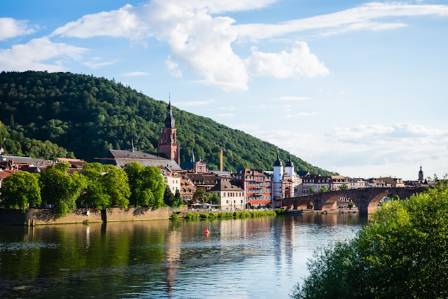
Heidelberg is a charming small city located along the Neckar River in the German state of Baden-Württemberg. It is often referred to as Germany’s most romantic city. Although it has suffered destruction multiple times throughout its long history, its ruins, architecture, and atmosphere continue to inspire artists and enchant both visitors and residents.
Blake Anderson
Margin note
Reading tip
The full digest continues below among botanical margin notes.
Grove
Olive Digests
Heidelberg is a charming small city located along the Neckar River in the German state of Baden-Württemberg. It is often referred to as Germany’s most romantic city. Although it has suffered destruction multiple times throughout its long history, its ruins, architecture, and atmosphere continue to inspire artists and enchant both visitors and residents.
Personal Experience in Heidelberg
I have been living in Heidelberg for two months. While that is far from enough time to fully understand the city, I have already found places I love and others I strongly recommend to anyone visiting this lively and beautiful destination.
Heidelberg Castle
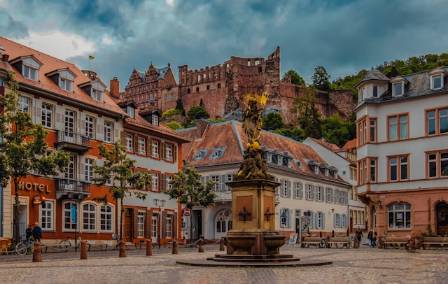
A visit to Heidelberg would feel incomplete without seeing its castle. It is often said that skipping the castle is like going to Rome without seeing its most famous landmark. Although commonly called a castle, it is actually a baroque ruin and one of the city’s defining symbols.
Reaching it involves a steep climb, but visitors can also take the Bergbahn funicular, which makes the journey easier and offers impressive views over the city—especially at sunset. The site is ideal for those interested in history, as it once served as the residence of the Prince Electors and was connected to important figures of the Holy Roman Empire, including Frederick V.
Admission typically includes the funicular ride, access to the castle courtyard, the German Pharmacy Museum, and the cellar area where the famous Heidelberg Tun, a massive wine barrel known worldwide, is displayed.
The Old Town (Altstadt)
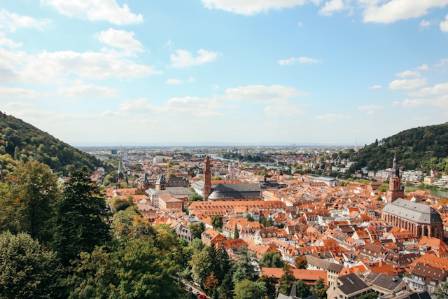
The Altstadt is not easily summarized in a single description. To truly understand Heidelberg, walking through its old town is essential. A free walking tour is highly recommended, as guides provide historical context and interesting stories that are easy to miss otherwise, such as the unusual tale behind the pretzel symbol found on one of the city’s church walls.
A good starting point is Bismarckplatz, where public transport converges. From there, Hauptstraße stretches through the heart of the old town, connecting key locations such as Universitätsplatz, Marktplatz, and Karlstor.
In Marktplatz, you will find the Heiliggeistkirche, a Gothic church historically linked to religious divisions between Catholics and Protestants. It also played a role in the founding of the University of Heidelberg and the Palatine Library. The Alte Brücke, commissioned by Karl Theodor, features statues including the ruler himself, the goddess Minerva, and the famous Brückenaffe monkey figure. Tradition says touching the statue brings fortune, prosperity, or even fertility.
Philosopher’s Walk
Another well-known attraction is the Philosophenweg, or Philosopher’s Walk. Although I have not personally completed it, it is highly recommended, especially on clear days. The path is somewhat steep, but the reward is a panoramic view of Heidelberg, the river, and the castle—scenery often featured on postcards.
Final Impression
Heidelberg may be small compared to major cities, but it is rich in history, charm, and memorable sights. Anyone who visits is likely to understand why poets, artists, and travelers have long been drawn to it—and perhaps even leave a piece of their heart behind.
More along this branch
LEAF · en
Is Kiwi Fruit Good for You During Pregnancy?
Kiwi, also known as Chinese gooseberry, is rich in essential nutrients and can be a great addition to your pregnancy diet. This small fruit offers a unique mix of vitamins, minerals, and fiber—plus a sweet, tangy flavor that may help satisfy pregnancy cravings in a healthy way.
LEAF · en

The Purple Swamphen
Last spring, during a three-month study abroad program in South Africa, I finally encountered one of my long-awaited lifer birds, the Purple Swamphen (Porphyrio porphyrio). I spotted it partially concealed among reeds in a large wetland within Wilderness National Park. After noticing me, the bird hurried across the water, attempting to disappear into the reeds on the opposite side of the shallow stream.
LEAF · en

20 of the world’s best soups
Pumpkin soup, tomato soup and other delicious dishes to satisfy your taste buds.
LEAF · en
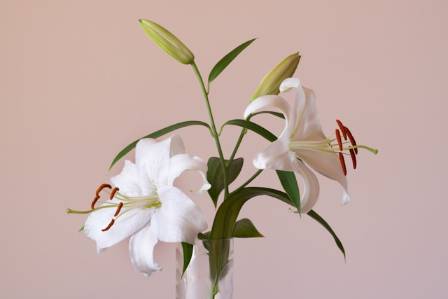
Fascinating Facts About Lilies
With more than 100 known species, lilies are among the most diverse and visually impressive flowers in the world. Their wide range of colors, dramatic shapes, and captivating fragrance have made them one of the most beloved flowers across the globe.
LEAF · en

What Is a New-Energy Vehicle?
When it comes to electric vehicle adoption, China stands in a league of its own. According to MIT Technology Review, China has held the title of the world’s largest EV market for the past eight years, selling an astonishing 6.8 million electric vehicles in 2022 alone. By comparison, the United States sold just over 800,000 EVs in the same year.
LEAF · en
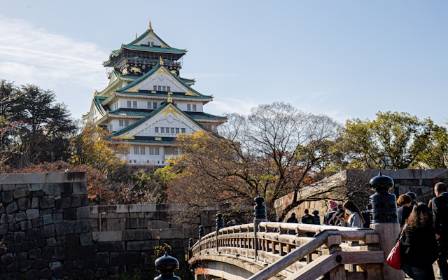
Osaka Castle: A Journey Through Four Centuries of Japan’s Turbulent Past
Osaka Castle stands as an enduring icon of Japan’s feudal heritage, its walls and towers bearing witness to over 400 years of conflict, reconstruction, and cultural transformation. Commissioned in 1583 by the legendary warlord Toyotomi Hideyoshi, this grand fortress has weathered sieges, fires, and the winds of modernization, yet remains a powerful symbol of Japan’s resilience and historical depth. From its origins as a monument to unification to its current role as a cherished cultural hub, Osaka Castle’s story is deeply intertwined with Japan’s evolution into the nation it is today. Let’s explore the rich and complex history of this remarkable structure.