Grove read
The Canada Goose Uncovered
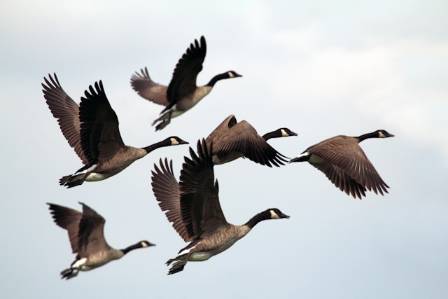
Soaring gracefully through the sky or casually grazing on a city lawn, the Canada goose is one of North America’s most captivating waterfowl.
Hannah Price
Margin note
Reading tip
The full digest continues below among botanical margin notes.
Grove
Olive Digests
Soaring gracefully through the sky or casually grazing on a city lawn, the Canada goose is one of North America’s most captivating waterfowl.
With its large size, elegant plumage, and remarkable adaptability, this bird thrives in both icy wetlands and bustling urban environments. In this article, we’ll explore the Canada goose’s behavior, nesting habits, migration patterns, and its current status across Indiana.
Quick Facts
Height: 20–48 inches
Weight: 3–24 pounds
Average Lifespan: 10–25 years
Maximum Lifespan: Up to 42 years in captivity
Flight Speed: 10–50 mph
Range: Most of the continental U.S. and Canada, northern Mexico in winter
Habitats: Wetlands, ponds, lakes, rivers, coastal areas, and urban retention or detention basins
Diet: Grains, grasses, succulents, forbs, pondweeds, and urban lawns
Overview and General Behavior
The Canada goose is one of the largest species in the waterfowl family. In Indiana, the primary breeding subspecies is the giant Canada goose (Branta canadensis maxima). Historically, these birds were common across the Midwest, but unregulated hunting and wetland drainage sharply reduced their numbers, and the giant Canada goose was once believed extinct.
In 1962, Dr. Harold Hanson of the Illinois Natural History Survey identified the geese wintering near Rochester, Minnesota, as giant Canada geese. Additional small populations were later discovered in the region. Conservation efforts have successfully re-established giant Canada geese throughout their historic range, and they are now common across Indiana. Significant populations are found around the Indianapolis area, the northern third of the state, southwestern coal company lands, and many state Fish and Wildlife Areas.
Canada geese exhibit significant size variation. North America hosts seven other subspecies, ranging from about 3 to 24 pounds. The giant subspecies averages 12 pounds but may be heavier. Some other subspecies also migrate through Indiana during spring and fall.
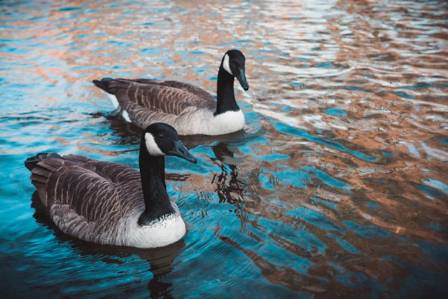
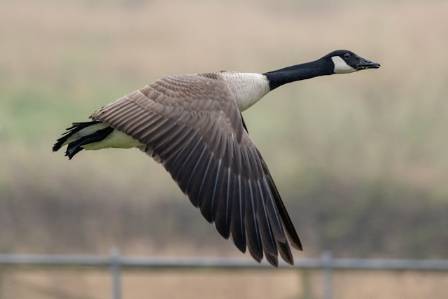
Adult Canada geese share a similar appearance regardless of size. They have gray-brown wings, backs, sides, and chests; black tails, legs, feet, bills, and heads; and long black necks marked by distinct white cheek patches. Males are usually larger than females, though their coloring is identical. Goslings hatch light yellow with greenish-gray heads and gradually darken as they mature, resembling adults around 70 days after hatching, when they gain the ability to fly.
Canada geese generally live 10–25 years, though individuals have been documented exceeding 30 years in the wild and one captive goose lived over 40 years.
Nesting and Breeding
Most Canada geese pair with a mate around age three, though some start at two. Pairs usually remain together for life, and if one partner dies, the surviving goose often finds a new mate within the same breeding season. In Indiana, geese form pairs for nesting in mid- to late February, with nesting activity taking place from mid-March to late April.
Nests are typically located within 150 feet of water. Preferred sites provide cover and include islands, muskrat lodges, man-made nesting platforms, shoreline vegetation, the base of mature trees, shrubs, dense cattails, flower boxes, urban landscaping, and even rooftops or doorways.
Both parents defend the nest, and the female lays eggs roughly every 1.5 days. Incubation lasts 28 days once all eggs are laid. Clutch sizes average five eggs, though 2–12 is possible. Nests range 12–40 inches in diameter and are constructed from plant materials and feathers plucked from the female. All eggs typically hatch simultaneously, and goslings leave the nest within 24 hours. If the nest is destroyed before hatching, the pair often re-nests nearby, particularly early in the season.
Parental defense of goslings is strongest during the first 10–12 weeks. During this period, several broods may merge into “gang broods” of 20–100 goslings led by a few adults, especially in areas with high nest density. Family groups, including parents and offspring, sometimes include a few previous-year goslings and may remain together well into winter.
Feeding
Canada geese are primarily herbivorous grazers, though small amounts of fish or invertebrates are occasionally eaten. In fall and winter, they often forage in harvested grain fields (corn, wheat, soybeans) during mornings and late afternoons, which provides high-calorie energy needed for cold weather survival. Grazing on wheat in winter does not typically reduce crop yields.
During summer, geese feed on aquatic plants, succulents, forbs, and grasses. In urban areas, they often prefer lawn grass, especially fertilized bluegrass. Geese generally feed in open spaces, which allows them to watch for predators.
Molting
All birds replace worn or lost feathers annually. Waterfowl are unique in that they shed all flight feathers simultaneously, leaving them temporarily flightless. Adult Canada geese molt in late June and early July in Indiana, a process taking about one month per individual. Non-breeding adults, yearlings, or those whose nests failed molt first, followed by adults caring for young at brood-rearing sites. By the time goslings are ready to fly (~70 days), adults have regained flight capability.
During molt, Canada geese select open areas near water with nearby food and unobstructed views. Suitable habitats include farm ponds, pasture fields, and, in urban areas, mowed lawns, parks, and golf courses.
Migration
Canada geese are known for their distinctive V-shaped flight formations during migration. Many Indiana residents believe local geese are permanent year-round populations. However, banding studies show that Indiana-banded geese can be harvested in at least 40 states and provinces, demonstrating greater dispersal than commonly thought.
Smaller northern subspecies, such as the interior Canada goose (Branta canadensis interior) breeding around Hudson Bay, undertake longer migrations. Most geese migrate only when weather conditions force them, typically deep snow preventing access to grain. These northern birds often winter as far south as central Indiana and Illinois and, historically, as far as northern Alabama.
The difference in numbers between long-distance migrants and resident giant Canada geese complicates management. Local breeders can withstand more hunting pressure, while northern migrants may require protection from overharvest. Balancing these needs presents challenges for Indiana wildlife management.
Mortality
Canada geese experience high mortality as juveniles but enjoy higher survival rates as adults. Indiana-breeding adults have annual survival rates above 90 percent, whereas interior geese survive at closer to 70 percent annually. Predation, hunting, disease, starvation, and accidents (vehicle collisions, power lines) are major causes of mortality. Urban areas, with fewer predators and less hunting, allow more juvenile geese to survive to adulthood.
Population
Indiana’s Canada goose population has been relatively stable since 1999. The state aims for roughly 80,000 breeding geese, but current estimates place the population at approximately 113,000, fluctuating between 80,000 and 125,000 over the years. The average since 1999 is 102,500. These figures exclude migratory geese passing through the state.
Breeding population changes are often linked to spring flooding. Heavy rains that destroy nests late in the season prevent re-nesting, resulting in fewer goslings the following year. For instance, spring floods in 2012 and 2013 caused the population to drop from 110,000 in 2011 to 82,000 in 2014.
More along this branch
LEAF · en
What are the characteristics of the latest plum blossom
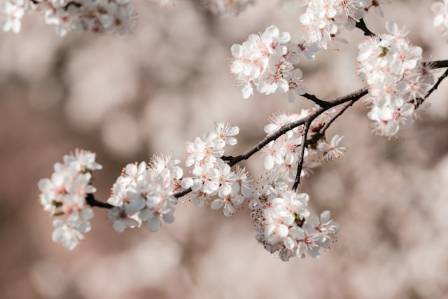
Plum blossom refers to a flowering tree belonging to the genus Prunus in the Rosaceae family. In some contexts, the term may also describe the fruit (plum) or the flower itself (plum blossom). It typically blooms during late winter and early spring and is traditionally recognized as one of the “Four Gentlemen” alongside orchid, bamboo, and chrysanthemum.
LEAF · en
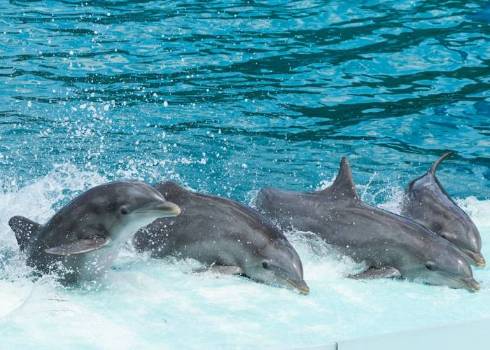
Dolphins: The Carnivorous Maestros of the Oceans
Dolphins, celebrated for their playful and inquisitive nature, are widely regarded as some of the most intelligent beings on our planet. With a staggering 42 diverse species, these marine marvels exhibit variations in size, behavior, and dietary preferences depending on their geographical habitat and the availability of prey. This exploration delves into the intriguing dietary habits of dolphins, focusing on a fundamental query: Are dolphins truly carnivores? If you've ever pondered the culinary inclinations of these charismatic creatures, you're in the right place!
LEAF · en
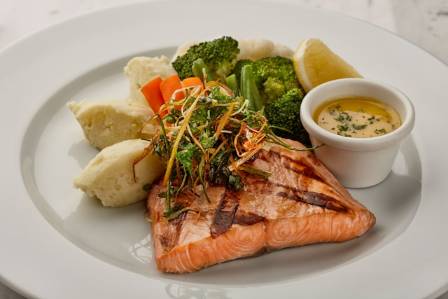
Healthy Salmon Recipes for Weight Loss That You’ll Love
Salmon is not only flavorful but also packed with nutrients. It provides high-quality protein, omega-3 fatty acids, vitamins, and essential minerals. But how can you turn it into a meal that is both tasty and nutritious?
LEAF · en

Table Mountain, A Natural Wonder
Table Mountain rises majestically above Cape Town, South Africa, and is one of the city’s most famous natural landmarks. Renowned for its spectacular scenery, remarkable biodiversity, and rich historical importance, it has attracted countless visitors from all over the world.
LEAF · en

Matcha Swiss Roll Cake
This matcha Swiss roll cake is a delightful treat featuring a light, airy sponge with a subtle earthy bitterness, paired with whipped mascarpone cream and fresh strawberries.
LEAF · en
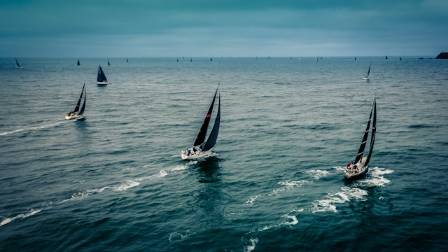
The 10 Best Sailing Adventures Around the Globe
Sailing has always captured the spirit of exploration, sending travelers across oceans with nothing but the wind in their sails. Today, setting out on the water is far less perilous than in the days of early explorers, but no less thrilling. From icy southern seas to turquoise tropical lagoons, these ten sailing destinations promise unforgettable adventures on the open ocean.