Chicago History

Grove read

Chicago History

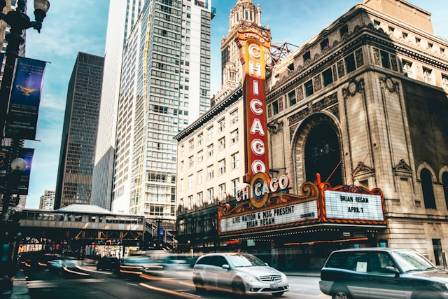
"It is hopeless for the occasional visitor to try to keep up with Chicago. She outgrows his prophecies faster than he can make them." – Mark Twain, 1883 When Mark Twain penned those words, Chicago was only 46 years into cityhood, yet it had already expanded more than a hundredfold — from a tiny trading outpost at the mouth of the Chicago River into one of the country’s largest cities. And its growth was far from over. Within two decades, the city would quadruple its population, astonishing the world with its capacity to reinvent itself again and again.

L

Logan Price

Margin note

Reading tip

The full digest continues below among botanical margin notes.

Grove

Olive Digests

"It is hopeless for the occasional visitor to try to keep up with Chicago. She outgrows his prophecies faster than he can make them." – Mark Twain, 1883
When Mark Twain penned those words, Chicago was only 46 years into cityhood, yet it had already expanded more than a hundredfold — from a tiny trading outpost at the mouth of the Chicago River into one of the country’s largest cities. And its growth was far from over. Within two decades, the city would quadruple its population, astonishing the world with its capacity to reinvent itself again and again.
That spirit continues to this day. Chicago remains a diverse metropolis, home to people from all walks of life. Long before it became a city, the land was home to many Native peoples, whose legacy continues to shape how we think about the city, its environment, and its heritage.
Today, Chicago stands as a global hub for commerce, trade, and culture — a place where people of all backgrounds pursue their vision of the American dream.

Indigenous Chicago

The land we call Chicago has long been the homeland of many Indigenous Nations, including the Hoocąk (Winnebago/Ho-Chunk), Jiwere (Otoe), Nutachi (Missouria), Baxoje (Iowa), Kiash Matchitiwuk (Menominee), Meshkwahkîha (Meskwaki), Asâkîwaki (Sauk), Myaamiaki (Miami), Waayaahtanwaki (Wea), Peeyankihšiaki (Piankashaw), Kiikaapoi (Kickapoo), Inoka (Illini Confederacy), Anishinaabeg (Ojibwe), Odawak (Odawa), and Bodéwadmik (Potawatomi).
Situated at a key continental divide, Chicago’s location at the crossroads of major waterways made it a vital site for travel, trade, and healing. The city acknowledges the sovereignty of Tribal Nations and affirms their ongoing presence here.

Early Chicago

Chicago’s first permanent non-Native settler was Jean Baptiste Point du Sable, a free Black man of Haitian origin. Born to a French sailor and an enslaved African woman, Du Sable arrived in the 1770s with his Native American wife, establishing a homestead at the mouth of the Chicago River.
In 1803, the U.S. Army constructed Fort Dearborn near what is now Michigan Avenue and Wacker Drive. The fort was destroyed during the War of 1812, rebuilt in 1816, and finally torn down in 1857. Bronze markers today commemorate its site.

A Trading Center

Officially incorporated in 1837, Chicago quickly became a focal point for westward expansion. The Illinois & Michigan Canal (1848) briefly linked the Great Lakes with the Mississippi River, though railroads soon outpaced it. Even now, about half of America’s rail freight passes through Chicago. On top of that, O’Hare and Midway International Airports have made it the nation’s busiest aviation hub.

The Great Fire of 1871

As the city grew, residents tackled major infrastructure challenges. In the 1850s, streets were raised several feet to install sewers — and entire buildings were lifted, too. Yet the wood-based construction left the city vulnerable. In 1871, the Great Chicago Fire destroyed most of the city’s buildings.
Only a few landmarks survived, such as the Chicago Water Tower and Pumping Station. The site where the fire began is now home to the Chicago Fire Department training academy.

“The White City”

Chicago rose from the ashes with remarkable speed. Debris was used as landfill to extend the lakefront, laying the groundwork for Grant Park, Millennium Park, and the Art Institute of Chicago.
In 1893, the city showcased its rebirth at the World’s Columbian Exposition, remembered for its dazzling “White City.” One of its structures later became the Museum of Science and Industry. Even the Great Depression didn’t dampen Chicago’s ambition: the Century of Progress Exposition in 1933–34 drew millions of visitors.

Hull House

Following the fire, waves of immigrants poured into Chicago, seeking factory and stockyard jobs. Many struggled, and Jane Addams’s settlement work provided vital support. Her Hull House Museum, still standing at 800 S. Halsted St., honors this legacy.

Chicago Firsts

Innovation has long defined Chicago:
Skyscrapers: The world’s first steel-framed skyscraper, the Home Insurance Building, rose in 1884.
Public Health: In 1900, engineers reversed the Chicago River to protect Lake Michigan’s drinking water.
Transportation: Chicago marked the start of Historic Route 66 at Grant Park.
Inventions: The city pioneered the refrigerated rail car (Swift), mail-order retail (Sears, Montgomery Ward), the car radio (Motorola), and the TV remote (Zenith).
Science: In 1942, the first self-sustaining nuclear chain reaction took place at the University of Chicago, ushering in the Atomic Age.
Architecture: The Willis Tower (formerly Sears Tower), completed in 1974, held the title of the world’s tallest building until 1998.

More along this branch

LF

LEAF · en

The World's Most Dramatic Sea Cliffs

The World's Most Dramatic Sea Cliffs

Towering sea cliffs offer some of the world's most spectacular viewpoints, combining dramatic scenery with the thrilling sensation of standing at the edge of the earth.

LF

LEAF · en

The Purple Swamphen

The Purple Swamphen

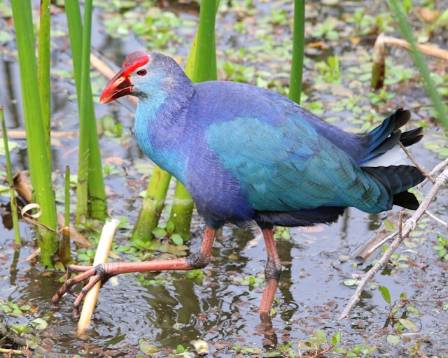
Last spring, during a three-month study abroad program in South Africa, I finally encountered one of my long-awaited lifer birds, the Purple Swamphen (Porphyrio porphyrio). I spotted it partially concealed among reeds in a large wetland within Wilderness National Park. After noticing me, the bird hurried across the water, attempting to disappear into the reeds on the opposite side of the shallow stream.

LF

LEAF · en

Needle Felting as a Therapeutic Art: Cultivating Mindfulness and Expressing Emotions (Rewritten & Expanded)

Needle Felting as a Therapeutic Art: Cultivating Mindfulness and Expressing Emotions (Rewritten & Expanded)

In an era defined by constant digital stimulation, overwhelming work demands, and pervasive anxiety, the search for tangible, grounding creative outlets has never been more urgent. Needle felting—an ancient craft that involves sculpting wool fibers into solid forms using barbed needles—has emerged as a beloved therapeutic practice, bridging the gap between creativity and mental well-being. Unlike high-pressure artistic pursuits that require advanced skills or expensive materials, needle felting is accessible to beginners, offering a low-stakes space to engage with one’s hands, focus the mind, and process complex emotions. What makes this craft uniquely therapeutic is its combination of repetitive motion, tactile engagement, and creative agency: as you poke the needle into the wool, you not only shape a physical object but also untangle emotional knots, finding calm in the rhythm of the process. In this expanded exploration, we will delve into the scientific and psychological foundations of needle felting’s therapeutic power, examine how it facilitates emotional expression, detail its key mental health benefits, guide beginners through their first steps, and explore its growing role in modern wellness practices. Whether you are seeking relief from stress, a way to express unspoken feelings, or simply a break from the chaos of daily life, needle felting offers a gentle yet profound path to healing and self-discovery.

LF

LEAF · en

The amazing Cuckoo

The amazing Cuckoo

Most people can recognize the familiar sound of a Cuckoo calling, even if they have never actually seen the bird itself.

LF

LEAF · en

Understanding What a Latte Is

Understanding What a Latte Is

A latte is one of the most popular coffee drinks in the world, known for its smooth, mild flavor and creamy texture. Coffee itself is incredibly versatile, with many different preparation styles that highlight different aspects of the coffee bean.

LF

LEAF · en

Table Mountain, A Natural Wonder

Table Mountain, A Natural Wonder

Table Mountain rises majestically above Cape Town, South Africa, and is one of the city’s most famous natural landmarks. Renowned for its spectacular scenery, remarkable biodiversity, and rich historical importance, it has attracted countless visitors from all over the world.