Five Spectacular Planetary Nebulae

Grove read

Five Spectacular Planetary Nebulae

A Guide to Observing the Hourglass, Smoke Ring, and Cosmic Snowball.What exactly are planetary nebulae, and how can amateur astronomers spot them?

M

Mia White

Margin note

Reading tip

The full digest continues below among botanical margin notes.

Grove

Olive Digests

A Guide to Observing the Hourglass, Smoke Ring, and Cosmic Snowball
What exactly are planetary nebulae, and how can amateur astronomers spot them?
Join us as we explore five of the most captivating examples visible through amateur telescopes.
It’s not uncommon to hear someone remark, “Hmm, a nebula,” upon peering through a telescope for the first time—often with a hint of disappointment. The initial reaction usually stems from not fully understanding what’s being observed. Context matters: knowing what lies behind that faint smudge of light can transform a casual glance into a moment of wonder.
In this guide, we’ll introduce five fascinating planetary nebulae and offer practical tips for locating them. But first—what are these enigmatic objects?

Understanding Planetary Nebulae

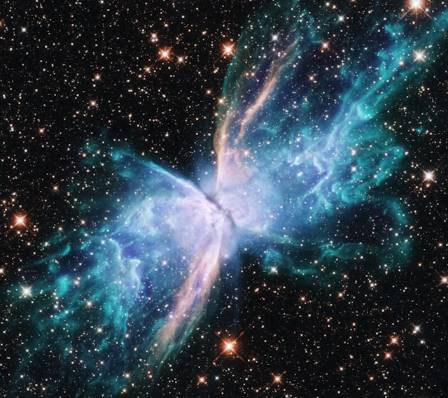
Planetary nebulae are deep-sky objects located far beyond our solar system, often thousands of light-years away. They represent the final stages of sun-like stars. Much like living beings, stars undergo birth, evolution, and eventual decline—though on timescales spanning millions or even billions of years.
When a star with up to 1.5 times the mass of our Sun exhausts the hydrogen fuel in its core, it expands into a red giant. Eventually, the outer layers are ejected into space, while the core collapses into a dense, hot white dwarf. The expelled material—composed of hydrogen, helium, and oxygen—forms a glowing shell illuminated by intense ultraviolet radiation from the central star. This shell is what we see as a planetary nebula.
The name dates back to the 18th century, when William Herschel observed these hazy, planet-like disks through early telescopes and likened them to gas giants. Though we now know they are unrelated to planets, the poetic name has endured.
These nebulae vary widely in age. Younger ones, around 2,000 years old, appear small and bright. Older nebulae, up to 10,000 years old, become faint and diffuse as they expand into space, eventually fading from view.

Observing Tips

While many nebulae require dark skies, some planetary nebulae are bright and compact enough to be seen from suburban locations. They come in diverse shapes: rings, disks, hourglasses, and irregular forms. Using an OIII filter (which highlights doubly ionized oxygen) can enhance the view of larger nebulae, especially with telescopes 8 inches or wider. For smaller, brighter nebulae, higher magnification often works best.
Many planetary nebulae emit strongly in the green part of the spectrum (495–500 nm), which our eyes are particularly sensitive to—hence their often greenish tint.

M27: The Dumbbell Nebula

One of the brightest planetary nebulae, M27 lies in the constellation Vulpecula. Discovered by Charles Messier in 1764, it resembles a cosmic hourglass. Through a telescope, its greenish glow and faint central star (visible in larger instruments) stand out. The nebula spans about 3 light-years and is roughly 9,000 years old.
To locate it, find the arrow-shaped constellation Sagitta. From the tip, move about one degree toward Cygnus. Look for a small arc of three 6th-magnitude stars—M27 lies nearby.
Observation tip: Use averted vision or an OIII filter to make the nebula “pop” into view.

M57: The Ring Nebula

A classic summer target in Lyra, the Ring Nebula is a smoke-ring-like structure formed by a dying star. It’s visible even in small telescopes at 100x magnification. The ring is slightly oval and grows by one arcsecond per century.
Find Lyra’s parallelogram of stars. M57 lies midway between Beta and Gamma Lyrae.

NGC 7662: The Blue Snowball

Located in Andromeda, this mag 8.3 nebula appears as a vivid blue-green disk. Its intense OIII emission and high surface brightness make it an ideal target for urban observers. Despite its name, the central star is not visible in amateur telescopes.
To find it, look halfway between Alpha Andromedae and Cepheus. From Iota Andromedae, shift two degrees west.

NGC 6826: The Blinking Planetary

This nebula in Cygnus exhibits a unique “blinking” effect due to the physiology of human vision: when you look directly, only the central star is visible; with averted vision, the nebula appears. It’s a fun challenge for small telescopes.
Locate Theta Cygni in the Swan’s wing. Move one degree toward a 6th-magnitude star, then 24 arcminutes further.

M76: The Little Dumbbell

Also known as the Barbell or Cork Nebula, M76 is the faintest planetary nebula in the Messier catalog. It lies in Perseus and shows a distinct two-lobed structure in moderate-sized telescopes. An OIII filter helps reveal faint extensions.
Find it midway between Cassiopeia and Andromeda, near the stars Upsilon Andromedae and Phi Persei.

Final Thoughts

Each of these nebulae offers a unique glimpse into the life cycle of stars. Whether you’re tracing the delicate ring of M57 or “blinking” at NGC 6826, you’re participating in a centuries-old tradition of cosmic observation. So on your next clear night, point your telescope toward one of these stellar remnants—and see the universe in a new light.

More along this branch

LF

LEAF · en

The Machinery Age: Innovation Driving the Modern World

The Machinery Age: Innovation Driving the Modern World

Machinery has reshaped human civilization, redefining how we live, produce, and innovate. From the early stages of the industrial era to today’s cutting-edge automation, mechanical systems have continuously advanced our capabilities. This article revisits the journey of machinery through time, explores its social and economic impact, and looks ahead at how intelligent machines will influence the future.

LF

LEAF · en

Refining Your Artistic Voice: A Guide to Developing Your Illustration Styl

Refining Your Artistic Voice: A Guide to Developing Your Illustration Styl

After years of working as a professional illustrator, sketching purely for pleasure can become rare. But returning to personal drawing projects—even briefly—can reignite creative excitement and offer a fresh sense of purpose outside of client work.

LF

LEAF · en

Alpine Skiing for Beginners

Alpine Skiing for Beginners

One of the great appeals of skiing is its flexibility—you can enjoy a relaxed scenic ride down gentle slopes or push yourself into a fast-paced, thrilling descent. Everything depends on the type of slope you choose. Among the many skiing styles, alpine skiing stands out as one of the most popular.

LF

LEAF · en

Mango Pomelo Sago Dessert

Mango Pomelo Sago Dessert

I first discovered this classic Hong Kong dessert years ago while visiting relatives in Hong Kong with my family.

LF

LEAF · en

The World's Most Dramatic Sea Cliffs

The World's Most Dramatic Sea Cliffs

Towering sea cliffs offer some of the world's most spectacular viewpoints, combining dramatic scenery with the thrilling sensation of standing at the edge of the earth.

LF

LEAF · en

The Best Selling Vehicles Dominating British Roads Right Now

The Best Selling Vehicles Dominating British Roads Right Now

Fully electric vehicles secured an unprecedented thirty percent of the automotive market in the United Kingdom during the month of June, representing the highest performance observed throughout the current year. This surge helped propel overall vehicle registrations upward by eleven point four percent to hit a grand total of 213,166 units, according to recent data published by the Society of Motor Manufacturers and Traders. This exceptional performance marked the strongest showing for the month of June since the year 2019, with the expansion driven entirely by low-emission options as automakers continue to roll out more electric and hybrid models while fresh automotive brands enter the British marketplace. Consumer appetite for electric mobility was further accelerated by climbing fuel prices connected to ongoing geopolitical tensions in the Middle East.