Grove read
The Secrets of the Pink Bird: Surprising Flamingo Discoveries
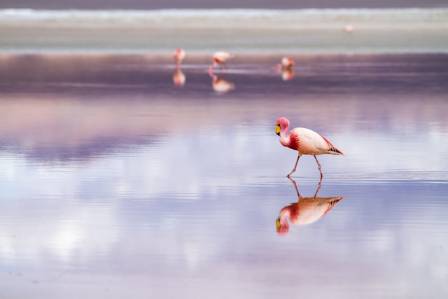
Beyond their vivid rose-colored plumage, flamingos are among the most distinct and specialized avian species on the planet. From their unique nesting habits to their remarkable physiological adaptations, these birds thrive in environments that would be inhospitable to most other creatures. Understanding the biology and behavior of the flamingo reveals a story of survival, complex social structures, and a highly specialized diet.
Olivia Turner
Margin note
Reading tip
The full digest continues below among botanical margin notes.
Grove
Olive Digests
Beyond their vivid rose-colored plumage, flamingos are among the most distinct and specialized avian species on the planet. From their unique nesting habits to their remarkable physiological adaptations, these birds thrive in environments that would be inhospitable to most other creatures. Understanding the biology and behavior of the flamingo reveals a story of survival, complex social structures, and a highly specialized diet.
The Science Behind the Pink Hue
The most famous characteristic of the flamingo—its vibrant pink color—is actually a result of its environment rather than genetics. Flamingos are born with gray, downy feathers; they only acquire their signature look through their diet. Many of the organisms they consume, such as microscopic algae and brine shrimp, are rich in organic pigments called carotenoids. As the flamingo digests these items, its body processes the pigments and deposits them into the growing feathers.
Specialized Feeding and Habitats
Flamingos are one of the few bird species that function as filter feeders. Similar to the mechanism used by baleen whales, flamingos use their tongues to pump water through comb-like plates in their beaks, trapping small seeds, insects, and crustaceans while expelling excess water. During this process, they typically hold their heads upside down to better navigate the shallow waters where their prey resides.
These birds are often found in extreme environments, such as "soda lakes" characterized by high concentrations of corrosive carbonate salts. While these waters can burn the skin of most animals, flamingos have evolved tough, protective skin on their legs to withstand the alkaline conditions. This allows them to exploit food sources that face little competition from other predators.
Diverse Species and Global Populations
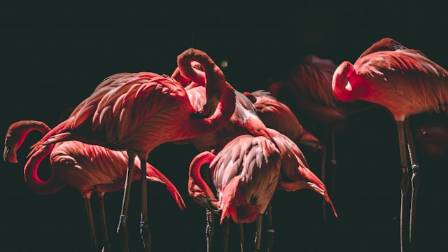
There are six distinct species of flamingos distributed across the globe. The Greater Flamingo is the largest and most widespread, found in parts of Africa, Asia, and Europe. In contrast, the Andean Flamingo is the rarest, with a population of fewer than 40,000 birds. The Lesser Flamingo, while the smallest in size, is the most numerous, with over 2 million individuals inhabiting Africa and Southern Asia. In the Americas, the Caribbean (or American) Flamingo is the most prominent, with a wild population estimated at roughly 200,000.
Social Structure and Reproductive Habits
Flamingos are highly social birds that gather in massive groups known as a "flamboyance." In the wild, these colonies can number in the thousands, providing safety in numbers. Within these groups, flamingos are primarily monogamous. Breeding pairs work together as a team to construct volcano-shaped nests made of mud, which elevate a single large egg above the waterline.
Once a chick hatches, both parents take turns providing nourishment. They secrete a nutrient-dense liquid known as "crop milk" from their throats. This substance is rich in fats and proteins, sustaining the young birds until their beaks develop the specialized hook shape required for independent filter feeding.
Misunderstood Anatomy and Behaviors
A common misconception regarding flamingo anatomy is that their knees bend backward. In reality, the joint visible in the middle of a flamingo's leg is actually the ankle. Their actual knees are located much higher up the leg, obscured by their body and feathers. Essentially, a flamingo stands on its tiptoes.
The iconic sight of a flamingo standing on a single leg is also a matter of efficiency. Research indicates that this posture requires less muscular effort than standing on two legs, allowing the bird to remain stable even while sleeping. Furthermore, by tucking one leg into their feathers, flamingos can conserve body heat that would otherwise escape through their limbs, a vital adaptation for maintaining their internal temperature in cool water.

More along this branch
LEAF · en

Annular Solar Eclipses: The “Ring of Fire” in the Sky
An annular solar eclipse is a rare and striking type of eclipse. It occurs when the Moon moves directly in front of the Sun but does not fully cover it. Instead, a bright outer ring of sunlight remains visible around the Moon’s silhouette. This glowing circle is known as an annulus, often described as a dramatic “ring of fire.”
LEAF · en

Nature’s Water – Carved Gems
Tucked away beyond the usual stretches of sand, there exists a beach where the ground shimmers with polished stones instead of grains. Under the shifting light of morning or dusk, these pebbles glow like scattered gems—green, red, and copper-tinted. Here, nature has been at work for centuries, smoothing every surface with salt and time. Visitors often pause in awe at the glint beneath their feet, realizing they’ve stumbled upon a quiet, unexpected treasure.
LEAF · en

Sushi: Nutritious or Not?
Sushi is often praised for its nutritional value, offering a variety of health benefits. Yet, it’s not without concerns—especially when considering sodium levels, potential contaminants, and mercury exposure. Let's explore its health implications in detail.
LEAF · en

Who Has Won the Most Grand Slams in Tennis History?
(Based on ESPN’s coverage, October 2025)
LEAF · en

How Next Generation Sofa Designs are Changing Modern Living Rooms
The upcoming interior design movements bring a distinct focus on gentle silhouettes, highly textured materials, and color schemes rooted deeply in the natural world. Contemporary seating arrangements are breaking away from rigid formats to encourage a more hospitable, experimental approach to living spaces. By blending organic shapes, advanced textiles, and soft lighting, modern layouts give the living room a completely refreshed identity centered on relaxation and social interaction.
LEAF · en

Global Soup Delights: A Culinary Journey Through Ten Iconic Bowls
Soup is a universal comfort food, transcending borders and cultures. From hearty stews to light broths, each country has its own signature soup that tells a story of its history, climate, and culinary traditions. Embarking on a gastronomic tour, let's explore ten renowned soups from around the world, each offering a unique taste of its homeland.