Grove read
Epiphyllum, Queen of the Night
As someone who enjoys collecting unique plants, I am constantly searching for green companions that bring something special to my indoor garden. Plants with unusual growth patterns and impressive flowers always catch my attention. Epiphytic plants are among my favorites because they are full of surprises. Unlike terrestrial plants that grow in soil, epiphytes naturally grow on other plants without taking nutrients from their hosts.
Leo Richardson
Margin note
Reading tip
The full digest continues below among botanical margin notes.
Grove
Olive Digests
As someone who enjoys collecting unique plants, I am constantly searching for green companions that bring something special to my indoor garden. Plants with unusual growth patterns and impressive flowers always catch my attention. Epiphytic plants are among my favorites because they are full of surprises. Unlike terrestrial plants that grow in soil, epiphytes naturally grow on other plants without taking nutrients from their hosts.
Many epiphytes, including staghorn ferns, certain orchids, air plants, bromeliads, and epiphyllums, are fascinating species worth exploring. In their natural habitats, these plants often grow in the organic debris collected on tree branches. This creates a small ecosystem where birds, insects, reptiles, and other creatures interact, providing nutrients and shelter for one another.
Two members of the Epiphyllum group that have recently captured my interest are Epiphyllum oxypetalum and Epiphyllum anguliger. Among the many flowering epiphyllum species found in nature, these two varieties and their hybrids are among the most popular choices for growing indoors.
About Epiphyllum Oxypetalum
Epiphyllum oxypetalum is commonly called Dutchman’s Pipe Cactus, Queen of the Night, Lady of the Night, Orchid Cactus, or Night-Blooming Cereus. However, these common names can sometimes create confusion. Despite the name “orchid cactus,” this plant is not an orchid, nor is it a true cereus or Dutchman’s pipe plant. It is actually a shade-loving cactus.
Many plants share similar common names because they produce flowers with comparable appearances or bloom at night, but their growing requirements can be completely different. Botanical names provide a more accurate and universal way to identify plants, while relying only on common names can sometimes lead to incorrect identification and improper care.
The Amazing Night Flowers of Epiphyllum
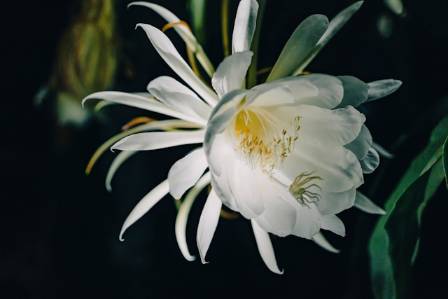
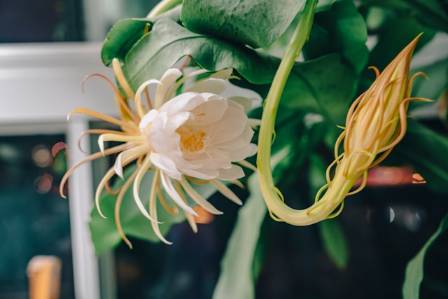
The most remarkable feature of Epiphyllum plants, aside from their large, dramatic foliage, is their incredible nighttime flowering display. They produce huge, exotic, and sweetly scented flowers that open during the night and fade by morning.
Their breathtaking blooms usually appear between midnight and sunrise, leaving behind wilted flowers once daylight arrives. Although some people believe Epiphyllum oxypetalum only flowers once each year, this is not always true. Under suitable conditions, a healthy plant may produce several rounds of nighttime blossoms over a period of weeks.
Some other rare epiphyllum species and similar night-flowering cacti may only bloom for a single night each year, making their displays even more special.
About Epiphyllum Anguliger
Epiphyllum anguliger is often known as the Fishbone Cactus, Zig Zag Cactus, or Ric Rac Cactus. It is one of the most distinctive-looking houseplants because of its unusual flat leaves with deep zig-zag edges.
The unique leaf shape creates a beautiful silhouette, especially when the plant is placed near a window or allowed to trail from a hanging container. Compared with Epiphyllum oxypetalum, this species is generally more reluctant to flower and may require additional encouragement.
To stimulate blooming, it can benefit from a fertilizer higher in potassium and phosphorus, along with a cooler resting period during late winter.
Natural Habitat and Light Requirements
Both Epiphyllum oxypetalum and Epiphyllum anguliger originate from tropical forests and jungle regions of Mexico, Central America, and South America. In their native environment, they are pollinated by nighttime-active creatures such as nectar-feeding bats and insects.
Because these plants naturally grow beneath forest canopies, they should not be exposed to harsh, direct sunlight. Indoors, they perform best near an east-facing window with gentle morning light or in bright locations with filtered sunlight from south or west-facing windows.
Unlike desert cacti that prefer dry soil and intense sun, epiphytic cacti enjoy more moisture and humidity. During their active growing season in spring and summer, they should receive thorough watering about once a week and should not be allowed to completely dry out.
Growing Epiphyllum Outdoors
During warm summer months, Epiphyllum plants can be moved outdoors where they can enjoy natural humidity and filtered light. Hanging them from a tree branch is an excellent way to recreate their natural forest environment.
Outdoor placement also makes it easier to observe the development of their long, curved flower buds. Watching these buds grow and preparing to stay awake for their midnight blooming event can be one of the most rewarding experiences of growing these plants.
Potting and Root Care
Epiphyllum plants prefer being slightly root-bound, so they should not be moved into oversized containers too quickly. When repotting, increase the pot size gradually by only a few inches at a time.
A slightly crowded root system can actually encourage flowering. However, moving the plant into a larger pot may stimulate rapid growth, and these plants can eventually become surprisingly large. Some mature Epiphyllum oxypetalum plants can develop a spread of several feet.
Always choose containers with drainage holes and avoid allowing the roots to sit in standing water. A cactus potting mix works well, or regular potting soil can be combined with orchid bark to improve drainage.
Fertilizing and Encouraging Blooms
Epiphyllum plants benefit from fertilizers that are low in nitrogen and higher in potassium and phosphorus. Products containing seaweed or fish emulsion can also support healthy growth.
If a mature plant between four and seven years old is not producing flowers, a short cooling period may help trigger blooming. Place the plant in a bright but unheated area during late winter for about two to three weeks, making sure temperatures stay above 40°F.
Propagating Epiphyllum
Epiphyllum plants are easy to reproduce through leaf cuttings. Simply allow a cutting to dry for several days until the cut surface forms a protective layer.
After the cut end has hardened, dip it into rooting hormone or rooting gel and place it into loose, slightly moist potting soil. Small root-like structures may appear along the leaf surface; these structures help the plant attach itself to tree branches in its natural habitat.
Enjoying These Unique Plants
Epiphyllum cacti are wonderful choices for plant lovers who enjoy unusual shapes, dramatic flowers, and fascinating growth habits. Their combination of tropical origins, easy propagation, and unforgettable nighttime blooms makes them truly special additions to any collection.
With the right light, moisture, and care, these remarkable plants can reward growers with years of beautiful foliage and spectacular flowers.
More along this branch
LEAF · en

Blue-breasted Bee-eater
The Blue-breasted Bee-eater (Merops variegatus) is a bird species native to central Africa and belongs to the bee-eater family, Meropidae. Members of this family share a similar appearance and are well known for their specialized diet, which mainly consists of Hymenopterans such as bees and wasps.
LEAF · en

7 Compelling Reasons to Start Collecting Ornaments and Figurines
Collecting figurines and ornaments is a hobby that brings both beauty and meaning into everyday life. These small, decorative objects aren't just eye-catching—they often carry personal stories, memories, and artistic appeal. Whether you're an experienced collector or just curious about starting, there are plenty of reasons to make this creative pastime part of your lifestyle.
LEAF · en

Fun Facts About The San Remo Luxury Apartment Building in NYC
As the first historic residential building in New York City to feature twin towers, The San Remo has long dominated the skyline of Central Park West with its unmistakable silhouette. This 27-story luxury cooperative apartment building was designed by renowned architect Emery Roth and stands between West 74th and West 75th Streets, offering residents spectacular views of Central Park from its soaring towers.
LEAF · en

The Odd Looking Golden Snub-Nosed Monkey
The golden snub-nosed monkey, also known as the orange monkey, snub-nosed leaf monkey, or Sichuan golden-haired monkey, is found only in central and southwestern China and the mountainous regions of Tibet. These monkeys live at elevations ranging from about 5,200 to 13,000 feet.
LEAF · en

Mango Pomelo Sago Dessert
I first discovered this classic Hong Kong dessert years ago while visiting relatives in Hong Kong with my family.
LEAF · en

The best cities are river cities
Beneath layers of pavement, concrete buildings, shopping districts, parks, and schools, many cities are home to forgotten waterways. Creeks, streams, and rivers still exist beneath the urban landscape, even if some have been buried underground inside pipes.