Grove read
Himalayan Finch: A Tiny Bird of the High Mountains
This small finch measures approximately 14–15 cm in length. It has a short, compact bill and a tail that forms a noticeable fork at the tip.
Eamon West
Margin note
Reading tip
The full digest continues below among botanical margin notes.
Grove
Olive Digests
This small finch measures approximately 14–15 cm in length. It has a short, compact bill and a tail that forms a noticeable fork at the tip.
The male has a vivid red to deep orange circular or oval marking on the forehead. The rest of the head, extending to the nape, along with the chin and upper breast, is sooty black. The upperparts are predominantly blackish, with broad yellowish or golden-buff edges along the feathers. The rump is bright yellow or yellowish-tan, becoming darker toward the uppertail-coverts. The tail is dark brown and narrowly bordered with orange to golden tones.
The upperwing-coverts are dark brown and edged in warmer brown or buffish-brown. The median coverts have pale orange tips, while the greater coverts show slightly lighter buffish-yellow tips on their inner feathers. The flight feathers and tertials are dark brown with fine yellowish-orange to golden margins.
The lower breast and belly are yellowish, becoming paler and almost white around the undertail-coverts. The center of the breast and the flanks are marked with sooty black streaks, which become more fragmented across the belly. The underwing-coverts are pale yellowish-white. The iris is dark brown or black, while both the bill and legs are dark brown to black.
Females closely resemble males but are generally less brightly colored. The forehead may show only a narrow red line or small red patch, while the black coloration of the head and back is duller and often more brownish-black. The rear crown and nape can have lighter gray feather edges, and the black markings are less extensive across the mantle, back, and breast.
Outside the breeding season, both sexes become paler overall. The forehead marking becomes less vivid and more reddish-orange, while the head and throat develop ashy or buff-colored feather edges and tips.
Habitat
During the breeding season, this species occupies montane and submontane forests, usually favoring areas near the forest edge rather than dense interior woodland. In the Himalayas, it is generally found between about 2,000 and 4,700 meters in elevation.
Outside the breeding period, it uses similar environments at lower elevations, ranging from approximately 1,370 to 3,300 meters. It can also occur in orchards and gardens around human settlements, including larger towns and villages. Other habitats include scattered trees on hillsides with low vegetation, river valleys, rocky wadis, and the edges of cultivated land.
Feeding Habits
The diet consists mainly of seeds, young shoots, flower heads, and fruits, supplemented by relatively small quantities of insects.
This finch generally searches for food on the ground, particularly around woodland edges, open scree slopes, meadows, and exposed areas of windblown boulders. It moves actively with short hops while searching for food. It may also perch on plants and grasses to reach seed heads.
The species sometimes feeds among branches, where it can hang upside down to reach birch catkins. It may also forage near the tops of trees, although dead branches, rocks, and boulders are often preferred perching locations.
It is commonly encountered in pairs or small groups. After breeding, larger flocks may form, and these groups can consist predominantly of males.
Breeding Habits
In India, breeding takes place mainly from July through August. The species is monogamous, and pair formation generally occurs while the birds are dispersing in winter flocks.
Pairs defend territories during the breeding period. Several males may display competitively at the same time in the presence of a female. During courtship, a male may raise the feathers on his crown and forehead prominently, droop and partially spread his wings, and hold his tail slightly elevated. He may also turn his body from side to side while displaying. Before mating, the male may provide food to the female as part of the courtship process.
The female is primarily responsible for constructing the nest, although the male may occasionally assist. The nest is a compact, neatly formed cup made from dry grasses, strips of bark, plant fibers, down, moss, lichen, feathers, and spider webs.
Nests can be positioned in a variety of locations. They may be placed low inside a shrub, higher on a branch or in a fork, against a tree trunk, within a rock crevice, on a cliff ledge, or inside a hole among loose scree.
Eggs and Young
A typical clutch contains between three and five eggs. The female alone incubates the eggs, with incubation lasting approximately 11–16 days.
After hatching, both parents participate in feeding and caring for the chicks. The young remain in the nest for around 14–16 days before fledging.
Even after leaving the nest, the young are not immediately independent. They generally become self-sufficient within three to four weeks, although their parents may continue supplying them with food for as long as five weeks.
More along this branch
LEAF · en

I Tried French Onion Soup at 4 Popular Chains & This One Was Pure, Cheesy Perfection
There’s something irresistibly comforting about a warm, hearty soup on a cold day, and French onion soup is the ultimate cozy choice. Caramelized onions, rich broth, toasted bread, and melted cheese combine into a simple yet deeply satisfying dish.
LEAF · en

Chicago History
"It is hopeless for the occasional visitor to try to keep up with Chicago. She outgrows his prophecies faster than he can make them." – Mark Twain, 1883 When Mark Twain penned those words, Chicago was only 46 years into cityhood, yet it had already expanded more than a hundredfold — from a tiny trading outpost at the mouth of the Chicago River into one of the country’s largest cities. And its growth was far from over. Within two decades, the city would quadruple its population, astonishing the world with its capacity to reinvent itself again and again.
LEAF · en

Escape the Urban Hustle: Reconnect with Nature
In the midst of the urban frenzy, there exists an age-old remedy to alleviate stress and anxiety, and rekindle your inner strength: the art of travel. The urban jungle, with its concrete canyons and ceaseless commotion, is a far cry from the serene wonders of the natural world. To immerse yourself in the embrace of tranquility, all you need is a journey that transports you back to the essence of your being.
LEAF · en

Strategies for Exceptional Home Furnishing: A Guide to Curating Your Space
Choosing the right furniture involves much more than simply placing functional objects within a room. It is a fundamental element of interior design that establishes a home's comfort, utility, and visual character. Whether you are furnishing a compact studio or a sprawling estate, your selections possess the power to completely reinvent your living environment. Achieving a balanced and inviting home requires a deep understanding of how to pick pieces that harmonize with your architecture while serving your daily requirements.
LEAF · en

What to see in Heidelberg, Germany
Heidelberg is a charming small city located along the Neckar River in the German state of Baden-Württemberg. It is often referred to as Germany’s most romantic city. Although it has suffered destruction multiple times throughout its long history, its ruins, architecture, and atmosphere continue to inspire artists and enchant both visitors and residents.
LEAF · en
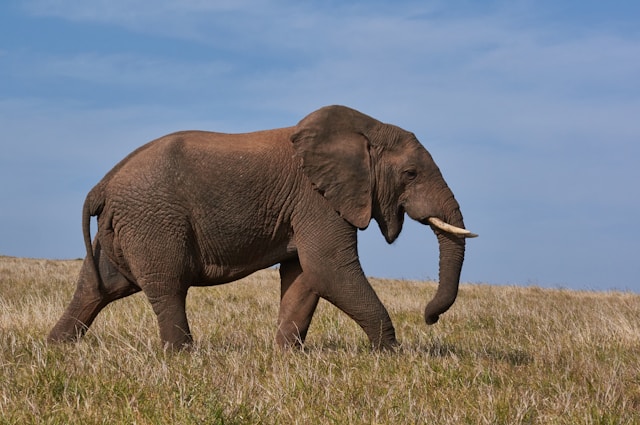
Elephant
Have you ever “herd” about them? Elephants are enormous, intelligent, strong, and highly social. For centuries, humans have been fascinated by their sheer size—a male African elephant can reach up to 7.5 tons (6.8 metric tons)! Beyond their massive bodies, elephants captivate us with their long, versatile trunks, enormous flapping ears, and loose, wrinkled skin. Stories about these majestic animals abound—you may recall Horton, Babar, or Dumbo.