Grove read
A Brief History of the SUV — and Why It Took the World by Storm
The Sports Utility Vehicle (SUV) isn’t just a car—it’s a cultural phenomenon. Walk through any suburban neighborhood, scroll through a highway traffic cam, or glance at annual sales reports, and one thing becomes clear: SUVs dominate. In the U.S. alone, over 12 million were sold last year, outpacing sedans, hatchbacks, and trucks. But this wasn’t always the case. The SUV’s rise from niche workhorse to global obsession is a story of war, innovation, and shifting human desires.
Lila
Margin note
Reading tip
The full digest continues below among botanical margin notes.
Grove
Olive Digests
The Sports Utility Vehicle (SUV) isn’t just a car—it’s a cultural phenomenon. Walk through any suburban neighborhood, scroll through a highway traffic cam, or glance at annual sales reports, and one thing becomes clear: SUVs dominate. In the U.S. alone, over 12 million were sold last year, outpacing sedans, hatchbacks, and trucks. But this wasn’t always the case. The SUV’s rise from niche workhorse to global obsession is a story of war, innovation, and shifting human desires.
With the launch of the Polestar 3—an electric SUV designed to redefine the category for a sustainable age—we sat down with Leslie Kendall, Chief Historian at the Petersen Automotive Museum in Los Angeles, to trace the SUV’s tangled past. “It’s not a straight line,” he laughs, surrounded by vintage Jeeps and early Suburbans. “But that’s what makes it fascinating.”
Origins: The First “Utility” Vehicles (1900s–1930s)
To understand the SUV, we need to go back to a time when “sport utility” wasn’t a marketing term—it was a necessity. The early 1900s were an era of rugged roads (or lack thereof), and drivers needed vehicles that could handle mud, snow, and ruts as easily as they carried people and cargo.
One of the earliest contenders was the FWD Auto Company’s “Battleship” model, introduced in 1908. A bulky, four-wheel-drive touring car, it was built for durability, with a steel frame and a 40-horsepower engine. “It was revolutionary,” Kendall explains. “Before the Battleship, most cars were two-wheel-drive and fragile—great for city streets, useless for country roads. FWD tried to solve that, but it was ahead of its time.” The Battleship flopped commercially; its high price and clunky design failed to resonate with a public still adjusting to the idea of cars as everyday tools.
By the 1930s, however, a new breed of “carryall” vehicles emerged. These were essentially trucks with enclosed passenger compartments, built to haul both people and gear. In 1935, Chevrolet unveiled the Suburban Carryall, a vehicle that would later be hailed as the “first SUV.” Based on a truck chassis, it had a wooden body, seating for eight, and a rear cargo area big enough for tools, hunting gear, or farm supplies.
“Was the Suburban a ‘sport’ vehicle? Not really,” Kendall admits. “But it had the ‘utility’ part down. It could go off-road, carry a family, and double as a work truck. That versatility is the DNA of every SUV that came after.” The Suburban wasn’t luxurious—its suspension was stiff, and its cabin was basic—but it sold steadily, especially in rural America, where practicality mattered more than comfort.
Post-War: From Battlefields to Driveways (1940s–1960s)
World War II changed everything. As armies across the globe relied on rugged, four-wheel-drive vehicles to navigate battlefields, a new standard of “utility” was set. The most iconic of these was the Willys MB, better known as the Jeep. Built for the U.S. military, it was lightweight, durable, and capable of climbing steep hills or fording rivers—traits that caught the public’s eye when the war ended.
“In 1945, soldiers came home talking about these Jeeps,” Kendall says. “They’d driven them through mud, snow, and bombed-out roads, and they wanted something like that for their farms, ranches, or weekend trips.” Willys-Overland (later Jeep) wasted no time. In 1946, it released the CJ-2A, a civilian version of the MB. It kept the military model’s 4x4 system and tough frame but added amenities like a tailgate and a more comfortable seat.
The CJ-2A was a hit, but it was still a rough ride—loud, bumpy, and far from family-friendly. “These were workhorses, not daily drivers,” Kendall notes. “They appealed to hunters, farmers, and adventurers, but most people stuck to sedans or station wagons for errands.”
That began to shift in the 1960s, thanks to two pivotal models: the Jeep Wagoneer and the International Harvester Scout. Introduced in 1963, the Wagoneer was a revelation. It combined the 4x4 capability of a Jeep with the comfort of a station wagon—think leather seats, air conditioning, and even a automatic transmission. For the first time, an off-road vehicle felt “civilized.”
“The Wagoneer was a bridge,” Kendall explains. “It proved that a utility vehicle could be both tough and nice to drive. Suddenly, families started thinking: ‘Why get a station wagon when this can do everything and go off-road?’” The Scout, launched in 1961, followed a similar playbook, offering a smaller, more affordable alternative to the Wagoneer. By the end of the decade, SUVs were no longer just for “serious” drivers—they were becoming a status symbol for outdoorsy, active families.
Luxury and Innovation: The Rise of the “Sport” SUV (1970s–1980s)
If the 1960s made SUVs practical, the 1970s and 1980s made them desirable. In 1970, Land Rover unveiled the Range Rover, a vehicle that redefined what an SUV could be. It had a V8 engine, coil-spring suspension (smoother than the leaf springs of Jeeps), and a refined interior with wood trim and plush seats. For the first time, an off-roader was marketed as a luxury item.
“The Range Rover was a game-changer,” Kendall says. “It wasn’t just about utility anymore—it was about style and performance. Wealthy buyers in Europe and America fell in love with it. They’d drive it to the office during the week and take it to the mountains on weekends. It was a ‘do-it-all’ status symbol.”
Across the Atlantic, Jeep was plotting its own revolution. In 1984, it launched the Cherokee XJ, a compact SUV with a radical new design: a unibody frame. Unlike traditional SUVs, which used a separate truck chassis (body-on-frame), the Cherokee’s body and frame were a single piece—just like a car. This made it lighter, more fuel-efficient, and easier to drive on pavement.
“Before the Cherokee, SUVs felt like trucks—clunky and slow on the highway,” Kendall explains. “The XJ changed that. It handled like a car but still had 4x4 capability. Suburban families went crazy for it. Suddenly, you didn’t need to be an off-road enthusiast to want an SUV.”
The Cherokee’s success sparked a wave of imitators. Ford launched the Explorer in 1990, Toyota introduced the 4Runner, and Chevrolet revamped the Suburban with more comfort features. By the end of the 1980s, SUVs were no longer niche—they were a mainstream choice, with sales climbing year after year.
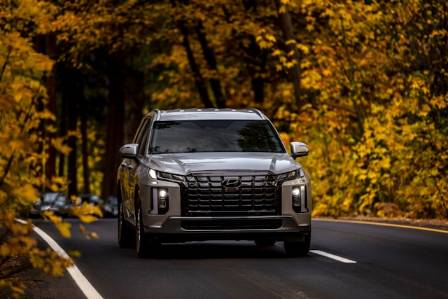
The 1990s: SUVs Conquer the Suburbs
The 1990s were the SUV’s golden age. Fuel prices were low, and American families were moving to the suburbs, where bigger homes meant more stuff to haul—and bigger cars to haul it in. SUVs fit the bill perfectly.
“The 1990s suburban dream was a big house, a picket fence, and an SUV in the driveway,” Kendall says. “They felt safer than sedans—higher off the ground, bigger in size—and they could carry kids, groceries, soccer gear, and a weekend’s worth of luggage all at once. For busy parents, that was invaluable.”
Ford’s Explorer became the poster child of this era. Introduced in 1990, it was smaller than the Suburban but roomier than the Cherokee, with a V6 engine and a smooth ride. By 1995, it was the best-selling SUV in America, with over 400,000 units sold annually. Other automakers rushed to keep up: Toyota’s RAV4, launched in 1994, pioneered the “compact crossover” category (a smaller, car-based SUV), while luxury brands like Mercedes-Benz (M-Class) and BMW (X5) joined the fray, offering premium SUVs for affluent buyers.
But the SUV boom wasn’t without criticism. Environmentalists pointed out that their large engines guzzled gas and emitted more CO2 than sedans. Safety experts warned that their high center of gravity made them prone to rollovers. “There was a backlash,” Kendall admits. “But it didn’t slow sales. People loved their SUVs too much.”
2000s–2010s: Dominance and Debate
By the 2000s, SUVs weren’t just popular—they were dominant. In 2002, SUV sales in the U.S. surpassed those of sedans for the first time. This growth was fueled by a new generation of “crossovers”—SUVs built on car platforms, with better fuel efficiency and handling than their truck-based predecessors. Models like the Honda CR-V and Toyota RAV4 became household names, appealing to drivers who wanted SUV style without the bulk.
But the 2000s also brought challenges. A spike in fuel prices in 2008 made gas-guzzling SUVs less attractive, and the global financial crisis hit big-ticket purchases hard. For a moment, it seemed like the SUV’s reign might end. But automakers adapted, introducing hybrid SUVs (like the Toyota Highlander Hybrid) and smaller crossovers that offered better mileage.
By the 2010s, SUVs were back—and bigger than ever. Sales rebounded, and by 2015, they accounted for over 40% of global car sales. Part of this was due to changing tastes: drivers wanted vehicles that felt “active” and adventurous, even if they rarely left the city. “SUVs became a lifestyle statement,” Kendall says. “You didn’t need to camp or hike to own one. It was about projecting a certain image—capable, successful, ready for anything.”
Yet the debate over their environmental impact intensified. A 2019 report from the International Energy Agency (IEA) found that the growing demand for SUVs was the second-largest contributor to rising global CO2 emissions between 2010 and 2018, behind only the power sector. “That was a wake-up call,” Kendall notes. “Automakers realized they needed to make SUVs cleaner if they wanted them to stay popular.”
The Electric Age: Reinventing the SUV
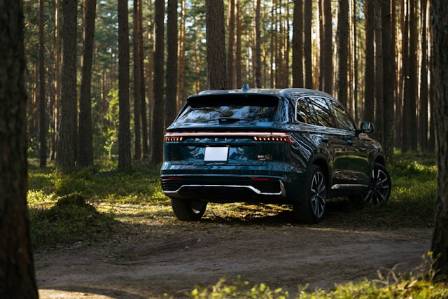
Enter the 2020s, and a new chapter begins: the electric SUV. As the world shifts toward sustainability, automakers are reimagining the SUV for a carbon-neutral future. The Polestar 3, launched in 2023, is a prime example. With a WLTP range of up to 628 kilometers, 517 horsepower, and dual-motor all-wheel drive, it retains the SUV’s signature traits—space, capability, a commanding view of the road—while ditching the gas-guzzling engine.
“Electricity gives SUVs a fresh start,” Kendall says. “They can keep the things people love—practicality, style, versatility—without the environmental cost. The Polestar 3 isn’t just an electric SUV; it’s a statement that the category can evolve.”
Electric SUVs solve many of the traditional SUV’s flaws. They’re quieter, smoother, and cheaper to run than gas-powered models. They also offer new design possibilities: without a bulky engine, engineers can create more interior space, better aerodynamics, and innovative storage solutions. The Polestar 3, for example, has a sleek, low-slung profile (unlike boxy traditional SUVs) to reduce wind resistance, boosting efficiency.
But the transition isn’t just about technology—it’s about culture. For decades, SUVs were tied to a “bigger is better” mindset. Electric SUVs challenge that, proving that capability and sustainability can coexist. “People still want the utility, but they also want to feel good about their choices,” Kendall explains. “Electric SUVs let them have both.”
Why the SUV Endures
So, what makes the SUV so enduring? It’s not just about size or power. The SUV’s appeal lies in its adaptability—it has evolved with each generation’s needs, from post-war workhorses to 1990s family cars to 2020s electric pioneers.
“At its core, the SUV is a blank canvas,” Kendall says. “It can be a luxury cruiser, a family hauler, an off-road warrior, or an eco-friendly commuter. That versatility is why it’s outlived fads like the minivan or the muscle car. It changes with us.”
As we enter the electric age, the SUV’s story is far from over. If the past 100 years are any indication, it will keep evolving, adapting to new technologies and new desires. And whether it’s a vintage Suburban, a classic Range Rover, or a cutting-edge Polestar 3, one thing is certain: the SUV will remain a fixture in our driveways—and our lives—for decades to come.
More along this branch
LEAF · en

20 of the world’s best soups
Pumpkin soup, tomato soup and other delicious dishes to satisfy your taste buds.
LEAF · en

Seafood Pasta
Bring a large pot of salted water to a boil and cook the pasta according to the package directions until it is al dente. Drain it, but keep about 1 cup of the cooking water for later use.
LEAF · en

Matcha Swiss Roll Cake
This matcha Swiss roll cake is a delightful treat featuring a light, airy sponge with a subtle earthy bitterness, paired with whipped mascarpone cream and fresh strawberries.
LEAF · en

My Top 5 Italian Pasta Recipes (Ranked by Flavor and Memory)
Pasta isn’t just a meal to me—it’s a celebration of flavor, tradition, and cherished memories. My lifelong love affair with Italian pasta has led to countless kitchen adventures, but narrowing down my top 5 dishes was no easy feat. These picks aren’t just based on taste; they’re tied to the emotions and joy they bring to the table, each holding a special place in my culinary journey.
LEAF · en

One World Trade Center: An Icon of Modern Architecture
One World Trade Center stands as a powerful symbol of resilience and innovation in the heart of New York City. Rising from the site of the original World Trade Center towers destroyed on September 11, 2001, this building not only serves as a functional office space but also represents the enduring spirit of progress and unity. It combines cutting-edge design with advanced safety features, redefining what a skyscraper can be in the 21st century.
LEAF · en

Easy Homemade Fruit Jelly
Making your own fruit jelly at home is a rewarding experience. Bursting with natural colors and fruity flavors, this easy recipe lets you enjoy a sweet treat without relying on store-bought options. Whether you’re hosting a summer gathering, making a playful dessert for children, or looking for a quick fruity snack, this homemade fruit jelly is simple to prepare and always satisfying.