Roadside Grassland Restoration: Turning Challenges into Opportunities

Grove read

Roadside Grassland Restoration: Turning Challenges into Opportunities

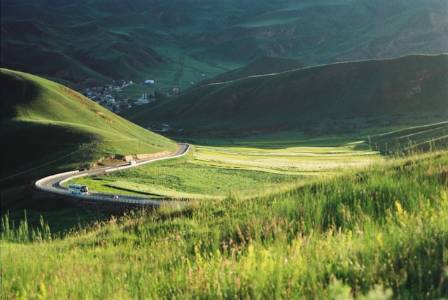
Roadsides cover a surprisingly large portion of our landscapes, and though often overlooked, they have the potential to play an important role in restoring ecosystems. When properly managed, these areas can provide habitat for native plants, support wildlife, and even deliver valuable ecosystem services such as erosion control and pollination. However, despite their potential, biodiversity-friendly restoration practices are rarely put into action.

E

Emma Brooks

Margin note

Reading tip

The full digest continues below among botanical margin notes.

Grove

Olive Digests

Roadsides cover a surprisingly large portion of our landscapes, and though often overlooked, they have the potential to play an important role in restoring ecosystems. When properly managed, these areas can provide habitat for native plants, support wildlife, and even deliver valuable ecosystem services such as erosion control and pollination. However, despite their potential, biodiversity-friendly restoration practices are rarely put into action.

Why Roadsides Matter

The vegetation that grows along roads depends on several factors—how the roadside was created, the type of soil present, climate, and how the area is maintained. Many stretches are degraded or overrun by invasive species. Yet, in agricultural or urban areas where natural habitats are scarce, roadsides can serve as refuges for rare and endangered plants.
Restoring these areas is not easy. Roadsides face unique challenges such as compacted soils, exposure to pollutants like road salt and nitrogen oxides, and harsh microclimates. These conditions demand tailored solutions rather than standard approaches.

Current Practices and Limitations

Today, the most common method of roadside revegetation is hydroseeding—spraying mixtures of commercial forage grasses and legumes. While inexpensive, this often results in poor establishment, especially under stressful roadside conditions. More promising are restoration projects that use regional native seed mixtures, which adapt better to local conditions and support biodiversity. The problem is that these seeds are often difficult to source and more costly.
Successful restoration also requires thoughtful site preparation, including erosion control and improving soil conditions. But beyond the technical side, research in this field has been limited. Most studies focus on temperate regions and plant species, with little long-term monitoring. Important questions remain about how restored roadsides influence broader ecosystem services, wildlife, and resilience to climate change.

Balancing Trade-offs and Building Synergies
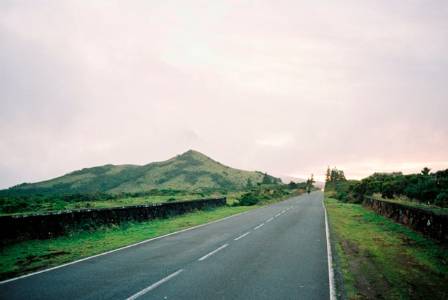
Like most conservation efforts, roadside restoration comes with trade-offs. Using native seeds and careful management costs more than conventional methods. Encouraging wildlife may raise concerns about road safety if it increases animal crossings.
Yet, there are also strong synergies. Native grasslands, for example, require less frequent mowing, which reduces both costs and risks for maintenance workers. Diverse roadside vegetation also helps prevent erosion, lowers the spread of invasive plants, and creates a safer driving environment by improving visibility.

Moving Forward: Opportunities in the UN Decade on Restoration

As countries invest in large-scale ecological restoration, roadsides represent an underutilized but valuable piece of green infrastructure. To unlock their potential, several steps are essential:
Closer collaboration between ecologists, road planners, and agencies.
Investment in native seed production to make local species more affordable and accessible.
Adopting biodiversity-friendly management, such as moderate mowing frequencies and the protection of remnant semi-natural roadside grasslands.
Prioritizing roadside restoration near protected or high-value landscapes, where it can strengthen habitat networks and connectivity.

Conclusion

Roadsides may cover only a small fraction of the land, but their visibility, extent, and connectivity make them powerful allies in global restoration efforts. By shifting from conventional grass seeding to strategies rooted in ecology, these overlooked spaces can transform into living corridors that support biodiversity, enhance ecosystem services, and contribute meaningfully to the goals of the UN Decade on Ecosystem Restoration.

More along this branch

LF

LEAF · en

A hidden village carved into a cliff

A hidden village carved into a cliff

About 195km southwest of Muscat’s sandy coastline, Oman’s dry plains gradually rise toward the limestone mountains of Jabal al Akhdar, a 2,980m-high massif whose name means “Green Mountain.” The region is made up of winding valleys, rugged slopes and dramatic gorges. It remains one of Oman’s most secluded areas, and once the paved road disappears, travelers must continue by foot, mule or four-wheel-drive vehicle.

LF

LEAF · en

Why Orange Cats Are So Special?

Why Orange Cats Are So Special?

Orange cats are often described as the friendliest cats of all, but whether this reputation is actually supported by science remains uncertain.

LF

LEAF · en

Discover the Smallest Canid of the Desert World

Discover the Smallest Canid of the Desert World

Fennec foxes are the absolute smallest members of the entire canid family. These incredible animals live in the deep deserts and arid regions of Africa and Arabia. They possess extraordinarily large ears that capture the slightest sounds. These massive ears help them hunt very efficiently during the dark night hours.

LF

LEAF · en

Top 10 Reasons to Embark on a Mediterranean Adventure

Top 10 Reasons to Embark on a Mediterranean Adventure

The mere mention of the Mediterranean conjures images of tantalizing seafood, sun-drenched beaches, and charming piazzas with dancing fountains. The Mediterranean Sea, nestled between Europe, Africa, and Asia, boasts a dazzling array of landscapes along its shores, each weaving its unique charm into the rich tapestry of the Mediterranean region. Here are the top 10 reasons why a journey to the Mediterranean is an absolute must:

LF

LEAF · en

Top 10 At-Home Basketball Drills to Elevate Your Game: A Complete Guide for Players

Top 10 At-Home Basketball Drills to Elevate Your Game: A Complete Guide for Players

Basketball excellence is forged not just in team practices or high-stakes games, but in the consistent, intentional work you put in on your own time. At-home training offers unparalleled flexibility to refine fundamentals, correct weaknesses, and build muscle memory—all without the need for a full court or teammates. Whether you’re a young athlete just starting out or a seasoned player looking to sharpen your skills, these 10 drills target every critical aspect of the game: ball handling, shooting, footwork, agility, finishing, rebounding, strength, and speed. By integrating them into your daily routine, you’ll develop the confidence and competence to stand out on the court. For members of Invictus Basketball Club, we’re excited to share that our exclusive Skills Lab homework will launch in video format this October—featuring step-by-step demonstrations and expert tips to amplify your at-home training. Read on to master these drills and take your game to the next level.

LF

LEAF · en

Sparkling Water: Why This Fizzy Drink Continues to Grow in Popularity

Sparkling Water: Why This Fizzy Drink Continues to Grow in Popularity

Sparkling water, often called carbonated water or seltzer, has become a popular choice for people who want a more exciting way to stay hydrated.