Grove read
Kinkaku-Ji: The temple of the Golden Pavilion
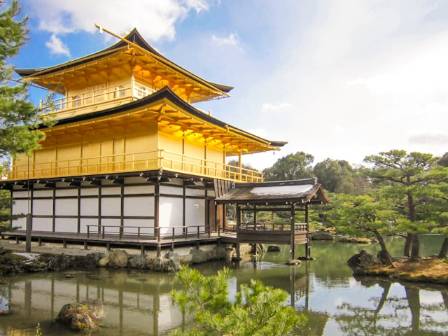
Located in the northwestern area of Kyoto, Kinkaku-ji is one of Japan’s most iconic historical landmarks and a UNESCO World Heritage Site. The temple has a long and eventful history that began in 1397. Over the centuries, it was destroyed and reconstructed several times, with the most recent rebuilding completed in 1955.
Andrew Clark
Margin note
Reading tip
The full digest continues below among botanical margin notes.
Grove
Olive Digests
Located in the northwestern area of Kyoto, Kinkaku-ji is one of Japan’s most iconic historical landmarks and a UNESCO World Heritage Site. The temple has a long and eventful history that began in 1397. Over the centuries, it was destroyed and reconstructed several times, with the most recent rebuilding completed in 1955.
Recognized as one of the most celebrated temples in Japan, Kinkaku-ji welcomes countless visitors from Japan and abroad throughout the year. Its convenient location also makes it easy to reach, requiring only about a 40-minute bus journey from Kyoto Station.
The Beauty of the Golden Pavilion
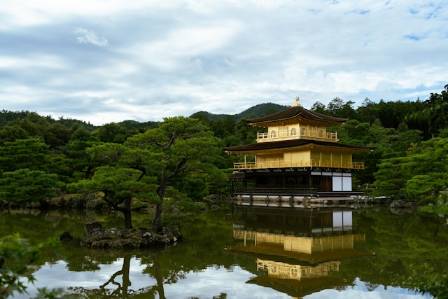
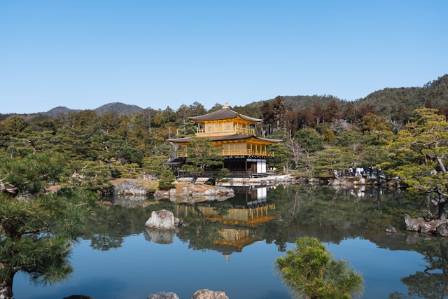
Kinkaku-ji is widely known as the “Golden Pavilion” because the upper two floors of the structure are covered with gold leaf. The brilliant golden exterior creates a stunning reflection on the Kyoko-chi, also called the Mirror Pond, producing one of Kyoto’s most memorable views.
Situated at the base of Kinugasa Hill, the temple is surrounded by lush forests, creating a peaceful atmosphere perfect for walking, relaxation, and quiet reflection.
The temple grounds are admired throughout all seasons. Traditional Chinese influences can be found in the garden design, while the scenery becomes especially spectacular when autumn leaves turn bright red or when winter snow covers the landscape.
Exploring the Temple Grounds
Visitors enter Kinkaku-ji through the Chumon Gate and follow a pathway surrounded by pine and maple trees. The temple’s architecture combines elements from several styles, including the shinden style of the Heian period, the samurai-inspired bukke style, and the design of Chinese Zen halls.
Inside the pavilion, visitors can find Buddhist statues, images of Yoshimitsu—the temple’s founder—and other religious figures. A bronze phoenix decoration stands proudly on the rooftop, adding to the building’s elegance.
Near the rear entrance of the grounds, the Upper Garden contains a small temple dedicated to Fudo Myo-o, a respected Buddhist deity. The area also features a pond believed to never run dry and statues where visitors toss coins as a traditional gesture for good fortune.
Another highlight is the Sekkatei Teahouse, which was added during the Edo period. After leaving the main temple area, visitors can browse souvenir stores and enjoy refreshments at a nearby tea garden.
History of Kinkaku-ji
The original Kinkaku-ji structure was built in 1397 and belonged to the Shoku-ji branch of Rinzai Zen Buddhism, which was established by Muso Soseki during the Muromachi period.
At first, the building served as a private villa for a member of the imperial court. Later, it became the retirement residence of the famous shogun Ashikaga Yoshimitsu. After his death, his son transformed the villa into a Zen temple according to Yoshimitsu’s wishes and named it Rokuon-ji.
Throughout history, the temple suffered repeated destruction caused by conflicts and fires. Several decades later, Yoshimitsu’s grandson constructed another famous temple, Ginkaku-ji, or the Silver Pavilion, on the opposite side of Kyoto.
In 1950, Kinkaku-ji was completely destroyed by a fire started by a young Buddhist monk who was dissatisfied with the temple. This incident later inspired Yukio Mishima’s 1956 novel The Temple of the Golden Pavilion.
The temple was rebuilt in 1955, and additional gold leaf decoration was applied during restoration work in 1987, restoring its magnificent golden appearance.
How to Reach Kinkaku-ji
From Kyoto Station, visitors can take Kyoto City Bus routes 101 from platform B2 or 205 from platform B3. Travelers should avoid the Rapid 205 service, as it does not stop at Kinkaku-ji. The Raku Bus routes 101 and 102 also provide convenient access.
The journey takes approximately 40 minutes, and buses stop at the Kinkakuji-Michi bus stop. The fare is around 230 yen.
Kinkaku-ji is also located a short walk north of Hirano Shrine and Waratenjin Shrine. Renting a bicycle is a good option for visitors who plan to explore nearby attractions such as Ryoan-ji and Ninna-ji Temples.
Another route is to combine the visit with Nijo Castle. From Kyoto Station, travelers can take the JR Sanin Line to Nijo Station, explore the castle, and then continue by train to Emmachi Station. From there, a short walk leads to the Nishinokyo Enmachi bus stop, where bus 205 goes directly to Kinkaku-ji.
Opening Hours and Admission Fees
Kinkaku-ji is open every day from 9:00 a.m. to 5:00 p.m. Admission costs 400 yen for adults and 300 yen for children.
Visitors are not allowed to enter the interior of the pavilion, but they can enjoy the surrounding gardens and admire the temple’s famous exterior views.
Attractions Around Kinkaku-ji
The area surrounding Kinkaku-ji contains many other historic temples, shrines, and cultural sites within walking distance. Nearby attractions include Ryoan-ji Temple, Toji-in Temple, and Ninna-ji Temple. Heading south, visitors can also reach Hirano Shrine and Kitano Tenmangu Shrine.
Near Nishioji Station, which can be reached via the JR Kyoto Line, there is a bicycle rental shop along with various Japanese and Western-style restaurants and a public bath facility.
Other nearby cultural attractions include the Kyoto Museum for World Peace and the Domoto Museum of Fine Art. From JR Kintetsu Kyoto Station, visitors can take city bus number 50 to the Ritsumeikan Daigaku-mae stop, with both museums located a short walk away.
Visiting Kinkaku-ji
For anyone traveling to Kyoto, Kinkaku-ji is a destination worth adding to the itinerary. With its golden architecture, peaceful gardens, fascinating history, and convenient transportation options, the Golden Pavilion offers visitors a memorable experience of Japan’s cultural heritage.
More along this branch
LEAF · en

Unmanned Aerial Vehicle
The Schmidt Ocean Institute provides support for drone or Unmanned Aerial Vehicle (UAV) operations by offering rental systems for approved research projects conducted aboard the R/V Falkor.
LEAF · en

9 Common Mistakes to Avoid for Your T-Shirt Designs
Every designer dreams of creating tees that fly off the shelves and become customer favorites—and chances are, that’s your goal too. But before your graphic t-shirts can achieve that dream success, your designs need to follow key graphic design principles. Overlooking these rules can lead to missteps that turn buyers away. Here are nine common pitfalls to steer clear of when crafting your t-shirt graphics.
LEAF · en
Mastering the Depths: A Comprehensive Guide to Underwater Art
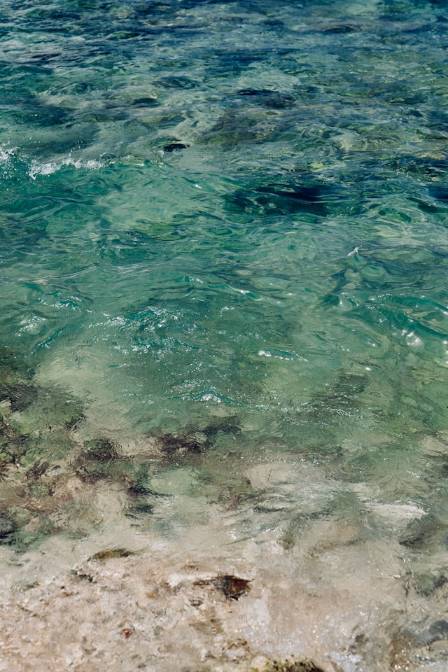
Rendering underwater scenes requires a specialized approach to perspective and light. To create a convincing aquatic environment, an artist must often depict two worlds simultaneously: the atmospheric background above the surface and the submerged reality in the foreground. This transition creates a "window" effect that invites the viewer into the water.
LEAF · en

What does the scenery on the ocean floor look like?
Seamounts are underwater mountain formations that are usually created by ancient volcanic activity. They often appear in long chains stretching across the ocean floor for hundreds of miles, rising hundreds or even thousands of feet above the surrounding seabed. These remarkable features play an important role in marine ecosystems by increasing the movement of nutrient-rich water, influencing ocean currents, strengthening tides, and creating waves.
LEAF · en
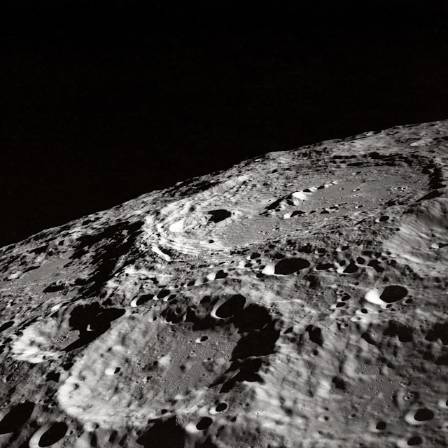
Understanding Moon Craters: Origins and Formation
Moon craters, those captivating bowl-shaped features on the lunar surface, have intrigued scientists and stargazers alike. Their formation is a testament to the dynamic history of Earth's celestial companion, shaped by the interplay of volcanism and cratering.
LEAF · en

Sparkling Flavored Water with Fruit
Make your afternoon sparkle with a fruity, fizzy drink! This flavored sparkling water with tropical fruit is refreshing, hydrating, and naturally sweet. All you need is a can of bubbly water and a handful of frozen fruit—easy, cheerful, and perfect for sipping on a sunny day.