Grove read
What does the scenery on the ocean floor look like?
Seamounts are underwater mountain formations that are usually created by ancient volcanic activity. They often appear in long chains stretching across the ocean floor for hundreds of miles, rising hundreds or even thousands of feet above the surrounding seabed. These remarkable features play an important role in marine ecosystems by increasing the movement of nutrient-rich water, influencing ocean currents, strengthening tides, and creating waves.
Lenora Finch
Margin note
Reading tip
The full digest continues below among botanical margin notes.
Grove
Olive Digests
Seamounts are underwater mountain formations that are usually created by ancient volcanic activity. They often appear in long chains stretching across the ocean floor for hundreds of miles, rising hundreds or even thousands of feet above the surrounding seabed. These remarkable features play an important role in marine ecosystems by increasing the movement of nutrient-rich water, influencing ocean currents, strengthening tides, and creating waves.
Because of these unique conditions, seamounts support a wide variety of marine life, including deep-sea corals, sea sponges, crabs, anemones, commercially valuable fish species, and many other organisms. Although scientists understand that seamounts provide major ecological benefits and influence deep-ocean environments, much of their world remains unexplored. Currently, only about one-fifth of the global seafloor has been surveyed using modern high-resolution mapping technology.
A Deep-Sea Discovery Expedition in the North Atlantic
From June 20 to July 29, 2021, NOAA Ocean Exploration, together with the U.S. Geological Survey (USGS), the U.S. Fish and Wildlife Service (USFWS), and various research institutions, carried out an advanced ocean exploration project. The mission focused on collecting important baseline information about deep-sea areas that were still poorly understood or had never been studied in detail.
Known as the “2021 North Atlantic Stepping Stones: New England and Corner Rise Seamounts” expedition, the project explored ecosystems within the Northeast Canyons and Seamounts Marine National Monument, as well as other unexplored regions of the New England and Corner Rise Seamount chains. These underwater mountain systems extend from areas near the Mid-Atlantic Ridge toward the eastern edge of the United States continental margin.
Discovering Rare Deep-Sea Creatures
During the expedition, researchers encountered many fascinating marine species, including a striking red jellyfish from the genus Poralia. Scientists believe this beautiful creature may represent a previously undescribed species. It was observed during Dive 20 of the expedition at a depth of approximately 700 meters (2,297 feet) in the North Atlantic.
The exploration provided scientists with a rare opportunity to observe deep-sea environments directly and document species that are rarely seen. These discoveries help improve understanding of the biodiversity that exists in some of the least explored areas of the ocean.
Exploring Ancient Coral Communities
One of the expedition’s remarkable discoveries was a large bubblegum coral (Paragorgia arborea) colony. Found during Dive 19, this impressive coral formation was estimated to be around 100 years old based on known growth rates for the species.
Researchers discovered multiple large coral colonies during the dive, leading one scientist to describe the location as a “land of giants.” These deep-sea coral communities demonstrate the importance of seamount habitats as refuges for long-lived and diverse marine organisms.
Mapping Previously Unknown Seamounts
USGS scientists Jason Chaytor and Kira Mizell served as geology science leaders during the expedition. Working alongside ship-based and shore-based researchers, they helped design remotely operated vehicle (ROV) dive plans, guided live exploration events, and coordinated scientific research efforts.
Between July 2 and July 28, the team successfully mapped around 40 seamounts, including approximately 20 that had little or no previous scientific information available. Since many of these underwater mountains had never been explored, researchers first conducted detailed mapping surveys before selecting locations for ROV dives.
These “map and dive” operations allowed scientists to identify the most valuable areas for exploration and collect new information about geological structures and deep-sea ecosystems.
Discovering Multispecies Coral Gardens
During Dive 11 of the expedition, researchers identified a large coral garden habitat that meets the definition established by the Oslo/Paris Convention (OSPAR), which describes these areas as containing between 100 and 700 coral colonies per 100 square meters.
The coral garden was mainly composed of whip corals (Calyptophora clinata) along with several other coral species, including Bathypathes, Thouraella, Acanella, Chrysogorgia, and Parantipathes. This discovery revealed a highly diverse underwater ecosystem thriving on a rocky ledge deep below the ocean surface.
Sharing Ocean Exploration With the Public
The expedition included two live-streamed “Live Dive” events that allowed people around the world to follow the research in real time. The first event, held on July 14, introduced the mission and featured scientists from NOAA, USGS, the University of Maine, and the Smithsonian National Museum of Natural History discussing their research.
A second live event on July 28 focused on the Northeast Canyons and Seamounts Marine National Monument. Scientists and visitors at Mystic Aquarium in Connecticut participated in discussions about geological discoveries, marine wildlife, and newly documented deep-sea habitats.
These public programs helped connect people with ocean science and highlighted the importance of exploring and protecting underwater environments.
Scientists’ Most Memorable Discoveries
When asked about the most significant moments of the expedition, Jason Chaytor highlighted the opportunity to study seafloor landscapes that had never been mapped or observed before. He noted that discoveries of carbonate caps on the Corner Rise Seamounts, along with collected samples, could provide valuable clues about the geological history of these formations.
Kira Mizell described her favorite experience as Dive 06 at Castle Rock Seamount. During this dive, researchers observed thick ferromanganese crusts covering pillow lavas, creating unusual rock formations resembling clusters of bubbles. The findings also provided important information about sediment movement, ocean currents, and water conditions throughout the long history of the seamount region.
Collecting Samples From the Deep Ocean
Researchers used remotely operated vehicles to collect geological samples from unnamed seamounts. These samples will help scientists better understand the formation and evolution of underwater mountains, as well as the processes that shape deep-ocean environments.
The information gathered during the expedition adds to previous New England Seamount research conducted in 2013 and 2014. Together, these studies are helping fill important gaps in knowledge about deep-sea landscapes and the distribution of marine habitats.
The Future of Seafloor Exploration
The findings from the 2021 North Atlantic Stepping Stones expedition will contribute to improved conservation and management decisions by expanding knowledge of deepwater ecosystems. The mapping data and ROV observations provide scientists and resource managers with a clearer understanding of marine biodiversity and geological features.
This research also supports global initiatives such as Seabed 2030, which aims to map the world’s ocean floor, as well as U.S. efforts to explore and characterize national waters. Through international cooperation and continued exploration, scientists are gradually revealing the hidden landscapes and extraordinary life forms that exist beneath the ocean surface.
More along this branch
LEAF · en
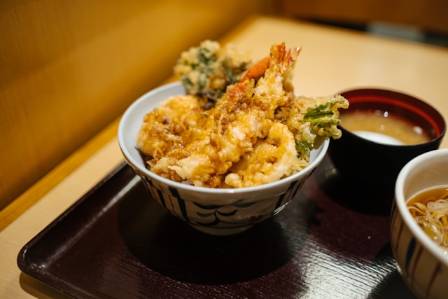
Simple Japanese Tempura Batter: A Guide to Light and Airy Frying
Creating authentic, restaurant-quality tempura at home is a manageable task that requires only three pantry staples. This method focuses on a minimalist approach to produce a delicate, golden coating that enhances rather than overwhelms the ingredients. Whether you are a novice or an experienced home cook, mastering this batter will allow you to transform ordinary seafood and vegetables into a crisp, professional-grade appetizer.
LEAF · en

The Odd Looking Golden Snub-Nosed Monkey
The golden snub-nosed monkey, also known as the orange monkey, snub-nosed leaf monkey, or Sichuan golden-haired monkey, is found only in central and southwestern China and the mountainous regions of Tibet. These monkeys live at elevations ranging from about 5,200 to 13,000 feet.
LEAF · en
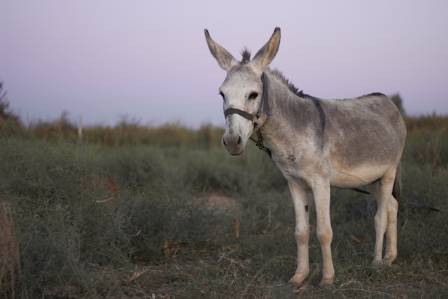
Curious and Remarkable Facts About Donkeys
Donkeys have played a vital role in human history for millennia, earning their place as reliable working companions. Despite being overshadowed by horses in popular culture, these animals are incredibly smart, tough, and socially complex.
LEAF · en

A Comprehensive Guide to Selecting Women’s Underlayers: Enhancing Every Silhouette
Choosing the ideal underlayer—be it a delicate camisole, a fitted bodysuit, or a light knit—is a foundational step in building a sophisticated wardrobe. These essential pieces do more than provide comfort; they serve as the structural base for your entire outfit, influencing how your silhouette appears and how your outer layers drape. By understanding your specific body type, you can select underlayers that accentuate your best features and provide a seamless, confident look for any occasion.
LEAF · en
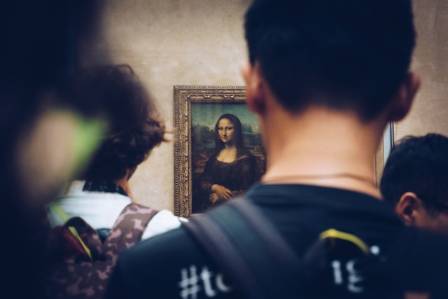
Top 3 Infamous Counterfeit Cases in the World of Art
The history of art forgery stretches back to ancient times, with instances like the Romans replicating Greek sculptures and ancient China producing a plethora of deceptive works. Modern art, too, hasn't been spared from the onslaught of fakes. While some forgeries are innocently crafted by enthusiastic students imitating masters, others are meticulously designed to deceive unsuspecting collectors and enthusiasts. The proficiency of certain forgers has blurred the lines between genuine and counterfeit, leading to museums and investors inadvertently investing millions in inauthentic pieces.
LEAF · en
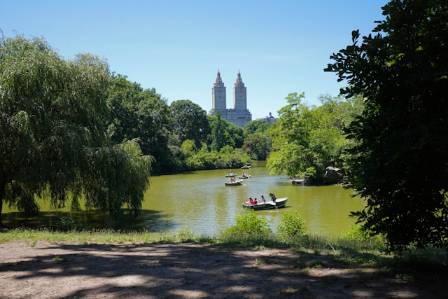
Fun Facts About The San Remo Luxury Apartment Building in NYC
As the first historic residential building in New York City to feature twin towers, The San Remo has long dominated the skyline of Central Park West with its unmistakable silhouette. This 27-story luxury cooperative apartment building was designed by renowned architect Emery Roth and stands between West 74th and West 75th Streets, offering residents spectacular views of Central Park from its soaring towers.