Grove read
Steps to a Happy, Colorful Home
Home has always represented comfort and belonging, but in 2020 it became even more central to our everyday lives.
Lucy Warren
Margin note
Reading tip
The full digest continues below among botanical margin notes.
Grove
Olive Digests
Home has always represented comfort and belonging, but in 2020 it became even more central to our everyday lives.
We often think about a home mainly through its practical purpose: a place that protects us and provides the basics we need. We consider questions like how many bedrooms it has, where guests can gather, and how much storage is available.
However, during this period, our homes became much more than simple living spaces. They transformed into classrooms, workplaces, creative studios, gyms, meditation corners, entertainment areas, writing spaces, personal retreats, and even our favorite restaurants that are always open.
At its best, a home should be a peaceful sanctuary where we can connect with loved ones, relax, explore creativity, and recharge. It should reflect our personality, inspire us when we need motivation, and surround us with warmth and calm when we want to slow down.
One of the most important roles of a home is to create happiness. Walking through the door should feel uplifting and bring a sense of comfort and joy.
Adding touches of color and pattern is one of the easiest ways to make a home feel personal and full of life.
Color is a powerful design element that can influence emotions and atmosphere. Research has shown that different colors may affect mood, energy levels, productivity, and feelings of relaxation. However, the most important factor when choosing colors is not simply following general rules.
The colors in your home should reflect you. Color is personal, emotional, and connected to your own memories and experiences. Think about the shades you naturally choose in your clothing, the artwork you admire, or the spaces where you feel happiest. Do those colors make you feel peaceful, inspired, energetic, or joyful? Trust your own reactions and choose colors that feel meaningful to you.
As someone who loves art, design, and color, my own home does include plenty of color, but I prefer using it through smaller details and carefully chosen accents.
I personally enjoy keeping a mostly neutral background, such as white walls, so that artwork, textiles, patterns, and colorful objects can stand out. This approach allows creativity to change over time without being limited by a strong permanent color scheme.
I especially love using statement rugs, accent walls, and decorative pieces that introduce bold colors and patterns in thoughtful ways.
Paint or Wallpaper a Small Space, Accent Wall, or Ceiling
Although a fully colorful room can be beautiful, sometimes a smaller area is all you need to transform the feeling of a space.
Painting one wall, adding wallpaper to a small room, or decorating a ceiling can create a surprising visual impact. The right color or pattern can highlight an architectural feature, make a room feel larger, or bring personality to an otherwise simple space.
A small powder room, hallway, or ceiling can become the perfect place to experiment with stronger colors and unique designs without overwhelming the entire home.
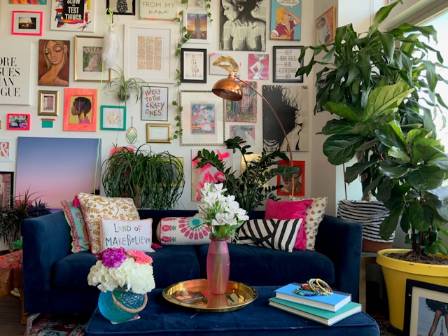
Add Personality Through Original Artwork
Artwork is one of the simplest ways to introduce color into your home while also making the space feel unique.
You can create your own large-scale artwork by choosing a color palette and painting a canvas yourself. Another option is transforming a secondhand piece with fresh paint or supporting independent artists by purchasing original works or prints.
Art brings character, creativity, and emotion into a room. A colorful painting can become a focal point while adding a sense of happiness and individuality to your surroundings.
Use Rugs, Throws, and Textiles to Add Color
Textiles are an easy way to bring warmth, comfort, and personality into a room.
A vibrant rug can serve as the foundation for a colorful design scheme. From there, you can repeat or complement its shades through pillows, blankets, curtains, and other soft furnishings.
For example, a deep blue rug can feel more lively when paired with accents of pink, terracotta, or warm red tones. These small additions can balance traditional colors and create a more cheerful atmosphere.
Arrange Books and Objects by Color
Organizing decorative items according to color can create a strong visual effect while making your shelves feel more intentional.
Grouping books by their cover colors can turn an ordinary bookshelf into a creative display. This method not only looks attractive but can also make it easier to remember where specific books are located because colors often become part of our visual memory.
The same idea can be applied to artwork, ceramics, accessories, and other objects displayed on shelves or tables.
Bring Nature Into Your Home
Natural elements are another wonderful way to add color, freshness, and life to your space.
Fresh flowers, branches collected during outdoor walks, and green plants can instantly brighten a room while creating a connection with nature.
Plants add beautiful shades of green, improve the feeling of freshness, and bring a calming organic quality to interiors. Displaying natural materials in creative ways can make a home feel more welcoming and peaceful.
Create a Home That Feels Like You
A happy home does not need to follow strict design rules. The most meaningful spaces are those that reflect the people who live there.
Color, texture, artwork, and natural elements can all help create an environment that feels joyful, relaxing, and inspiring. Whether you prefer bold patterns or subtle accents, the goal is to design a home that supports the way you want to live and makes you feel comfortable every day.
More along this branch
LEAF · en

These 5 Mountain Lakes Are Even More Gorgeous In The Winter
Mountain lakes possess an untouched, pristine charm throughout the year, but their winter appearance has a special kind of magic. Once the water freezes and fresh snow covers the surrounding landscape, these alpine settings seem to transform into an entirely different world.
LEAF · en

Six Winter Scenes in Art
Winter in the northern hemisphere brings short days, biting winds, frosty paths, and cozy knitwear. It marks the end of one year and the beginning of another, a season of reflection and transition.
LEAF · en

What Is a Partial Solar Eclipse?
On August 21, a remarkable total solar eclipse will sweep across the United States, allowing observers in portions of 14 states to witness one of nature’s most spectacular astronomical events. While people located within the narrow path of totality will see the Moon completely cover the Sun, millions of others across North America will experience a partial solar eclipse. Although less dramatic than totality, a partial eclipse remains an impressive celestial display.
LEAF · en
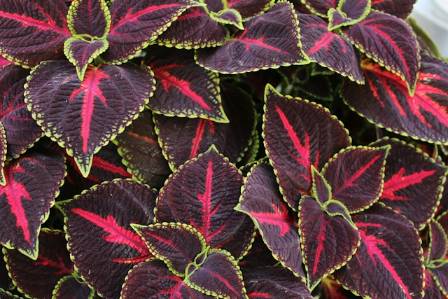
Coleus: A Color for Every Garden
Coleus has been a dependable favorite in gardens for generations. It is primarily grown for its remarkable foliage, which comes in an enormous range of colors and patterns. These plants can tolerate a variety of soil conditions and can be grown in locations ranging from partial shade to sunny areas. Because of its importance and popularity as a garden plant, the National Public Garden Bureau designated 2015 as the Year of the Coleus.
LEAF · en

The Purple Swamphen
Last spring, during a three-month study abroad program in South Africa, I finally encountered one of my long-awaited lifer birds, the Purple Swamphen (Porphyrio porphyrio). I spotted it partially concealed among reeds in a large wetland within Wilderness National Park. After noticing me, the bird hurried across the water, attempting to disappear into the reeds on the opposite side of the shallow stream.
LEAF · en

Smart Buying Tips for Vacation Rentals
To maximize your investment returns, look for properties in prime destinations that offer high-demand features like pools, hot tubs, or scenic views. Prioritize locations with lower overhead to boost your capitalization rate.