Grove read
Is a Red Panda a Bear?
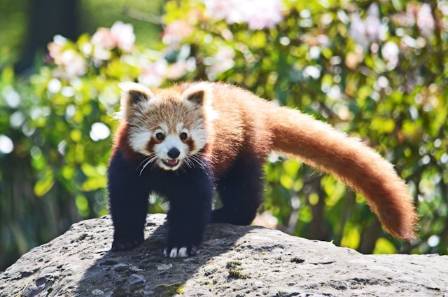
September 19 marks International Red Panda Day, a special occasion to celebrate one of the world’s most charming and unusual mammals. Whether you call them red pandas, firefoxes, red bear-cats, lesser pandas, first pandas, or simply “the other pandas,” these fluffy creatures are full of fascinating secrets.
Natalie Morgan
Margin note
Reading tip
The full digest continues below among botanical margin notes.
Grove
Olive Digests
September 19 marks International Red Panda Day, a special occasion to celebrate one of the world’s most charming and unusual mammals. Whether you call them red pandas, firefoxes, red bear-cats, lesser pandas, first pandas, or simply “the other pandas,” these fluffy creatures are full of fascinating secrets.
From their mysterious family history to their incredible climbing abilities, red pandas are truly remarkable animals. Let’s learn more about these unique inhabitants of the mountain forests.
Are Red Pandas Really Pandas?
The answer depends on how you define the word “panda.” The name is thought to come from the Nepali word “ponya,” which means “bamboo eater” or “bamboo-footed.”
Although red pandas and giant pandas share the same name, they are not closely related. Red pandas are the only surviving members of the Ailuridae family, while giant pandas belong to the bear family, Ursidae.
The red panda was first scientifically described in 1825 and given the name Ailurus fulgens. Giant pandas were identified later and received the name “panda” because they shared certain similarities with red pandas, especially their bamboo-based diet. In some ways, red pandas could even be considered the original pandas.
Why Do Red Pandas Have Such Fluffy Tails?
A red panda’s large, bushy tail serves several important purposes. Its long, furry tail helps the animal maintain balance while moving along narrow branches and rocky surfaces high in the forest.
Unlike some animals that survive winter through hibernation, red pandas remain active throughout the cold season. Their thick fur and fluffy tails provide extra insulation, helping them stay warm during freezing temperatures, strong winds, and snowy weather.
Are Red Pandas Bears?
No. Red pandas are not bears, and they are not raccoons either.
Scientists have debated the classification of red pandas for many years. When they were first discovered, researchers placed them in the raccoon family because of similarities in their skull shape, teeth, and striped tails. Later studies suggested a possible connection with bears.
However, modern genetic research has shown that red pandas belong to their own separate family, Ailuridae. Their evolutionary history reveals that they are ancient carnivores and are likely more closely related to animals such as skunks, raccoons, and weasels. Their ancestors even lived in North America millions of years ago.
Where Do Red Pandas Live?
Red pandas are found in high-elevation temperate forests throughout the Himalayas and other mountain regions where bamboo grows.
Recent genetic studies suggest that what was once considered one species may actually include two separate species: Ailurus fulgens fulgens and Ailurus fulgens styani.
The Himalayan red panda (Ailurus fulgens fulgens) mainly lives in Nepal and can also be found in India and Bhutan. The Chinese red panda (Ailurus fulgens styani) is mostly found in China and Myanmar and is generally larger with deeper reddish fur.
Do Red Pandas Enjoy Snow?
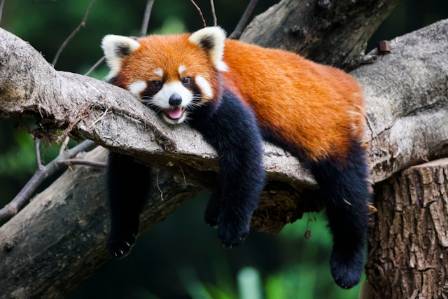
Yes, red pandas are especially fond of snowy environments. Snowy weather often brings out their playful and active behaviour, making it one of the best times to observe them.
Their thick coats allow them to move comfortably through cold mountain forests covered in snow.
Do Red Pandas Make Sounds?
Although red pandas are generally quiet animals, they can produce a variety of sounds. They may squeak, chirp, hiss, grunt, or make unusual “huff-quack” noises when communicating.
Young cubs may whistle or make high-pitched cries when they feel threatened or need attention. However, scent communication is much more important than vocal signals for adult red pandas.
They mark their surroundings by urinating or rubbing scent glands located near the base of their tails against objects. This scent information can reveal details such as their age, sex, and reproductive condition.
Red pandas also have scent glands between their foot pads. These glands release a clear liquid that humans cannot detect by smell and are used to mark their territory.
When a red panda discovers a new scent mark, it uses its tongue to examine the chemical information. A special cone-shaped structure on the underside of its tongue collects the scent and transfers it to a gland inside the mouth for analysis. This ability is unique among carnivores.
How Large Do Red Pandas Become?
Adult red pandas are relatively small animals. Most weigh between 8 and 17 pounds, which is similar to the size of a domestic cat.
Their total body length, measured from the nose to the end of the tail, usually ranges from 36 to 43 inches.
Can Red Pandas Be Kept as Pets?
No. Although fictional characters inspired by red pandas may seem like adorable pets, real red pandas are wild animals and should never be kept in homes.
They have sharp claws and teeth, produce strong-smelling scent secretions, and require very specific diets and veterinary care. In addition, red pandas are endangered and protected by law, making private ownership and trade illegal in many places.
What Do Red Pandas Eat?
Although red pandas have the digestive system of a carnivore, their diet is mostly plant-based. Around 95% of what they eat is bamboo.
They mainly consume young bamboo leaves and tender shoots while avoiding the harder woody stems. They also eat roots, grasses, fruits, insects, and larvae. Occasionally, they may capture small animals or birds.
In captivity, red pandas are often fed bamboo, special herbivore biscuits, and seasonal bamboo shoots. They may also enjoy treats such as apples, grapes, bananas, and blueberries.
What Is a Group of Red Pandas Called?
A group of red pandas may be called a pack, although these animals rarely gather together in the wild.
Red pandas are usually solitary except during breeding season. At that time, males and females may form pairs, and occasionally one male may associate with multiple females.
Young red pandas are usually born in late spring or early summer and remain with their mothers for about one year before becoming independent.
In zoos, some red pandas may live together depending on their personalities and available space.
Are Red Pandas Good Climbers?
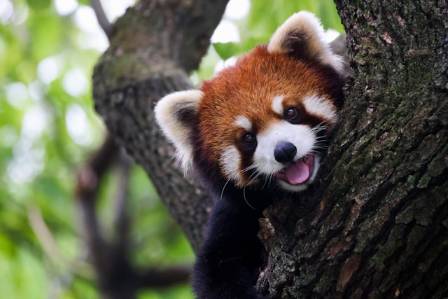
Yes, red pandas are excellent tree climbers. They spend much of their lives above the ground, where they sleep, rest, search for food, and avoid predators.
Their flexible ankles allow them to climb down trees headfirst, while their sharp claws and furry feet provide extra grip on branches and trunks.
How Many Red Pandas Remain in the Wild?
Red pandas are classified as endangered, and their numbers have fallen significantly in recent decades.
Researchers estimate that wild populations have declined by more than half over the past 20 years, with possibly only around 2,500 individuals remaining in their natural habitats.
Habitat destruction, deforestation, and human activity continue to threaten their survival.
How Can We Help Red Pandas?
One of the most effective ways to protect red pandas is by spreading awareness and supporting conservation programs.
Learning about these animals, sharing information with others, and supporting responsible wildlife tourism can all contribute to their protection.
People can also help by reducing their environmental impact. Simple actions such as reusing materials, recycling, reducing waste, and participating in local conservation activities help protect ecosystems that support red pandas and many other species.
By understanding and protecting red pandas, we can help ensure these extraordinary animals continue to survive in the wild.
More along this branch
LEAF · en

Top 5 Skydiving Bucket List Ideas
Heeeeck yeah! You just did a tandem skydive — and put a great big neon checkmark through the number-one item on your personal bucket list! We couldn’t be prouder of you for doin’ it. Maybe, however, that check mark has just gotten you excited to find out what might be behind that incredible blue veil you just brushed aside. Your initial tandem jump might just have given you a taste for freefall. If you’re wondering what to do after your bucket list skydive, we have an idea: create a skydive bucket list. Consider it a subset of the overall to-dos, right? Here are some super-cool skydiving bucket list ideas to get your cogs turning…
LEAF · en

Easy Cat Drawing
If you want an easy and enjoyable way to start drawing cats, this free downloadable tool is an ideal choice. It includes two versions of the cat image: a black-and-white line drawing perfect for sketching or coloring, and a fully colored version to serve as a reference. Whether you’re a beginner artist or a parent looking for an engaging activity for your child, this resource makes learning to draw both fun and educational.
LEAF · en
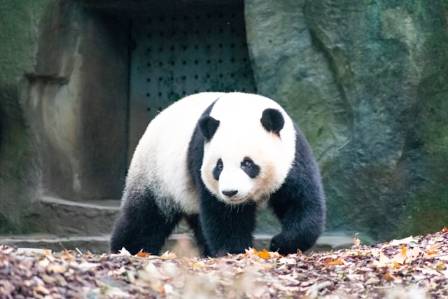
The Giant Panda: A Black-and-White Icon of Conservation
The giant panda (Ailuropoda melanoleuca) is one of the world’s most recognizable and beloved mammals, a member of the bear family distinguished by its striking black-and-white fur and gentle demeanor. Native exclusively to China’s mountainous regions, these iconic creatures have long captured global attention—not just for their adorable appearance, but also for their remarkable conservation journey, which has seen them rebound from the brink of extinction to a status of “Vulnerable” on the IUCN Red List. Beyond their cultural significance as China’s national treasure, giant pandas play a vital role in their forest ecosystems, serving as an umbrella species whose protection benefits countless other plants and animals sharing their habitat. From their specialized diet to their solitary lifestyle, every aspect of the giant panda reflects a unique adaptation to the challenging mountain environment they call home.
LEAF · en
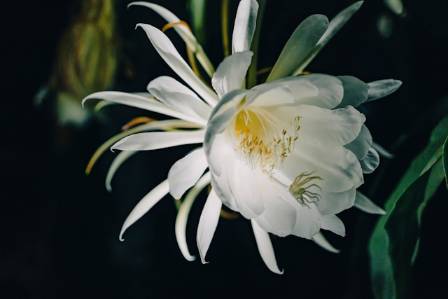
Epiphyllum, Queen of the Night
As someone who enjoys collecting unique plants, I am constantly searching for green companions that bring something special to my indoor garden. Plants with unusual growth patterns and impressive flowers always catch my attention. Epiphytic plants are among my favorites because they are full of surprises. Unlike terrestrial plants that grow in soil, epiphytes naturally grow on other plants without taking nutrients from their hosts.
LEAF · en

The world's top 10 cities surrounded by mountains
Nagano is a perfect example of a city where visitors can enjoy both modern urban experiences and exciting mountain adventures. While many people assume outdoor activities require leaving the city behind, Nagano proves that skiing, hiking, culture, and city comforts can all exist within easy reach.
LEAF · en
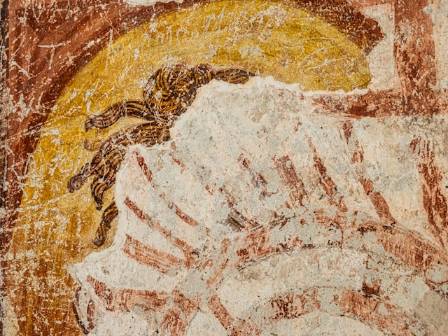
Five Captivating Examples of Ancient Rock Art
The earliest recorded examples of cave paintings originated tens of millennia ago, providing a window into the prehistoric environment through the eyes of our predecessors.