Grove read
7 Fascinating Facts About the Equitable Life Building – The World’s First Skyscraper
New York City is celebrated for its skyline, but the modern era of tall buildings began with one bold experiment: the Equitable Life Building, finished in 1870. Often regarded as the first true skyscraper, it stood only eight stories tall, yet its innovations forever changed architecture.
Griffin
Margin note
Reading tip
The full digest continues below among botanical margin notes.
Grove
Olive Digests
New York City is celebrated for its skyline, but the modern era of tall buildings began with one bold experiment: the Equitable Life Building, finished in 1870. Often regarded as the first true skyscraper, it stood only eight stories tall, yet its innovations forever changed architecture.
A Revolutionary Structure
The Equitable Life Building was groundbreaking for its time. Rising 130 feet, it dwarfed its neighbors and introduced features that redefined what a city building could be. Its “cage construction” technique, using a metal frame, allowed for greater height and stability than traditional masonry.
Materials and Fire Safety
The exterior featured terracotta tiles and brownstone, which were not only decorative but also fire resistant—an essential safeguard in dense urban areas. These design choices balanced elegance with practicality, ensuring the building looked impressive while remaining resilient.
Elevators That Changed Everything
Perhaps its greatest leap forward was the inclusion of Otis passenger elevators, still a new technology in 1870. For the first time, upper floors were easily accessible, transforming the way people thought about vertical space. Offices higher up became desirable, proving that tall buildings could be profitable as well as practical.
Praise and Criticism
The Equitable Life Building was met with mixed reactions. Admirers viewed it as a bold symbol of progress, while skeptics worried it would block sunlight and restrict airflow for neighboring structures. Despite such concerns, engineers applauded its use of steel framing and advanced technology.
The Architect Behind the Vision
George B. Post, a former civil engineer turned architect, designed the building. His mastery of steel construction and flair for spacious interiors earned him recognition across the nation. Post later created landmarks such as the New York Stock Exchange (1903) and the Wisconsin State Capitol, cementing his reputation as a pioneer.
Short but Influential Life
Though admired, the Equitable Life Building only stood for 45 years. In 1912, it was torn down to make space for a larger replacement, the new Equitable Building that still occupies the site today. Its demolition was controversial—some mourned the loss of history, while others saw it as progress in a city that never stopped growing.
A Lasting Legacy
Even though the original structure is gone, its influence remains immense. By proving that steel frames and elevators could support tall buildings, it opened the door for icons like the Empire State Building and, eventually, global marvels such as the Burj Khalifa. The Equitable Life Building may no longer exist, but its impact is embedded in every modern skyline.
Conclusion
The Equitable Life Building was more than just an office block—it was the seed that grew into the skyscraper era. With its innovative materials, elevators, and daring design, it reshaped cities and inspired generations of architects. While it stood for less than half a century, its legacy continues to tower over the history of architecture.
More along this branch
LEAF · en
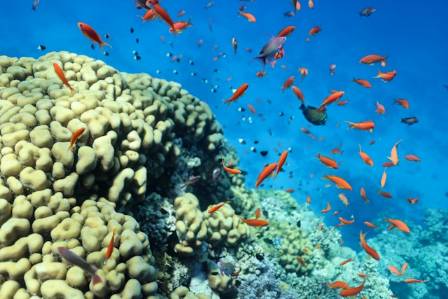
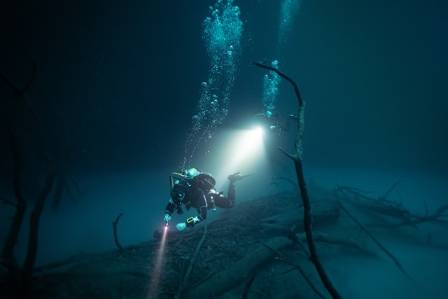
What does the scenery on the ocean floor look like?
Seamounts are underwater mountain formations that are usually created by ancient volcanic activity. They often appear in long chains stretching across the ocean floor for hundreds of miles, rising hundreds or even thousands of feet above the surrounding seabed. These remarkable features play an important role in marine ecosystems by increasing the movement of nutrient-rich water, influencing ocean currents, strengthening tides, and creating waves.
LEAF · en

The Most Innovative Smartphones of 2023
2023 has been a year of unexpected innovations in the smartphone industry. While it might seem like smartphones have reached a plateau, some devices have broken the mold, offering exciting new features and designs. These standout phones remind us that there’s still room for creativity and innovation in the smartphone world.
LEAF · en

Annular Solar Eclipses: The “Ring of Fire” in the Sky
An annular solar eclipse is a rare and striking type of eclipse. It occurs when the Moon moves directly in front of the Sun but does not fully cover it. Instead, a bright outer ring of sunlight remains visible around the Moon’s silhouette. This glowing circle is known as an annulus, often described as a dramatic “ring of fire.”
LEAF · en

Dolphins: The Carnivorous Maestros of the Oceans
Dolphins, celebrated for their playful and inquisitive nature, are widely regarded as some of the most intelligent beings on our planet. With a staggering 42 diverse species, these marine marvels exhibit variations in size, behavior, and dietary preferences depending on their geographical habitat and the availability of prey. This exploration delves into the intriguing dietary habits of dolphins, focusing on a fundamental query: Are dolphins truly carnivores? If you've ever pondered the culinary inclinations of these charismatic creatures, you're in the right place!
LEAF · en

3 Techniques to Unleash Your Creative Potential
Ingenious Strategies for Cultivating Inspiration, Drive, and Readiness to Amplify Creativity.
LEAF · en
Submersible Robotics: Prying into the Enigmas of the Deep Sea
Modern ocean exploration relies on staggering engineering feats. Deep-sea vehicles like the remotely operated vehicles (ROVs) Deep Discoverer and Seirios, along with autonomous platforms like Nereid Under Ice, are marvels of technology. These machines are composed of thousands of pounds of hardware and miles of internal wiring. They are built to endure depths exceeding four miles, where the environment is hostile and the pressure is nearly 600 times greater than at the surface.