Grove read
Alpine Ibex: A Majestic Mountain Survivor
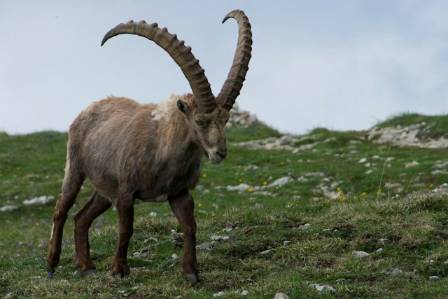
The Alpine ibex (Capra ibex) is among the most remarkable animals inhabiting Europe's high mountain regions. With its impressive appearance and powerful build, this wild goat can weigh approximately 100 kilograms. Its large horns curve backward and may reach about one meter in length. These horns also provide clues about the animal's age, as their annual growth rings correspond to successive winters.
Evander Knox
Margin note
Reading tip
The full digest continues below among botanical margin notes.
Grove
Olive Digests
The Alpine ibex (Capra ibex) is among the most remarkable animals inhabiting Europe's high mountain regions. With its impressive appearance and powerful build, this wild goat can weigh approximately 100 kilograms. Its large horns curve backward and may reach about one meter in length. These horns also provide clues about the animal's age, as their annual growth rings correspond to successive winters.
Habitat and Adaptations
Alpine ibex are well adapted to rocky mountain environments at elevations above 2,000 meters. They inhabit steep, rugged slopes as well as alpine grasslands where relatively few other animals are able to survive.
Despite their substantial size and weight, ibex are extraordinarily capable climbers. Their deeply split hooves give them a secure grip on narrow ledges and uneven rock surfaces, allowing them to move across terrain that appears nearly impossible to navigate. They can leap from one rock to another with remarkable precision, reaching cliffs and high slopes that would be inaccessible to most large mammals.
During the winter months, Alpine ibex generally move toward south-facing slopes. These areas receive more sunlight and often retain less snow, giving the animals better access to shelter and food. Their dense coats provide insulation against freezing temperatures and strong mountain winds, while their specialized hooves help them maintain balance on icy and snow-covered surfaces.
The Mystique of the Alpine Ibex
Throughout history, the Alpine ibex has been associated with strength, endurance, and survival. Ancient people considered the animal extraordinary enough to connect it with supernatural powers and believed its ability to live in such severe environments reflected a relationship with the gods.
The ibex was also hunted because various parts of its body were believed to have medicinal properties. Powder made from its horns was once thought to be useful against poisoning, while its heel bones were believed to possess aphrodisiac qualities.
These beliefs contributed to intensive hunting pressure. By the 17th century, the Alpine ibex had nearly disappeared from the Alps. Fortunately, later conservation measures helped protect the remaining animals and eventually allowed the species to recover.
The Comeback Story
The recovery of the Alpine ibex began during the early 20th century. A small surviving population in Italy's Gran Paradiso National Park received protection, allowing the animals to reproduce safely. Some ibex were subsequently bred in captivity before being gradually returned to suitable areas in the wild.
Today, more than 40,000 Alpine ibex are estimated to live throughout the Alps, with particularly large populations occurring in Switzerland and Italy.
The species has also established itself successfully in places such as Austria's Ötztal Valley and Switzerland's Geigenkamm Range following reintroduction programs. As a result, Alpine ibex can once again be seen moving freely through many parts of their traditional mountain habitat.
Social Structure and Behavior
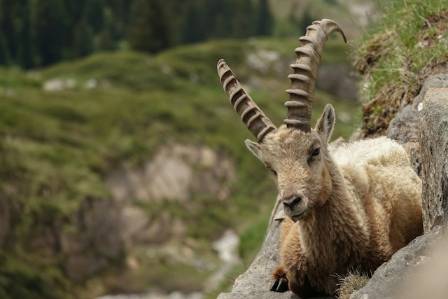
Alpine ibex are social animals that typically gather in relatively small groups. Female herds commonly contain around 10 to 20 individuals, including younger animals.
Adult males generally have a much more solitary lifestyle for most of the year. They come together with other males primarily during the rutting period in late autumn. At this time, males compete aggressively for access to females and engage in powerful battles to establish dominance.
The males that succeed in these contests gain opportunities to mate with several females, allowing their genes to be passed on to the next generation.
Alpine ibex communicate through a variety of vocalizations. Young animals produce sounds similar to the bleats of domestic goats, while adults can make distinctive whistling noises, particularly when they become alarmed or startled.
Diet and Lifestyle
Alpine ibex are herbivores that mainly consume grasses, flowers, and shrubs. Their strong, specialized hooves help them reach vegetation growing among rocky surfaces and outcrops.
Their food choices change according to the season. During summer, when vegetation is plentiful, they take advantage of green alpine meadows and other fresh plant growth. In winter, when snow covers much of the vegetation, they depend more heavily on evergreen shrubs and lichens.
Ibex may also obtain additional nutrients by licking moss and salt deposits from rocks. Their ability to locate and make use of limited food resources in severe mountain environments demonstrates how effectively they have adapted to alpine conditions.
Conservation and Challenges
The Alpine ibex is currently classified as Least Concern by the IUCN, largely because decades of conservation work and strict hunting controls have helped the species recover.
Nevertheless, these mountain goats still face pressures from human activities. Tourism, mountaineering, and hunting can disturb their natural habitat and affect their behavior.
Trophy hunting has been particularly controversial in certain regions, including Switzerland, where regulated hunting is permitted. Critics argue that trophy hunting can conflict with broader conservation objectives, while supporters maintain that income generated by regulated hunting can contribute to local economies and conservation programs.
Despite these continuing challenges, the Alpine ibex remains well established in the high-altitude regions of the Alps. Its remarkable recovery and ability to survive in extreme mountain landscapes have made it a lasting symbol of strength, endurance, and resilience.
More along this branch
LEAF · en

Escape the Urban Hustle: Reconnect with Nature
In the midst of the urban frenzy, there exists an age-old remedy to alleviate stress and anxiety, and rekindle your inner strength: the art of travel. The urban jungle, with its concrete canyons and ceaseless commotion, is a far cry from the serene wonders of the natural world. To immerse yourself in the embrace of tranquility, all you need is a journey that transports you back to the essence of your being.
LEAF · en

Are Strawberries Good for You?
Nutrition, Health Benefits, Diet Tips, and Potential Risks Strawberries are not only delicious—they’re loaded with nutrients that support overall wellness. Packed with essential vitamins, minerals, fiber, and natural compounds with antioxidant and anti-inflammatory effects, strawberries may help lower the risk of several chronic conditions. Emerging research indicates that strawberries may help regulate blood sugar levels after meals in certain individuals with excess weight or obesity. Moreover, this fruit contains plant-based compounds that may contribute to a lower risk of heart disease, stroke, cancer, high blood pressure, and digestive issues. Here’s a breakdown of what makes strawberries a smart addition to your diet.
LEAF · en
The White Tiger: Genetics, Myths, and Conservation—Unveiling Nature’s Rare Marvel
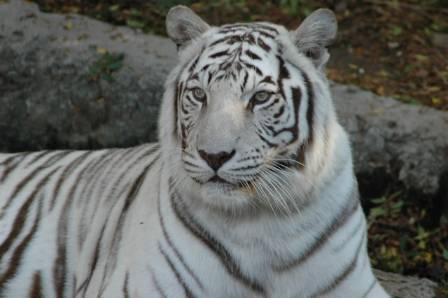
Few creatures command attention like the white tiger. With its snow-white fur, jet-black stripes, and piercing blue eyes, this big cat stands as one of nature’s most captivating spectacles, weaving a spell over anyone fortunate enough to see it. Found in select conservation parks worldwide—including Taman Safari Bali—white tigers have long been surrounded by myths, from being revered as divine beings in ancient cultures to being misunderstood as a distinct tiger species. Yet beyond their breathtaking appearance lies a fascinating story of genetics, adaptation, and conservation. Contrary to popular belief, white tigers are not a separate subspecies nor albino; they are a rare genetic variant of the Bengal tiger (Panthera tigris tigris), shaped by a recessive gene that alters their pigmentation. Their existence highlights the complexity of natural genetics, while their presence in zoos and conservation centers plays a pivotal role in raising awareness about the broader threats facing all tiger populations. In this exploration, we delve into the science behind their unique coloration, their physical traits, the challenges they face in the wild, and their vital role in conservation education—separating fact from fiction to celebrate one of nature’s most extraordinary creations.
LEAF · en
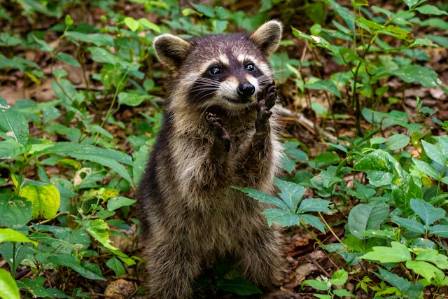
Raccoons: Clever Survivors of the Wild and Urban World
The raccoon (Procyon lotor) is classified among the carnivores, a mammalian group traditionally made up of animals that primarily consume meat. However, many members of this group are also capable of eating berries, fruits, vegetables, eggs, acorns, beech and hickory nuts, grains, grasses, and bark when other food sources are scarce. Carnivorous mammals have five toes and prominent canine teeth. Raccoons are omnivores, and the proportion of plant and animal foods they consume changes according to the season and what is available in their surroundings.
LEAF · en

Sparkling Flavored Water with Fruit
Make your afternoon sparkle with a fruity, fizzy drink! This flavored sparkling water with tropical fruit is refreshing, hydrating, and naturally sweet. All you need is a can of bubbly water and a handful of frozen fruit—easy, cheerful, and perfect for sipping on a sunny day.
LEAF · en

What Is a Partial Solar Eclipse?
On August 21, a remarkable total solar eclipse will sweep across the United States, allowing observers in portions of 14 states to witness one of nature’s most spectacular astronomical events. While people located within the narrow path of totality will see the Moon completely cover the Sun, millions of others across North America will experience a partial solar eclipse. Although less dramatic than totality, a partial eclipse remains an impressive celestial display.