Grove read
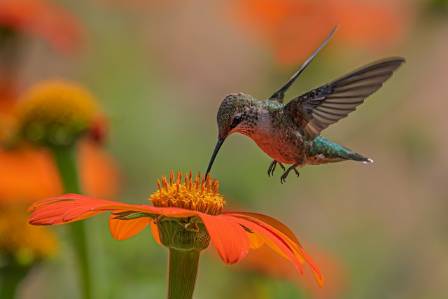
Hummingbirds have underdeveloped legs, so they cannot walk.
Fun Facts About Hummingbirds
Amelia Brooks
Margin note
Reading tip
The full digest continues below among botanical margin notes.
Grove
Olive Digests
Fun Facts About Hummingbirds
- North America is home to 18 different hummingbird species. These remarkable birds are naturally found only in the New World, including North, Central, and South America.
- The oldest recorded wild hummingbird was a Broad-tailed Hummingbird, which survived for more than 12 years.
- There are more than 325 known hummingbird species, making hummingbirds the second-largest bird family in the world, following only flycatchers.
- Hummingbirds are incredibly small, weighing only about one-tenth of an ounce, which is approximately the weight of a single penny.
- Their brains are extremely tiny, roughly the size of a BB pellet, yet they display remarkable intelligence and memory.
- Hummingbirds have very weak and short legs, meaning they are unable to walk normally. Their bodies are specially adapted for flying.
- A female hummingbird is only about eight times heavier than the egg she produces, an unusually small difference compared with many other birds.
- Hummingbirds produce the smallest bird eggs in the world. Ruby-throated Hummingbird eggs are among the tiniest known.
- Most hummingbirds lay two eggs, each approximately the size of a blueberry.
- Ruby-throated Hummingbirds have one of the highest nesting success rates among migrating birds that travel between the tropics and North America.
- Ruby-throated Hummingbirds can raise two broods in a single season, with each breeding cycle taking about 45 days from nest building until the young birds leave the nest.
- Hummingbirds use spider silk as a natural adhesive. The sticky threads help secure their nests to branches and also hold the nest materials together.
- Their nests are surprisingly small, usually around the size of a golf ball, measuring approximately 1.5 inches in diameter.
- Only about 20% of young Ruby-throated Hummingbirds survive their first year of life.
Feeding Behavior
- Hummingbirds have extremely high energy needs and typically feed about every 10 minutes.
- Contrary to popular belief, hummingbirds are not born with a natural attraction to the color red. Instead, they learn the connection between red flowers and available food sources.
- During periods of extreme cold when food becomes unavailable, hummingbirds may become aggressive. In one case, a male Anna’s Hummingbird killed another bird during a food shortage by using its bill like a spear. Providing additional feeders or temporary sugar-water sources can help birds survive such emergencies.
- A hummingbird can consume nectar equal to twice its own body weight every day. Most other birds consume only about one-quarter to one-half of their body weight daily.
- Their diet includes nectar from flowers as well as sugar-water solutions provided by feeders.
- Hummingbirds collect nectar using their long tongues. Special grooves along both sides of the tongue create a capillary effect, helping draw nectar upward and into the mouth.
- Their tongues can extend approximately the same distance as the length of their bill.
- While feeding, hummingbirds can move their tongues in and out at speeds of up to 12 times per second.
- Female hummingbirds generally have longer tongues than males.
- In addition to nectar, hummingbirds eat insects and insect eggs found on plants, trees, and the ground. Spiders and spider eggs are especially important food sources.
- They capture insects using their bills rather than their tongues.
- One scientific study recorded an Anna’s Hummingbird visiting more than 1,000 flowers in a single day.
Flight Abilities
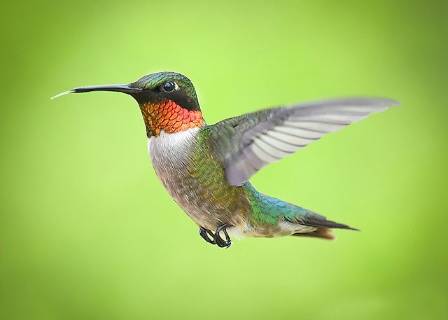
- Hummingbirds are incredibly fast flyers. They can reach speeds of approximately 60 miles per hour, although their usual flying speed is around 30–45 miles per hour.
- They are the only birds capable of flying:
- Backward
- Upside down
- While hovering in place
- Their extraordinary flying skills are possible because of their highly flexible shoulder joints.
- Their wings can beat between 20 and 80 times per second, depending on the species and activity.
- Although they are excellent flyers, hummingbirds avoid deep water. They prefer bathing in shallow pools, small dishes, sprinklers, or misting systems.
- To maintain clean and healthy feathers, hummingbirds sometimes perform “leaf bathing” by fluttering against wet leaves.
Survival Adaptations
- At night, Ruby-throated Hummingbirds can enter a special energy-saving state called torpor.
- This condition is similar to short-term hibernation. During torpor:
- Their metabolism slows dramatically.
- Their heart rate can decrease from around 1,200 beats per minute to only 50 beats per minute.
- Hummingbirds are small but highly territorial. They can become very aggressive when defending feeding areas and may even chase away much larger birds.
Appearance and Colors
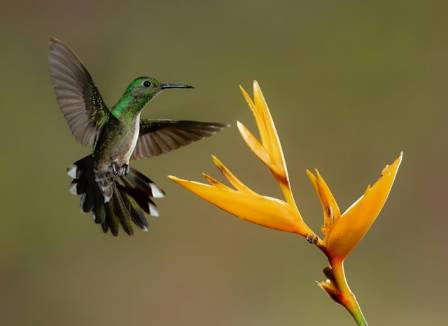
- The shimmering colors of hummingbird feathers have earned them the nickname “jewels of the garden.”
- Male hummingbirds often have a brightly colored throat patch called a gorget. This area reflects specific wavelengths of light, creating brilliant colors.
- These throat colors can help identify different male species:
- Anna’s Hummingbird: bright neon pink
- Costa’s Hummingbird: violet
- Magnificent Hummingbird: green
- Ruby-throated Hummingbird: ruby red
- Blue-throated Hummingbird: vivid blue
Natural Predators
Despite their speed and agility, hummingbirds can still become prey for larger animals.
Known predators include:
- Bullfrogs
- Praying mantises
- Large spiders
These predators can capture hummingbirds when they are feeding, resting, or caught by surprise.
More along this branch
LEAF · en
Exploring the Life of Toucans
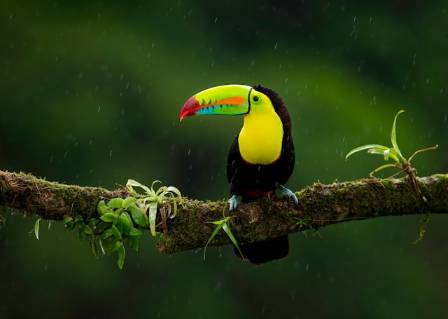
Toucans, instantly recognized for their large, colorful beaks, are among the most iconic birds of the neotropical regions of the Americas. Beyond their striking appearance, they are important members of their ecosystems and boast an intriguing natural history. This guide explores the life of toucans, from their biology and behavior to their habitats and cultural significance.
LEAF · en

Exploring Ten of the World's Most Renowned Murals
Murals have long served as powerful tools for storytelling, cultural expression, and social commentary. From ancient frescoes to contemporary street art, these large-scale artworks offer glimpses into the values, struggles, and aspirations of societies across the globe. Below, we delve into ten of the most iconic murals that have left an indelible mark on the art world.
LEAF · en

Alpine Skiing for Beginners
One of the great appeals of skiing is its flexibility—you can enjoy a relaxed scenic ride down gentle slopes or push yourself into a fast-paced, thrilling descent. Everything depends on the type of slope you choose. Among the many skiing styles, alpine skiing stands out as one of the most popular.
LEAF · en

The Top 6 Classic Coupés
The allure of a classic coupé lies not only in its performance but also in its unmatched style and sophistication. These cars offer a blend of practicality and elegance, perfect for a leisurely drive down winding roads. Here, we take a closer look at six of the most stylish coupés that have graced the streets over the years.
LEAF · en
Discover Sunny Beach: Bulgaria's Premier Coastal Resort
Sunny Beach stands as Bulgaria's most famous seaside destination, renowned for its vibrant energy and beautiful setting along the Black Sea coast. This premier resort offers a dynamic mix of attractions that cater to a wide range of visitors, from families to nightlife enthusiasts.
LEAF · en
12 Remarkable Sharks You Should Know
Sharks have roamed Earth's oceans for nearly 450 million years—long before the dinosaurs. With over 400 species thriving today, they come in all shapes and sizes, each with unique features perfectly suited to their habitats. Here’s a look at 12 fascinating shark species that highlight the incredible diversity of these ancient predators.