Grove read
Five Intriguing Truths Regarding Satellites and Their Orbital Paths
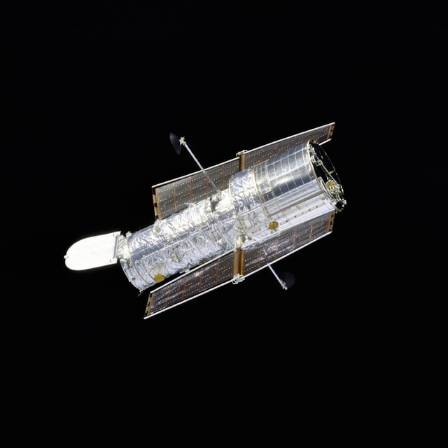
While many view satellites as simple pieces of machinery, their history and operation are filled with fascinating complexities, ranging from early physics theories to "zombie" transmissions. To better understand these technical marvels and the space they occupy, we have compiled several key insights that highlight the unique nature of orbital science.
Christopher Daniel Whitfield
Margin note
Reading tip
The full digest continues below among botanical margin notes.
Grove
Olive Digests
While many view satellites as simple pieces of machinery, their history and operation are filled with fascinating complexities, ranging from early physics theories to "zombie" transmissions. To better understand these technical marvels and the space they occupy, we have compiled several key insights that highlight the unique nature of orbital science.
Isaac Newton Mathematically Validated Orbits Long Before Space Travel
In 1687, Isaac Newton established the fundamental principles of motion, suggesting that an object will continue its path unless interrupted by an external force. This concept is the heart of satellite operation, representing a delicate equilibrium between the object's forward momentum and the pull of Earth's gravity. Newton illustrated this using a thought experiment involving a mountain-top cannon. He reasoned that while a weak blast would result in the ball hitting the ground and an overpowered one would send it into deep space, a perfectly calibrated launch would allow the projectile to fall indefinitely around the curve of the Earth, effectively entering orbit.
Satellite Missions Utilize Three Primary Orbital Categories
Operational altitudes for these machines vary significantly, stretching from approximately 300 miles to precisely 22,236 miles above the planet. Low-Earth Orbit (LEO) is the closest tier, situated between 300 and 900 miles up. Satellites here are typically smaller and simpler to deploy, often launching in large groups on a single vehicle. Moving higher, Medium-Earth Orbit (MEO) occupies the space between 3,100 and 7,500 miles. At this height, a relatively small cluster of around ten satellites can provide nearly global coverage. Finally, Geostationary Orbit (GEO) sits at a specific altitude of 22,236 miles directly over the equator. Because GEO satellites travel at the same rotational speed as Earth, they seem to stay fixed in one spot in the sky, allowing constant communication with simple, stationary ground antennas.
High-Altitude Satellites Must Occupy Regulated Orbital Slots
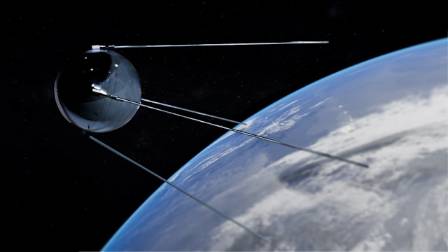
Due to the specific requirements of Geostationary Orbit, usable space is finite. Every GEO satellite must be positioned in a designated "slot" to prevent interference and collisions with other hardware. These positions are assigned by national space departments and strictly overseen by the International Telecommunications Union. This rigorous regulatory process, which often spans several years, ensures that the limited equatorial path remains organized and functional for all global operators.
Periodic Adjustments Are Required to Maintain Proper Positioning
Satellites do not stay perfectly still; they tend to "wobble" or drift due to various gravitational influences. This movement can pull a geostationary satellite into a figure-eight pattern, eventually breaking its link with ground-based receivers. To counteract this, operators perform "station keeping," using small onboard engines called thrusters to nudge the craft back into its assigned coordinate. This constant maintenance relies on a steady exchange of data between the spacecraft and mission control centers on the ground.
Decommissioned Satellites Face Different Ends Based on Their Altitude
The operational life of a satellite can span from a few years to several decades, and the method of disposal depends on its location. Hardware in lower altitudes generally succumbs to atmospheric drag and gravity, eventually re-entering the atmosphere and incinerating. Conversely, GEO satellites are moved using their final reserves of fuel into a "graveyard orbit" several hundred kilometers above the active zone. In this isolated region, they remain indefinitely without interfering with active missions. Occasionally, these retired crafts exhibit "zombie" behavior, unexpectedly resuming transmissions decades after they were shut down, a phenomenon that continues to fascinate both professional and amateur astronomers.
More along this branch
LEAF · en

The Stunning Golden Rapeseed Fields of the Cotswolds
“We give thanks for those who shaped the fields, created the farms, cleared the waterways, and built the paths.” — From The Cotswold Prayer of Praise
LEAF · en

The Chicest Winter Coats 2025: Trends & Must-Have Styles Selling Out Fast
Winter coats are the ultimate wardrobe investment—one you’ll reach for year after year, never regretting a single penny spent. Far from an afterthought tossed on as you dash out the door, a great winter coat doesn’t just keep you warm; it completes your outfit, elevates even the simplest jeans-and-sweater combo, and becomes a signature piece that defines your seasonal style. Whether you’re chasing the latest Autumn/Winter 2025 trends or craving a timeless classic that transcends fads, this season’s best winter coats offer something for every taste, budget, and occasion. From maxi lengths and shaggy textures to versatile wrap styles and sleek suede trenches, the options are as stylish as they are functional—though you’ll need to act fast: the most sought-after designs are already flying off shelves.
LEAF · en

How to Buy a Supercar: From Budget to Ownership
Buying a supercar is not the same as purchasing a standard vehicle. It requires careful planning, financial awareness, and a clear understanding of long-term responsibilities. These machines are more than just fast cars—they are highly engineered works of art built with advanced materials such as carbon fiber, extreme powertrains, and precision aerodynamics. Often produced in limited numbers, they represent the highest level of automotive engineering available for road use. Importantly, the purchase price is only the starting point of the true cost of ownership.
LEAF · en

Victoria Harbor The Shimmering Heart of Hong Kong
Victoria Harbor lies between Hong Kong Island and the Kowloon Peninsula in the Hong Kong Special Administrative Region. It is regarded as the largest harbor in Asia and one of the world’s major seaports, ranking behind San Francisco in the United States and Rio de Janeiro in Brazil. With its naturally deep waters and expansive harbor area, it has earned the nickname “Pearl of the Orient.” The harbor is particularly famous around the world for its spectacular nighttime scenery.
LEAF · en

The Secrets of the Pink Bird: Surprising Flamingo Discoveries
Beyond their vivid rose-colored plumage, flamingos are among the most distinct and specialized avian species on the planet. From their unique nesting habits to their remarkable physiological adaptations, these birds thrive in environments that would be inhospitable to most other creatures. Understanding the biology and behavior of the flamingo reveals a story of survival, complex social structures, and a highly specialized diet.
LEAF · en

Sushi: Nutritious or Not?
Sushi is often praised for its nutritional value, offering a variety of health benefits. Yet, it’s not without concerns—especially when considering sodium levels, potential contaminants, and mercury exposure. Let's explore its health implications in detail.