Grove read
A BIG VICTORY FOR THE SMALL CAR: 50 YEARS ON, THE CLASSIC MINI’S 1964 MONTE CARLO RALLY TRIUMPH THAT SHOCKED MOTORSPORT
In the annals of international motorsport, few victories have carried the underdog spirit as vividly as the one scored by a tiny British car on a frosty January day in 1964. On 21 January, the Classic Mini Cooper S—small, lightweight, and outgunned by its V8-powered rivals—claimed its first Monte Carlo Rally win, a triumph that didn’t just rewrite the rulebook for rallying but etched itself into the hearts of fans worldwide. Fifty years later, the story of Patrick “Paddy” Hopkirk, his co-driver Henry Liddon, and their iconic Mini (licence plate 33 EJB) remains a masterclass in how ingenuity, timing, and a car built for the people could topple giants.
Silas
Margin note
Reading tip
The full digest continues below among botanical margin notes.
Grove
Olive Digests
In the annals of international motorsport, few victories have carried the underdog spirit as vividly as the one scored by a tiny British car on a frosty January day in 1964. On 21 January, the Classic Mini Cooper S—small, lightweight, and outgunned by its V8-powered rivals—claimed its first Monte Carlo Rally win, a triumph that didn’t just rewrite the rulebook for rallying but etched itself into the hearts of fans worldwide. Fifty years later, the story of Patrick “Paddy” Hopkirk, his co-driver Henry Liddon, and their iconic Mini (licence plate 33 EJB) remains a masterclass in how ingenuity, timing, and a car built for the people could topple giants.
The Monte Carlo Rally of 1964 was meant to be a showcase for power. Competitors arrived with machines that embodied brute force: Ford’s Falcon, packing a thundering V8 engine; Mercedes-Benz’s 300 SE, a luxury saloon with a six-cylinder unit that dwarfed smaller cars in output; and other heavyweights designed to dominate the rally’s mix of snow-covered mountain passes, tight country lanes, and high-speed straights. The Mini Cooper S, by contrast, was a David among Goliaths. At just 3.05 meters long and weighing barely 650 kg, it was a family car first—conceived by Alec Issigonis, then Deputy Technical Director at the British Motor Corporation (BMC), to tackle post-war Britain’s narrow roads and fuel shortages. But thanks to the vision of sports car designer John Cooper, it had been transformed into a racer.
Cooper, a man who knew speed (he’d built championship-winning Formula One cars), spotted the Mini’s untapped potential early. The stock Mini, launched in 1959, made just 34 horsepower—hardly enough for racing. But its design held secrets: a front-mounted transverse engine (saving space and improving weight distribution), front-wheel drive (uncommon in rallying at the time, but ideal for traction on slippery surfaces), a wide track, and a surprisingly long wheelbase for its size. Cooper convinced BMC to build a more powerful version: the Mini Cooper, launched in 1961 with a 997cc engine and 55 horsepower. By 1964, the Cooper S had arrived, with a 1071cc four-cylinder engine cranking out around 90 horsepower—still a fraction of the Falcon’s 271 hp, but paired with a chassis that handled like a go-kart.
For Hopkirk, a 29-year-old Northern Irish driver with a knack for rallying, the Mini was more than a car—it was a partner. “People thought we were crazy,” he later recalled, now 80 but still lighting up when talking about 33 EJB. “It was a little family saloon, not a ‘proper’ rally car. But technically, it had advantages no one else had. Front-wheel drive meant we could pull out of corners without spinning—critical on ice. The car was small, so it sliced through narrow, ploughed roads where big cars got stuck. We practiced for months on snowy hills, learning how to brake late, how to carry speed downhill. That preparation wasn’t luck—it was survival.”
The 1964 Monte Carlo Rally followed a tradition: cars started from nine European cities, converging on Reims, France, before heading to Monte Carlo. Hopkirk and Liddon began their journey in Minsk (now Belarus), a 2,000-kilometer leg that tested both car and crew. Rauno Aaltonen (Finland) and Tony Ambrose started in Oslo; Timo Mäkinen (also Finnish) and Patrick Vanson in Paris. All six BMC works Minis—painted tartan red with white roofs, impossible to miss—faced the same challenge: keeping up with bigger, faster cars on flat sections, then capitalizing on their agility in the mountains.
Hopkirk rose to the task. On the rally’s long, flat stages, he refused to let the Falcon (driven by Sweden’s Bo Ljungfeldt) build a decisive lead, pushing the Mini to its limits without breaking it. But it was the “Night of the Long Knives”—the penultimate stage, a grueling run through the Maritime Alps—that would define the race. This was no ordinary stretch: narrow roads carved into mountainsides, snowdrifts blocking lanes, and gradients so steep that powerful cars struggled for traction. For the Mini, it was home.
“The snow slowed everyone down, but it slowed the big cars more,” Hopkirk explained. “They had so much power, their tyres spun on ice—they couldn’t put that power down. We? We were light. The Mini was brilliant downhill: I could brake later, take corners tighter, and make up time we’d lost going up. On the Col de Turini—a 1,607-meter pass with hairpin after hairpin—I knew we had a chance. Liddon was reading the notes perfectly, calling out ‘ice ahead’ or ‘tight left,’ and the car just… responded. It felt like an extension of me.”
By the time Hopkirk reached the top of the Col de Turini, he’d taken the lead. But Ljungfeldt wasn’t done. The final stage through Monte Carlo’s streets was a flat-out sprint, and the Falcon’s V8 roared back. When Hopkirk crossed the finish line, he waited—no one told him he’d won. “Rallying then wasn’t like now,” he laughed. “No radios, no updates. I did the final circuit, pulled up, and a journalist ran over yelling, ‘You’ve won!’ I thought he was joking. We’d beaten cars with three times our power. It surprised the world—and it surprised us.”
The margin? Just 17 seconds.
In Britain, the victory was a national celebration. Hopkirk received a telegram from Prime Minister Harold Wilson, congratulating him on “a win for British ingenuity.” But the message that stuck with him came from four lads from Liverpool: the Beatles. “They sent me a telegram first, then a photo—all four of them, grinning, with a note: ‘You’re one of us now, Paddy.’ I still have that photo. It’s framed in my office. Back then, the Beatles were the biggest thing in the world, and here they were celebrating a Mini. That’s how big this win was.”
The 1964 triumph wasn’t a fluke—it was the start of a Mini dynasty at Monte Carlo. In 1965, Timo Mäkinen and co-driver Paul Easter returned with a upgraded Cooper S: a 1275cc engine, now making 103 horsepower, and a chassis tuned for even better handling. The rally that year was brutal: record snowfall turned roads into ice rinks, and organizers added a second night stage through the Alps to test crews further. Mäkinen, a calm, precise driver, rose to the challenge. He was the only competitor to finish without a single penalty point—an unheard-of feat in such harsh conditions—and claimed victory by nearly two minutes. The Mini’s dominance was no longer a surprise; it was a fact.
1966 should have been the year of the hat-trick. Mäkinen, Aaltonen, and Hopkirk dominated from start to finish, crossing the line in first, second, and third place— a clean sweep for BMC. Fans went wild; the Mini had cemented its status as rallying’s unlikely king. But then came the controversy. French race commissioners announced they were disqualifying all three Minis, citing “non-compliant headlights.” The rules required cars to use standard production headlights, and the Minis had been fitted with small auxiliary spotlights (common in rallying to cut through snow). The decision was widely seen as unfair—rival cars had similar setups—but it stood. Finland’s Pauli Toivonen, driving a Citroën, was declared the winner.
“The ‘Three Musketeers’—that’s what people called us—were devastated,” Hopkirk remembered. “We’d won fair and square. The headlights were a technicality, nothing more. But we didn’t dwell on it. We knew we had to come back stronger.”
They did. In 1967, the Minis returned, with Hopkirk, Mäkinen, and Aaltonen joined by two more BMC works teams. Aaltonen, paired with Liddon (Hopkirk’s 1964 co-driver), was determined to set things right. “Henry was the best co-driver I ever worked with,” Aaltonen later said. “He didn’t just read notes—he knew the car. He’d say, ‘We need to slow here’ or ‘Push harder there,’ and he was always right.” The rally was tight, but the Mini’s agility shone again. Aaltonen took the lead on the Col de Turini (again, the Mini’s playground) and held on, crossing the finish line 12 seconds ahead of the nearest rival. This time, there were no disqualifications—just a well-earned victory.
Hopkirk finished sixth in 1967, and fifth in 1968; Aaltonen took third that year. But by then, the writing was on the wall. Rivals had learned from the Mini: they built smaller, more agile cars with powerful engines. The Ford Escort RS1600, launched in 1968, and the Lancia Fulvia HF were faster, more powerful, and better suited to the rally’s evolving demands. The Mini’s era of dominance was over—but its legacy was just beginning.
Today, the Classic Mini’s 1964 Monte Carlo win is more than a race result; it’s a symbol of what happens when innovation beats intimidation. The car’s transverse engine, front-wheel drive, and lightweight design became staples of modern car engineering. Its underdog story inspired generations of drivers and designers—proof that you don’t need the biggest engine to win, just the best combination of skill, preparation, and a car that fits the task.
For Hopkirk, the memories are as vivid as ever. “I still get letters from people who were kids in 1964, telling me they bought a Mini because of that win,” he said. “That’s the real legacy—not the trophy, but the way it made people believe in small things. The Mini wasn’t just a car. It was a revolution.”
And the headlights that cost the Minis the 1966 title? They’ve become a badge of honor. Today, Original MINI Accessories sell black headlight housings, retro spotlights, and xenon retrofits—tributes to the car that dared to take on giants, and won.
More along this branch
LEAF · en
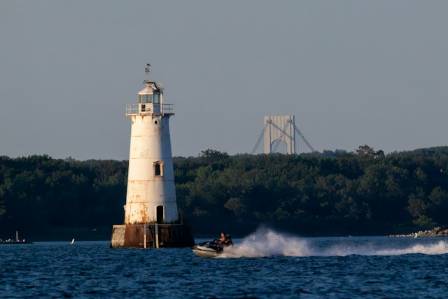
The Lighthouses Every Boater Should Visit in Narragansett Bay
Every boater can remember the first moment a lighthouse appeared on the distant horizon.
LEAF · en
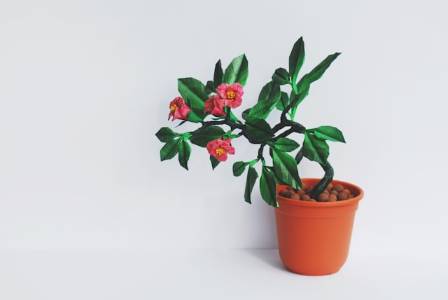
The Art of Paper Folding: A Guide to Creating Handmade Origami Flowers
Origami is a timeless craft that transforms simple sheets of paper into intricate works of art. While it is a skill that can be practiced anywhere, its repetitive and focused nature makes it a particularly therapeutic hobby. Whether you are looking for a creative outlet during a period of rest or simply want to add a handmade touch to your home decor, folding paper flowers—specifically the popular kusudama style—is a rewarding project that is much easier to master than it initially appears.
LEAF · en

9 Fresh Fruit Smoothies You’ll Want to Make Again and Again
Fresh fruit smoothies are refreshing, naturally sweet, and incredibly easy to make. Whether you want a quick breakfast, a healthy snack, or a cooling summer treat, smoothies are one of the simplest ways to enjoy fruit.
LEAF · en
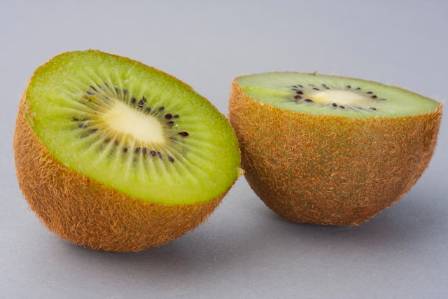
Is Kiwi Fruit Good for You During Pregnancy?
Kiwi, also known as Chinese gooseberry, is rich in essential nutrients and can be a great addition to your pregnancy diet. This small fruit offers a unique mix of vitamins, minerals, and fiber—plus a sweet, tangy flavor that may help satisfy pregnancy cravings in a healthy way.
LEAF · en
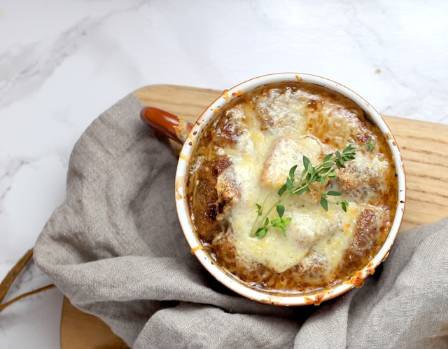
I Tried French Onion Soup at 4 Popular Chains & This One Was Pure, Cheesy Perfection
There’s something irresistibly comforting about a warm, hearty soup on a cold day, and French onion soup is the ultimate cozy choice. Caramelized onions, rich broth, toasted bread, and melted cheese combine into a simple yet deeply satisfying dish.
LEAF · en
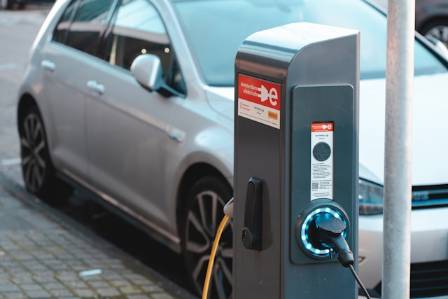
The Shift to Electric: The Dynamic Evolution of the Automotive Industry
The automotive sector finds itself at the crossroads of transformation, navigating the compelling shift toward Electric Vehicles (EVs). Fueled by global climate change imperatives, nations are under increasing pressure to meet environmental milestones, propelling a surge in demand for electric alternatives and prompting automakers to recalibrate their strategies.