Grove read
Sandhill Cranes and the “Orchestra of Evolution”
I will always remember the first time I heard a Sandhill Crane. It was early June, and I was about halfway through an eight-day backpacking journey in Montana's Sapphire Mountains. One evening, I was sitting in a meadow beside a quiet creek, filling my water bottle at an oxbow, when an extraordinary sound suddenly reached my ears. It sounded like a strange combination of an elephant, a jackhammer, and a squeaky old door hinge. Whatever was making it, I was convinced it could not possibly belong to any living creature I knew, and certainly not to a bird.
Nessa Whitby
Margin note
Reading tip
The full digest continues below among botanical margin notes.
Grove
Olive Digests
I will always remember the first time I heard a Sandhill Crane. It was early June, and I was about halfway through an eight-day backpacking journey in Montana's Sapphire Mountains. One evening, I was sitting in a meadow beside a quiet creek, filling my water bottle at an oxbow, when an extraordinary sound suddenly reached my ears. It sounded like a strange combination of an elephant, a jackhammer, and a squeaky old door hinge. Whatever was making it, I was convinced it could not possibly belong to any living creature I knew, and certainly not to a bird.
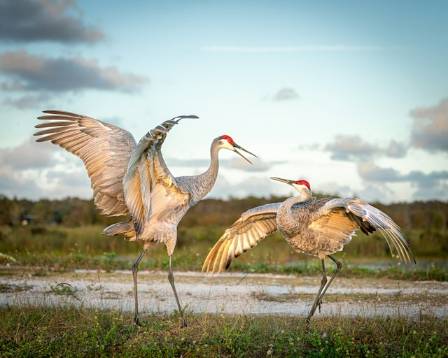
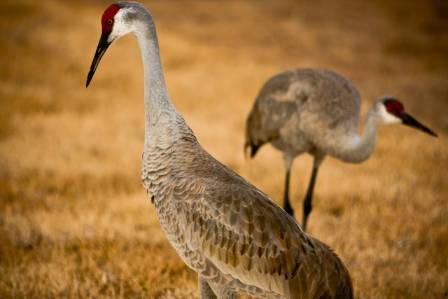
When I returned to camp, the puzzled expression on my face apparently revealed that something had happened. I was quickly told that the strange rattling call I had heard came from a Sandhill Crane. I borrowed a pair of binoculars, and there they were across the meadow: two enormous birds with rusty-gray plumage. They raised their wings as they danced and called to one another, while the deep red patches on their foreheads were just visible in the fading light of the summer evening. Looking at them, I couldn't help but think of dinosaurs.
A Bird That Seemed to Come From Another Time
It was an unforgettable scene. Yet that summer was filled with remarkable sights. I was new to Montana and had only recently begun working on backcountry trails, so every day seemed to bring another unexpected sight, sound, or experience as I traveled through the remote landscapes of the northern Rocky Mountains.
Only after the season ended, when I finally had an opportunity to slow down and think about everything I had experienced, did that evening in the Sapphire Mountains return to my mind. The memory seemed increasingly strange the longer I considered it. Had I somehow imagined the whole encounter? What were these enormous creatures that appeared noisily in otherwise peaceful landscapes, spread their wings, and filled the mountains with cries that seemed almost capable of trembling the ground?
The Ancient Voice of the Sandhill Crane
Learning more about these extraordinary birds was not difficult, because I was certainly not the first person to become fascinated by them. I was also far from the only person who had associated their calls with dinosaurs.
Conservationist Aldo Leopold famously described the experience of hearing a Sandhill Crane as something far more profound than simply listening to a bird. To him, the crane's call represented a connection to evolution and to a wild, ancient past that humans can no longer experience directly.
Those words are more than poetic imagery. Sandhill Cranes have an extraordinary evolutionary history to support such comparisons.
One of the World's Most Ancient Living Birds
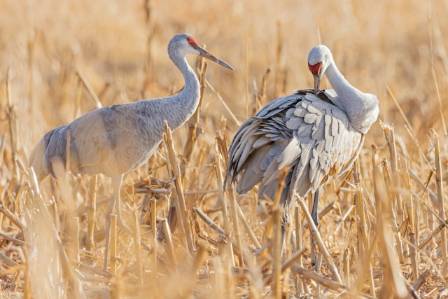
Sandhill Cranes are considered the oldest living bird species on Earth. Fossils belonging to other members of Gruiformes, the taxonomic order that includes cranes, extend back approximately 60 million years. This places their broader lineage shortly after the mass extinction event that eliminated most of the dinosaurs.
The oldest definitively identified Sandhill Crane fossil was discovered along the coast of Florida and dates to approximately 2.5 million years ago. By comparison, most modern bird species can trace their lineage back around 1.8 million years.
That is still an astonishing span of time by any measure, but Sandhill Cranes have an even deeper head start. Their ancient history gives new meaning to the feeling of hearing their unmistakable calls across a remote landscape.
A Ten-Million-Year-Old Connection
There is an even more remarkable discovery that adds another layer to the story. A crane fossil approximately ten million years old was found in northeastern Nebraska.
The fossil is actually part of a wing, and scientists cannot say with complete certainty that it belonged to a Sandhill Crane itself. It may instead have come from an ancient and closely related ancestor known as the Crowned Crane. Nevertheless, the physical resemblance between this ancient specimen and modern Sandhill Cranes is striking.
The location of the discovery makes the story even more intriguing. The ten-million-year-old fossil was found near the Platte River, directly within an area that remains an important migration route for Sandhill Cranes today.
This raises the remarkable possibility that ancient cranes were traveling along routes that closely resemble those used by their modern descendants. The migration pathways followed by Sandhill Cranes today may therefore reflect patterns that have been connected to their ancestors for millions of years.
Listening for the Dinosaurs
There is something extraordinary about standing in the present and witnessing a species that has appropriately been described as a living fossil. The seasonal rhythms of crane migration, their elaborate courtship displays, and that unmistakable bugling call all provide a living connection to an ancient world.
These behaviors create a thread linking the modern landscape to a distant evolutionary history, allowing us to experience a small part of what Aldo Leopold described as an “untamable past.”
Every spring, as Sandhill Cranes begin their return, there is something special about waiting for their arrival. Look toward the sky, listen carefully to the distant calls, and for a moment, it may feel as though an ancient world is speaking once again.
More along this branch
LEAF · en

Why Orange Cats Are So Special?
Orange cats are often described as the friendliest cats of all, but whether this reputation is actually supported by science remains uncertain.
LEAF · en
What’s the biggest gorilla ever recorded?
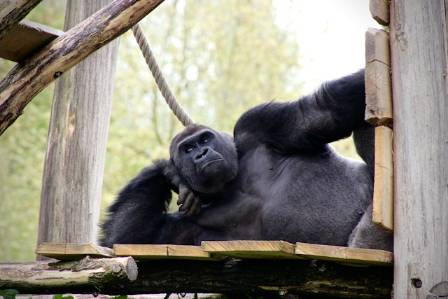
The question of which gorilla is the largest ever documented is one that fascinates many wildlife enthusiasts. Among the most famous examples is Titus (24 August 1974 – 14 September 2009), a silverback mountain gorilla that lived in the Virunga Mountains and was widely regarded as one of the most notable gorillas ever recorded.
LEAF · en

Top 10 At-Home Basketball Drills to Elevate Your Game: A Complete Guide for Players
Basketball excellence is forged not just in team practices or high-stakes games, but in the consistent, intentional work you put in on your own time. At-home training offers unparalleled flexibility to refine fundamentals, correct weaknesses, and build muscle memory—all without the need for a full court or teammates. Whether you’re a young athlete just starting out or a seasoned player looking to sharpen your skills, these 10 drills target every critical aspect of the game: ball handling, shooting, footwork, agility, finishing, rebounding, strength, and speed. By integrating them into your daily routine, you’ll develop the confidence and competence to stand out on the court. For members of Invictus Basketball Club, we’re excited to share that our exclusive Skills Lab homework will launch in video format this October—featuring step-by-step demonstrations and expert tips to amplify your at-home training. Read on to master these drills and take your game to the next level.
LEAF · en
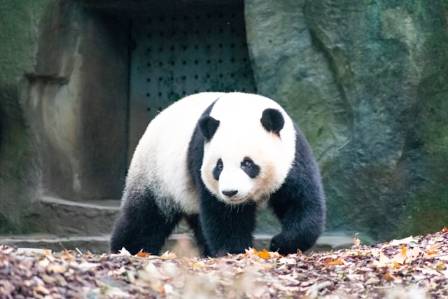
The Giant Panda: A Black-and-White Icon of Conservation
The giant panda (Ailuropoda melanoleuca) is one of the world’s most recognizable and beloved mammals, a member of the bear family distinguished by its striking black-and-white fur and gentle demeanor. Native exclusively to China’s mountainous regions, these iconic creatures have long captured global attention—not just for their adorable appearance, but also for their remarkable conservation journey, which has seen them rebound from the brink of extinction to a status of “Vulnerable” on the IUCN Red List. Beyond their cultural significance as China’s national treasure, giant pandas play a vital role in their forest ecosystems, serving as an umbrella species whose protection benefits countless other plants and animals sharing their habitat. From their specialized diet to their solitary lifestyle, every aspect of the giant panda reflects a unique adaptation to the challenging mountain environment they call home.
LEAF · en
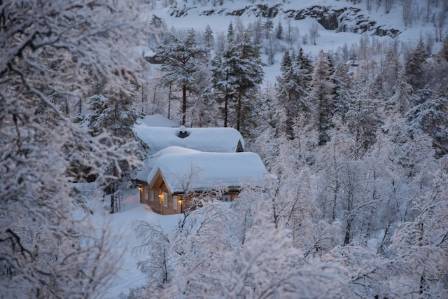
8 Types of Cozy Cabin Retreats for Your Snowy Escape
There’s something almost spellbinding about stepping into a world blanketed in white, where silence reigns and the cold air sharpens every sense. For me, the ideal winter getaway is in a cabin that marries rustic warmth with creature comforts—wood crackling in the fire, deep views out frosted windows, and the scent of pine filling the air. Below are eight handpicked cabin styles designed to elevate your next snowy adventure.
LEAF · en

Healthy Habits: Fruits and Vegetables as Allies for Weight Management
Fruits and vegetables are more than just colorful additions to your plate—they are powerful allies in healthy weight management, aligned with the Centers for Disease Control and Prevention’s (CDC) core principles of nutrition and wellness. Packed with essential vitamins, minerals, fiber, and antioxidants, these plant-based foods support overall health while naturally aiding in weight loss or maintenance. Unlike restrictive diets that leave you feeling deprived, incorporating more fruits and vegetables into your daily meals focuses on addition through substitution—replacing higher-calorie, nutrient-poor ingredients with options that are low in fat and calories but high in volume and satisfaction. This approach not only helps you achieve a calorie deficit (the key to weight loss) but also promotes long-term healthy eating habits that benefit your heart, immune system, and risk of chronic diseases like cancer and diabetes. Below, we’ll explore science-backed strategies to seamlessly integrate more fruits and vegetables into every meal, snacks, and cooking routine, based on CDC guidelines and practical, actionable tips.