Grove read
Chaka Salt Lake: Mirror Of The Sky
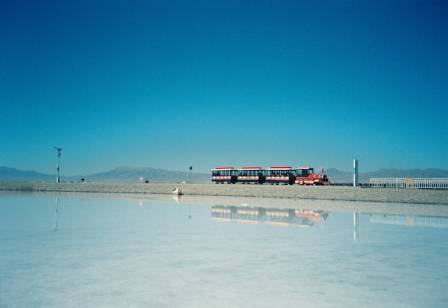
Chaka Salt Lake, located near the town of Chaka in Wulan County, is regarded as one of the most beautiful lakes in the Qaidam Basin of Northwest China’s Qinghai Province. In reality, Chaka is an enormous salt flat measuring roughly 9 kilometres from north to south and 15 kilometres across, with its surface covered by a thick layer of salt. During the dry part of the year, the visible lake becomes considerably smaller. After rainfall, however, the water spreads outward and the lake can reach its full extent.
Daphne Everhart
Margin note
Reading tip
The full digest continues below among botanical margin notes.
Grove
Olive Digests
Chaka Salt Lake, located near the town of Chaka in Wulan County, is regarded as one of the most beautiful lakes in the Qaidam Basin of Northwest China’s Qinghai Province. In reality, Chaka is an enormous salt flat measuring roughly 9 kilometres from north to south and 15 kilometres across, with its surface covered by a thick layer of salt. During the dry part of the year, the visible lake becomes considerably smaller. After rainfall, however, the water spreads outward and the lake can reach its full extent.
Why Chaka Is Called the Mirror of the Sky
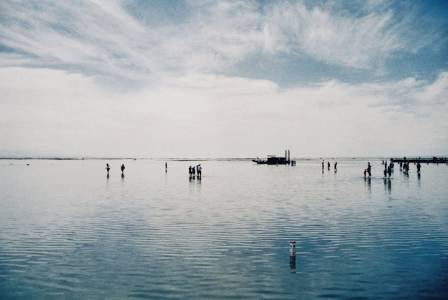
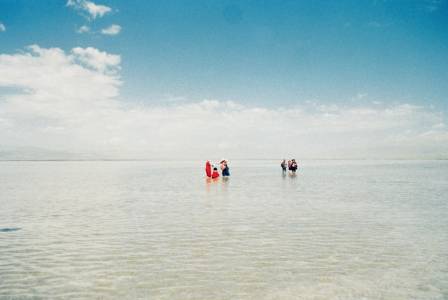
The water at Chaka Salt Lake is extremely shallow, with some sections reaching only ankle depth. This makes it possible for visitors to walk directly across parts of the lake. When the weather is clear and the sky is intensely blue, the water creates an almost perfect reflection of the heavens above, giving the impression that an enormous mirror has been placed across the earth. Because of this remarkable scenery, Chaka Salt Lake is often known as the “Mirror of the Sky.” Its appearance has also led to comparisons with Bolivia’s famous Salar de Uyuni, although Chaka is considerably smaller.
How the Salt Lake Was Formed
The area where Chaka Salt Lake now lies was once covered by a shallow sea. Over time, tectonic forces pushed this section of land upward by more than 3,000 metres, contributing to the formation of the vast Qinghai-Tibet Plateau. As the ancient sea disappeared, small amounts of seawater remained trapped in depressions across the elevated landscape and gradually developed into saline lakes, including Chaka Salt Lake.
Rainfall and seasonal streams carried additional salt and minerals down from the surrounding mountains into these enclosed waters. As this process continued over a very long period, the concentration of salt in the lake steadily increased. Today, the salt layer beneath Chaka Salt Lake is more than 5 metres thick.
A History of Salt Production
Salt has been extracted from the lakes of the Qaidam Basin for more than 3,000 years. During the Western Han Dynasty, which lasted from 206 BC to AD 25, members of the local Qiang ethnic minority relied on these lakes as an important source of salt. Salt was also collected from other nearby bodies of water, including Xian Lake, which is now known as Qinghai Lake, as well as Salt Lake in Jincheng County.
Modern Salt Mining at Chaka
Large-scale salt extraction began during the latter half of the 18th century. Because the region contains such enormous natural reserves, obtaining the mineral has traditionally been relatively straightforward. In many areas, salt can be collected simply by removing the upper layer of the lake surface.
Today, industrial-scale extraction is carried out with mechanical equipment. Chaka’s salt factory produces hundreds of tons of high-quality crude salt every year. The salt is distributed throughout China and is also shipped overseas to markets including Japan, Nepal and the Middle East.
More along this branch
LEAF · en

The True Value of Well-Placed Outdoor Seating in Public Environments
Communal areas such as public gardens, educational grounds, and residential neighborhoods act as vital shared zones where individuals gather to unwind, socialize, and find their way around. Wisely selected exterior furnishings play a major role in upgrading these locations by aiding directional awareness and boosting communal pleasure. Features like traditional park seating, open-air dining tables, and waste receptacles enhance both the practical utility and the aesthetic charm of these environments. Recognizing the true value of public seating helps administrators decide exactly where to place these items to generate the greatest possible comfort and utility for everyone. When positioned with care, exterior installations offer welcome rest areas, inspire conversations among neighbors, and help manage the natural flow of pedestrian movement. This comprehensive approach demonstrates how different varieties of open-air seating facilitate seamless navigation and elevate the daily experiences of visitors, proving to be critical components for city planners, builders, and local authorities who wish to build inviting environments.
LEAF · en

Classic Cream Puffs with Chocolate Sauce
Growing up, my mom only made this dessert once, but it stayed with me for years. I can still remember the soft texture, the gentle egg flavor in a pleasant way, and the perfect harmony between sweetness and different layers of texture. Ever since then, I feel like I’ve been trying to recreate that exact cream puff experience.
LEAF · en

Painting a Dolphin with Primary Colors
painting with acrylics is a great way to experiment with color blending, mixing, and creative ideas.
LEAF · en

A Brief History of the SUV — and Why It Took the World by Storm
The Sports Utility Vehicle (SUV) isn’t just a car—it’s a cultural phenomenon. Walk through any suburban neighborhood, scroll through a highway traffic cam, or glance at annual sales reports, and one thing becomes clear: SUVs dominate. In the U.S. alone, over 12 million were sold last year, outpacing sedans, hatchbacks, and trucks. But this wasn’t always the case. The SUV’s rise from niche workhorse to global obsession is a story of war, innovation, and shifting human desires.
LEAF · en

The White Tiger: Genetics, Myths, and Conservation—Unveiling Nature’s Rare Marvel
Few creatures command attention like the white tiger. With its snow-white fur, jet-black stripes, and piercing blue eyes, this big cat stands as one of nature’s most captivating spectacles, weaving a spell over anyone fortunate enough to see it. Found in select conservation parks worldwide—including Taman Safari Bali—white tigers have long been surrounded by myths, from being revered as divine beings in ancient cultures to being misunderstood as a distinct tiger species. Yet beyond their breathtaking appearance lies a fascinating story of genetics, adaptation, and conservation. Contrary to popular belief, white tigers are not a separate subspecies nor albino; they are a rare genetic variant of the Bengal tiger (Panthera tigris tigris), shaped by a recessive gene that alters their pigmentation. Their existence highlights the complexity of natural genetics, while their presence in zoos and conservation centers plays a pivotal role in raising awareness about the broader threats facing all tiger populations. In this exploration, we delve into the science behind their unique coloration, their physical traits, the challenges they face in the wild, and their vital role in conservation education—separating fact from fiction to celebrate one of nature’s most extraordinary creations.
LEAF · en
Lake Powell — Why You Should See It for Yourself
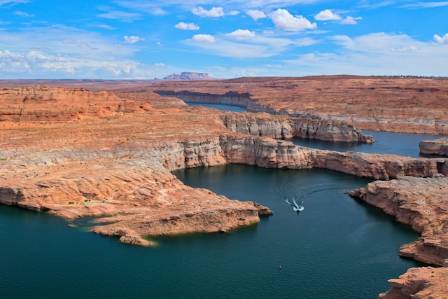
I’ve been visiting Lake Powell for many years now, and ever since getting married three years ago, it’s become a yearly summer tradition with my new family. Every trip feels like a favorite escape — peaceful, breathtaking, and completely unique. Few places in the world compare to Lake Powell, nestled between dramatic red-rock canyons that seem to stretch forever.