Grove read
Types of Ocean Waves
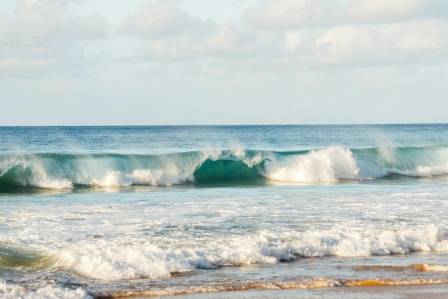
Waves are created when energy moves through water, causing the water particles to travel in a circular pattern. When a floating object meets a passing wave, it may seem as though the object is being pushed forward and lifted upward. However, as the wave moves onward, the object follows an orbital motion and eventually returns to nearly the same place where it started.
Declan Avery
Margin note
Reading tip
The full digest continues below among botanical margin notes.
Grove
Olive Digests
Waves are created when energy moves through water, causing the water particles to travel in a circular pattern. When a floating object meets a passing wave, it may seem as though the object is being pushed forward and lifted upward. However, as the wave moves onward, the object follows an orbital motion and eventually returns to nearly the same place where it started.
A wave occurs when the surface water of an ocean or lake is disturbed and pushed into motion. The formation of waves involves the combined effects of the Sun, Earth, and Moon, while wind is the main force that drives waves toward coastlines. Waves rise and fall, with the uppermost point known as the crest and the lowest point called the trough. Some waves remain in place, while others travel across the water.
Waves often appear in groups known as wave trains. Their development depends on several conditions, including wind speed, the distance over which wind travels without changing direction, the size of the area affected, the length of time the wind blows, and the depth of the water. Some waves can cross enormous distances before reaching land. Their size varies greatly, from tiny ripples to waves that can reach the height of a multi-story building, depending on weather conditions, ocean depth, and surrounding environments.
Types of Ocean Waves
Different wave patterns form under different natural conditions. Each type has unique characteristics and develops through specific forces acting on the water.
Capillary Waves
Capillary waves, also called ripple waves, are small disturbances that appear on the surface of water due to the combined influence of surface tension and gravity. These waves usually have very short wavelengths, typically less than a few centimeters, and move at speeds of around 0.2 to 0.3 meters per second.
They are often created by small surface movements, such as raindrops falling onto water, producing the delicate ripples commonly seen on ponds, lakes, and calm ocean surfaces.
Surface Gravity Waves
Surface gravity waves are common waves that occur along the boundary between water and air. Examples include waves breaking along beaches or circular ripples spreading outward after an object falls into water.
These waves are a type of mechanical wave, meaning they transfer energy through the movement of particles between different physical environments. Gravity plays a major role in restoring the water surface after it has been disturbed.
Swell Waves
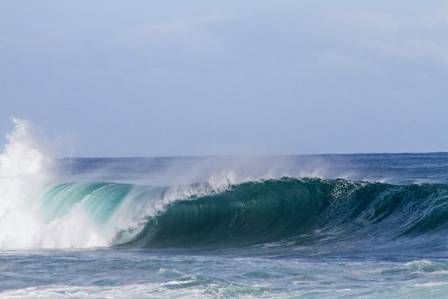
Swell waves are groups of ocean waves produced by distant weather systems, such as storms far away at sea. After being generated, these waves can travel across oceans and large bodies of water over long distances.
They are recognized by their smooth, extended wavelengths and often appear on the horizon as evenly spaced, parallel lines. Unlike local wind waves, swells can continue moving even after the original storm has disappeared.
Seiche Waves
A seiche is a standing wave that develops in enclosed or partly enclosed bodies of water, including lakes, bays, or even smaller containers.
These waves can be triggered by several natural events, such as strong winds, sudden changes in atmospheric pressure, earthquakes, tsunamis, and powerful storm systems. The water moves back and forth within the enclosed space, creating a repeating oscillation pattern.
Seismic Waves
Seismic waves are generated by sudden movements of material within the Earth. The most common cause is the shifting of rocks along faults during earthquakes.
However, other events can also create seismic waves, including volcanic eruptions, explosions, landslides, avalanches, and even rapidly moving rivers. These waves transfer energy through the Earth and are important for understanding underground structures and geological activity.
Tidal Waves
The term tidal wave is now rarely used in scientific discussions because it is often incorrectly associated with tsunamis.
Tsunamis are large ocean waves caused by underwater disturbances such as earthquakes, volcanic eruptions, landslides, or other sudden movements beneath the ocean. Although tsunamis were once commonly called tidal waves, their formation has nothing to do with tides. The two phenomena are created by completely different processes.
Rogue Waves
Rogue waves are unusually large ocean waves that appear unexpectedly compared with the surrounding sea conditions. In ocean science, they are generally defined as waves reaching more than twice the height of the significant wave height, which is calculated from the largest portion of recorded waves.
These extreme waves do not have one single cause. They often develop when several factors combine, including powerful winds, strong ocean currents, and multiple waves merging together to create one exceptionally large wave.
Monitoring Ocean Waves
Wave monitoring systems help scientists track ocean conditions and improve coastal safety. WaveNet, operated by Cefas in the United Kingdom, provides real-time information collected from a network of wave buoys positioned in areas vulnerable to flooding.
Since beginning operation in 2002, WaveNet has gathered and processed measurements from directional wave buoys managed by Cefas, along with additional information from other research programs and organizations. These observations are made available for analysis and public viewing.
The collected wave data is shared with organizations such as the Met Office to improve wave prediction and tidal surge models. Coastal forecasting services, emergency teams, local authorities, and other groups use this information to better understand potential flood risks and provide warnings when dangerous coastal conditions may occur.
More along this branch
LEAF · en
Top 10 Reasons to Embark on a Mediterranean Adventure
The mere mention of the Mediterranean conjures images of tantalizing seafood, sun-drenched beaches, and charming piazzas with dancing fountains. The Mediterranean Sea, nestled between Europe, Africa, and Asia, boasts a dazzling array of landscapes along its shores, each weaving its unique charm into the rich tapestry of the Mediterranean region. Here are the top 10 reasons why a journey to the Mediterranean is an absolute must:
LEAF · en
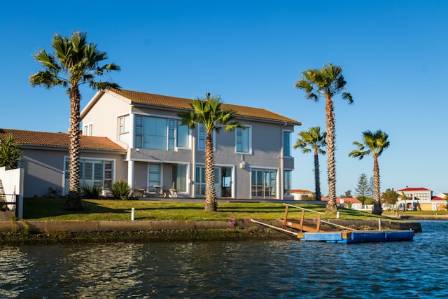
Smart Buying Tips for Vacation Rentals
To maximize your investment returns, look for properties in prime destinations that offer high-demand features like pools, hot tubs, or scenic views. Prioritize locations with lower overhead to boost your capitalization rate.
LEAF · en
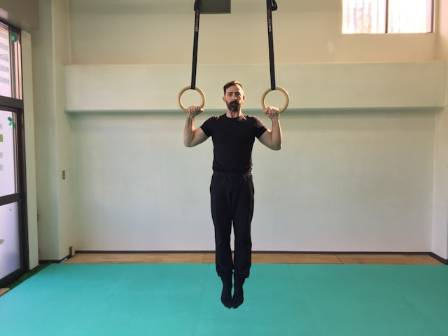
The Essence of Men’s Artistic Gymnastics: A Comprehensive Guide to the Six Disciplines
Men’s artistic gymnastics (MAG) stands as the cornerstone of gymnastics, with roots tracing back to ancient Greece, where athletes trained in strength, flexibility, and precision to prepare for warfare and competition. Recognized as the oldest form of organized gymnastics, it evolved through centuries—from 19th-century European gymnasiums to its debut as an Olympic sport at the first modern Games in 1896—to become a showcase of human physical excellence. At the elite level, MAG athletes compete across six demanding disciplines: floor exercise, pommel horse, still rings, vault, parallel bars, and high bar. Each event demands a unique blend of core skills—strength, balance, coordination, agility, and mental fortitude—while pushing the boundaries of what the human body can achieve. Below is an in-depth exploration of each discipline, uncovering the technical nuances, historical context, and competitive standards that define men’s artistic gymnastics.
LEAF · en
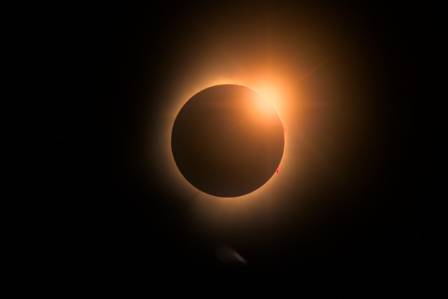
Annular Solar Eclipses: The “Ring of Fire” in the Sky
An annular solar eclipse is a rare and striking type of eclipse. It occurs when the Moon moves directly in front of the Sun but does not fully cover it. Instead, a bright outer ring of sunlight remains visible around the Moon’s silhouette. This glowing circle is known as an annulus, often described as a dramatic “ring of fire.”
LEAF · en

The amazing Cuckoo
Most people can recognize the familiar sound of a Cuckoo calling, even if they have never actually seen the bird itself.
LEAF · en

Top Fashion Watches to Elevate Your Style
In the fashion world, watches serve a purpose far beyond simply showing the time. They are important accessories that express individual taste, status, and personality while adding a polished touch to almost any outfit. Whether you are preparing for an elegant formal occasion or simply want to bring more refinement to your daily wardrobe, the right watch can have a noticeable effect on your overall appearance.