
Grove read
The Solar Dance of Sunflowers: Unveiling the Secrets of Heliotropism
Sunflowers, those captivating specimens of nature, unveil a dynamic aspect of plant life, challenging the notion of their static existence. Unlike the perception of plants as immobile entities, these particular flowers actively orient themselves toward the sun, tracing its journey from the eastern horizon to its western descent.
Leo Everett
Margin note
Reading tip
The full digest continues below among botanical margin notes.
Grove
Olive Digests
Sunflowers, those captivating specimens of nature, unveil a dynamic aspect of plant life, challenging the notion of their static existence. Unlike the perception of plants as immobile entities, these particular flowers actively orient themselves toward the sun, tracing its journey from the eastern horizon to its western descent.
But why do sunflowers exhibit this fascinating behavior?
This tendency to face the sun is predominantly noticeable in young flowerheads, tapering off as the flower matures (with mature sunflowers typically orienting themselves eastward). The enthralling phenomenon of flowers diligently tracking the sun's course is known as heliotropism.
Similar to humans, plants possess internal biological clocks, referred to as circadian rhythms. Just as a person's circadian rhythm triggers various physiological and chemical changes over approximately 24-hour cycles, a plant's circadian rhythm enables it to respond to environmental shifts in a similar time frame.
How do sunflowers achieve this sun-tracking feat?

Before sunrise, a young sunflower turns to the east, greeting the emerging sun. Throughout the day, it dynamically follows the sun's trajectory westward. As the sun sets, the flower reorients itself eastward, ready to repeat the cycle with the next sunrise.
A study published in the journal Science in 2016 proposed an intriguing explanation for this behavior. Researchers suggested that sunflowers engage in heliotropism because their stems undergo differential growth at different times of the day.
Their observations revealed a fascinating pattern: as the sun moves from east to west, the east side of a sunflower stem experiences faster growth than the west side. This uneven growth causes the flower to lean toward the sun. Conversely, during sunset, the growth on the west side surpasses that on the east side, prompting the flower to return to its original position facing east.
Adding complexity to their investigation, researchers immobilized some sunflower stems or redirected them away from the sun. The results were noteworthy – plants with restricted movement exhibited reduced biomass and a smaller leaf area compared to undisturbed ones.
To delve deeper, the responsiveness of sunflower plants to light was tested under artificial lighting conditions. The findings indicated that the plants could effectively track light movements within a 24-hour cycle but struggled when the artificial day approached a 30-hour cycle.
The unequal growth on either side of the sunflower stem is attributed to auxins, plant hormones that stimulate growth.
So, why do sunflowers, particularly young ones, faithfully face the sun?

The answer lies in the advantage it provides during the critical phase of reproduction. Young sunflowers, with their green "bracts" resembling a mane and leaves positioned beneath the flower facing the sun, actively practice heliotropism. This behavior maximizes photosynthesis, and during pollination, it ensures the flower is conspicuous to pollinators, primarily insects.
Facing east proves advantageous, as the flowers warm up quickly, attracting more pollinating insects. In fact, when researchers compared mature east-facing blooms with those artificially turned westward, the former attracted five times as many pollinators.
In the intricate dance of heliotropism, the sunflower gains a strategic edge in the quest for reproduction, showcasing the dynamic and purposeful nature of these seemingly stationary botanical wonders.
More along this branch
LEAF · en

10 Best Cities to Visit in Winter
Winter is a season that many places avoid, but in some cities it turns the urban environment into something magical. The article highlights ten cities around the world that shine in wintertime — whether because of snow-covered architecture, festive lights, unique seasonal events, or simply a change of atmosphere.
LEAF · en

Sea Otter Protection: A Key to Mitigating Climate Change Impacts on Arctic Marine Ecosystems
A groundbreaking study published in Science on September 11, 2020, reveals a critical link: the drastic decline of sea otter populations off Alaska’s Aleutian Islands since the 1990s has amplified climate change’s destructive effects on the region’s widespread calcareous algae reefs. Led by marine biologist Dr. Douglas Rasher from the Bigelow Laboratory for Ocean Science, the international research team—including scientists from GEOMAR Helmholtz Centre for Ocean Research Kiel—documented how the loss of this keystone predator, combined with ocean warming and acidification, threatens the survival of complex coastal ecosystems. GEOMAR’s expertise in uranium-thorium limestone dating was instrumental in supporting the study’s detailed ecological reconstructions.
LEAF · en

Simple Japanese Tempura Batter: A Guide to Light and Airy Frying
Creating authentic, restaurant-quality tempura at home is a manageable task that requires only three pantry staples. This method focuses on a minimalist approach to produce a delicate, golden coating that enhances rather than overwhelms the ingredients. Whether you are a novice or an experienced home cook, mastering this batter will allow you to transform ordinary seafood and vegetables into a crisp, professional-grade appetizer.
LEAF · en

Canton Tower: the Tallest TV Tower in China
Canton Tower, often nicknamed the “Little Waist” because of its unique slim shape, is the tallest television tower in China. The structure reaches a total height of 600 meters and contains 112 levels, including 111 floors above ground and one underground level.
LEAF · en

What’s the biggest gorilla ever recorded?
The question of which gorilla is the largest ever documented is one that fascinates many wildlife enthusiasts. Among the most famous examples is Titus (24 August 1974 – 14 September 2009), a silverback mountain gorilla that lived in the Virunga Mountains and was widely regarded as one of the most notable gorillas ever recorded.
LEAF · en
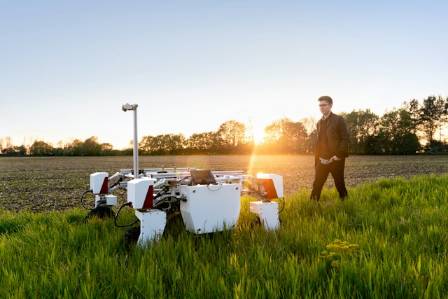
Agricultural Robots Bringing Food to the Table
Agriculture is steadily becoming more automated. The shift initially focused on autonomous tractors equipped with sensors and software that allowed them to operate continuously throughout the day and night. Today, the technology has expanded into a wide variety of agricultural robots equipped with increasingly sophisticated sensors, software, lasers, and specialized gripping mechanisms. These machines can harvest crops, remove weeds, control pests, and perform many other demanding jobs. Here are five emerging agricultural robots currently working on farms across the country.